Asia Pacific Ozempic Market Size, Share, Growth, Trends, and Forecast Report – Segmented By Indication, Route of Administration, Distribution Channel, Patient Demographics, and Region (India, China, Japan, South Korea, Australia & New Zealand, Thailand) - Industry Analysis from 2026 to 2034
Asia Pacific Ozempic Market Size
The Asia Pacific ozempic market size was valued at USD 557.56 million in 2025, and the market size is expected to reach USD 2,196.49 million by 2034 from USD 649.44 million in 2026. The market's promising CAGR for the predicted period is 16.45%.
Ozempic is a prescription medication used primarily to manage type 2 diabetes and reduce the risk of major cardiovascular events. Unlike in Western regions, its regulatory footprint in APAC remains limited to high income countries such as Japan South Korea Australia and Singapore, with approvals in China and India still pending or restricted. The drug functions by mimicking the endogenous incretin hormone GLP one, thereby enhancing glucose dependent insulin secretion and promoting satiety. The clinical relevance of Ozempic in this region is underscored by the escalating burden of metabolic disease across rapidly urbanizing economies. According to the International Diabetes Federation, the Asia Pacific region is home to a massive population of adults with diabetes, with the region representing a leading portion of the global diabetic population and a significant area of increasing prevalence. Furthermore, the World Health Organization reports that overweight and obesity rates in countries like China and Indonesia have doubled since 2000, creating a vast and growing pool of individuals at high risk for type 2 diabetes and its complications, thereby defining the epidemiological urgency that frames the APAC Ozempic market.
MARKET DRIVERS
Rising Type 2 Diabetes Prevalence in Urbanizing Economies
The explosive rise in type 2 diabetes prevalence, particularly in middle income nations undergoing rapid urbanization and dietary transition is a primary driver of the APAC Ozempic market. In China alone, the number of adults living with diabetes has surged to over one hundred and forty million, making it the largest national diabetic population globally according to the International Diabetes Federation. Similarly, India's diabetic population, particularly within major urban areas, is experiencing a significant surge, ranking it as one of the nations with the highest number of adults living with the condition, with prevalence rates in cities surpassing the national average. This epidemic is fueled by sedentary lifestyles, increased consumption of processed foods, and genetic predispositions that heighten susceptibility at lower body mass indices. As healthcare systems in these countries strengthen their chronic disease management capabilities, demand for advanced therapeutics like GLP one receptor agonists is growing among affluent urban populations. Recent clinical studies published in international medical journals indicate that GLP-1 receptor agonists are increasingly adopted as a preferred treatment option for type 2 diabetes management among specialists in China, reflecting a growing preference for advanced pharmacological therapies in rapidly developing Asian markets.
Strong Uptake in High Income APAC Markets with Advanced Reimbursement Systems
The robust adoption of Ozempic in high-income Asia-Pacific countries further augments the expansion of the APAC Ozempic market. In these regions, regulatory pathways are mature, and partial reimbursement mechanisms exist. Japan's PMDA approved Ozempic for type 2 diabetes management in 2018, with the National Health Insurance system providing covered access with patient co-payments. Japan experiences a significant diabetes challenge, with millions of cases amplified by an aging population and increasing cardiovascular risks. Similarly, the Australian Pharmaceutical Benefits Scheme (PBS) lists Ozempic, providing subsidized, targeted treatment for eligible patients with type 2 diabetes. High demand for semaglutide in Australia has led to ongoing supply shortages and tightened PBS eligibility restrictions to manage usage.South Korea and Singapore have followed similar trajectories, leveraging centralized health financing to support access. These markets act as regional anchors, generating real world evidence and physician familiarity that gradually influence prescribing norms in neighboring lower income countries.
 MARKET RESTRAINTS
Limited Regulatory Approvals and Absence in Key Populous Markets
The lack of regulatory approval for Ozempic in several high burden, populous APAC nations is limiting the growth of the APAC Ozempic market. This is most notably the case in India and much of Southeast Asia. Amidst one of the world's highest diabetes burdens, India has authorized the launch of Ozempic, with widespread accessibility expected to increase following impending patent expirations. Similarly, regulatory approval for advanced GLP-1 receptor agonists like Ozempic remains fragmented across Southeast Asia, with many nations still in the process of reviewing these therapies for official approval. This regulatory gap stems from complex local requirements, lengthy dossier evaluations, and prioritization of lower cost generic therapies by national drug authorities. Regulatory access to advanced, long-acting GLP-1 receptor agonists is currently limited in many non-OECD APAC nations, although access is increasing for both diabetes and obesity treatments. Consequently, the market remains confined to a narrow band of affluent nations, excluding the vast majority of the region’s diabetic population and severely limiting the therapy’s public health impact and commercial scalability across the broader Asia Pacific landscape.
High Out of Pocket Costs and Limited Insurance Coverage
The prohibitive cost of Ozempic in markets where it is available but not fully reimbursed also hinders the growth of the APAC Ozempic market. This renders the medication inaccessible to the average patient. In China, Ozempic is accessible through the national reimbursement system at reduced rates, while in Thailand, the medication is available for private purchase at a high monthly cost. The high cost of private-pay weight loss medications represents a substantial portion of the average urban household's monthly income in China. Ozempic is officially available in India through pharmacies at authorized prices, which, while high, are lower than initial international, non-subsidized rates. Public insurance schemes in most APAC nations prioritize essential medicines and generics, excluding high cost biologics from formularies. A large percentage of patients with type 2 diabetes in developing Asia-Pacific countries are unable to afford GLP-1 agonists without incurring heavy financial burdens, due to high out-of-pocket costs and limited insurance coverage. This economic barrier confines usage to a small affluent elite, preventing widespread adoption and undermining the potential for population level health benefits despite clear clinical need.
MARKET OPPORTUNITIES
Expansion into China Following Regulatory Approval and Local Manufacturing
The imminent full market entry into China, the world’s largest diabetic population, is setting up a transformative opportunity for the APAC Ozempic market. Novo Nordisk received approval for its weight-loss drug, Wegovy, from China’s National Ozempic Administration in 2024, following the earlier 2021 approval of Ozempic for diabetes. The company has already established a dedicated biologics manufacturing facility in Tianjin, which will localize production and reduce import dependency. This strategic move is critical given that China accounts for a portion of all global diabetes cases. Strong physician interest in weight-loss medications has been observed in major Chinese cities following regulatory approvals for Novo Nordisk's products. Furthermore, inclusion in China’s National Reimbursement Drug List is under active negotiation, with provincial pilots in Guangdong and Zhejiang already demonstrating willingness to cover semaglutide for high risk patients. Successful nationwide reimbursement would unlock access for tens of millions, positioning China as the single largest growth engine for the APAC Ozempic market in the coming decade.
Integration with Digital Health Platforms in Tech Savvy APAC Markets
The region’s high digital health adoption, particularly in countries like South Korea, Singapore, and Australia, provides fresh prospects for the APAC Ozempic market. These nations boast some of the world’s highest smartphone penetration rates and advanced telemedicine infrastructures, creating fertile ground for digitally enabled chronic disease management. Ozempic’s efficacy is maximized when combined with sustained lifestyle changes, making it an ideal candidate for integration into comprehensive digital therapeutic platforms. In South Korea, a highly connected population is driving partnerships between pharmaceutical firms and startups to offer integrated, technology-driven patient support. Recent pilots in Singapore suggest that such digital, bundled programs significantly improve patient adherence to treatment compared to standard care. Embedding Ozempic within advanced digital ecosystems allows manufacturers to enhance real-world performance, generate robust data, and establish a competitive edge in the crowded APAC market.
MARKET CHALLENGES
Intensifying Competition from Domestic Biosimilars and Local Innovators
The emergence of domestic GLP one analogs and biosimilar candidates from local pharmaceutical companies in China and India is a formidable challenge to the APAC Ozempic market. Chinese firms such as Hansoh Pharma and Jiangsu Hengrui Medicine have developed their own semaglutide biosimilars and novel GLP one fusion proteins, which are significantly cheaper and benefit from government support under national innovation policies. Hansoh Pharma has progressed its injectable dual-receptor candidate into late-stage clinical testing, while its oral alternative remains in earlier development phases. Similarly, Major Indian pharmaceutical firms are preparing biosimilar versions of popular weight-loss medications to enter domestic and international markets as legal protections for the original drugs end. These local players enjoy preferential procurement status in public hospitals and strong distribution networks in tier two and three cities. Research emphasize a vast pipeline of domestic metabolic treatments in human testing, indicating a future surge of local options that will challenge the market share of established international brands.
Cultural and Clinical Resistance to Injectable Therapies
The deep seated cultural and clinical aversion to injectable medications among both patients and physicians across much of Asia inhibits the expansion of the APAC Ozempic market. Oral therapies are strongly preferred due to perceptions of convenience, safety, and social acceptability, particularly in collectivist societies where visible medical devices may carry stigma. A significant portion of individuals with type 2 diabetes in South and Southeast Asia are hesitant to start injectable therapies, even when advised by their physicians. Healthcare professionals frequently delay initiating injectable treatments, often waiting until the disease has progressed to an advanced stage. A lack of comprehensive, hands-on training for injection techniques in primary care settings contributes to the delay in adopting injectable medications. As primary care providers are usually the first point of contact, their hesitation and limited training act as a barrier to optimal diabetes management. Consequently, even when Ozempic is available and affordable, uptake is hindered by entrenched therapeutic hierarchies that prioritize pills over pens. Overcoming this requires extensive education, demonstration programs, and potentially the introduction of oral formulations, highlighting a fundamental barrier rooted in regional healthcare culture rather than just economics or regulation.
REPORT COVERAGE
| REPORT METRIC | DETAILS |
| Market Size Available | 2025 to 2034 |
| Base Year | 2025 |
| Forecast Period | 2026 to 2034 |
| CAGR | 16.45% |
| Segments Covered | By Indication, Route of Administration, Distribution Channel, Patient Demographics, and Region |
| Various Analyses Covered | Regional & Country Level Analysis, Segment-Level Analysis, DROC, PESTLE Analysis, Porter’s Five Forces Analysis, Competitive Landscape, Analyst Overview on Investment Opportunities |
| Regions Covered | India, China, Japan, South Korea, Australia, New Zealand, Thailand, Malaysia, Vietnam, Philippines, Indonesia, Singapore, and the Rest of Asia-Pacific |
| Market Leaders Profiled | Novo Nordisk A S, Eli Lilly and Company, Sanofi, Bristol Myers Squibb, Pfizer Inc., Merck and Co., Inc., AstraZeneca, Takeda Pharmaceutical Company Ltd., Sun Pharmaceutical Industries Ltd., and Cipla Ltd. |
SEGMENTAL ANALYSIS
By Indication Insights
The Type 2 Diabetes segment dominated the APAC Ozempic market and accounted for a substantial share in 2025. The dominance of the segment is driven by regulatory reality, Ozempic is only approved for type 2 diabetes in the limited number of APAC countries where it is commercially available, such as Japan Australia South Korea and Singapore. Regulatory agencies across the region, including China’s National Ozempic Administration and India’s Central Drugs Standard Control Organization, have not granted approvals for weight management or standalone cardiovascular risk reduction indications. Consequently, all legal prescribing is anchored to a confirmed diagnosis of type 2 diabetes. The International Diabetes Federation indicates that a massive and rapidly increasing number of adults in the Asia-Pacific region are living with diabetes, with China and India serving as the primary contributors to this burden. In Japan's heavily regulated and reimbursed market, the vast majority of Ozempic prescriptions are associated with Type 2 diabetes diagnoses according to recent national claims data. This strict regulatory alignment ensures that the type 2 diabetes segment remains the sole legitimate and scalable driver of demand across the region.
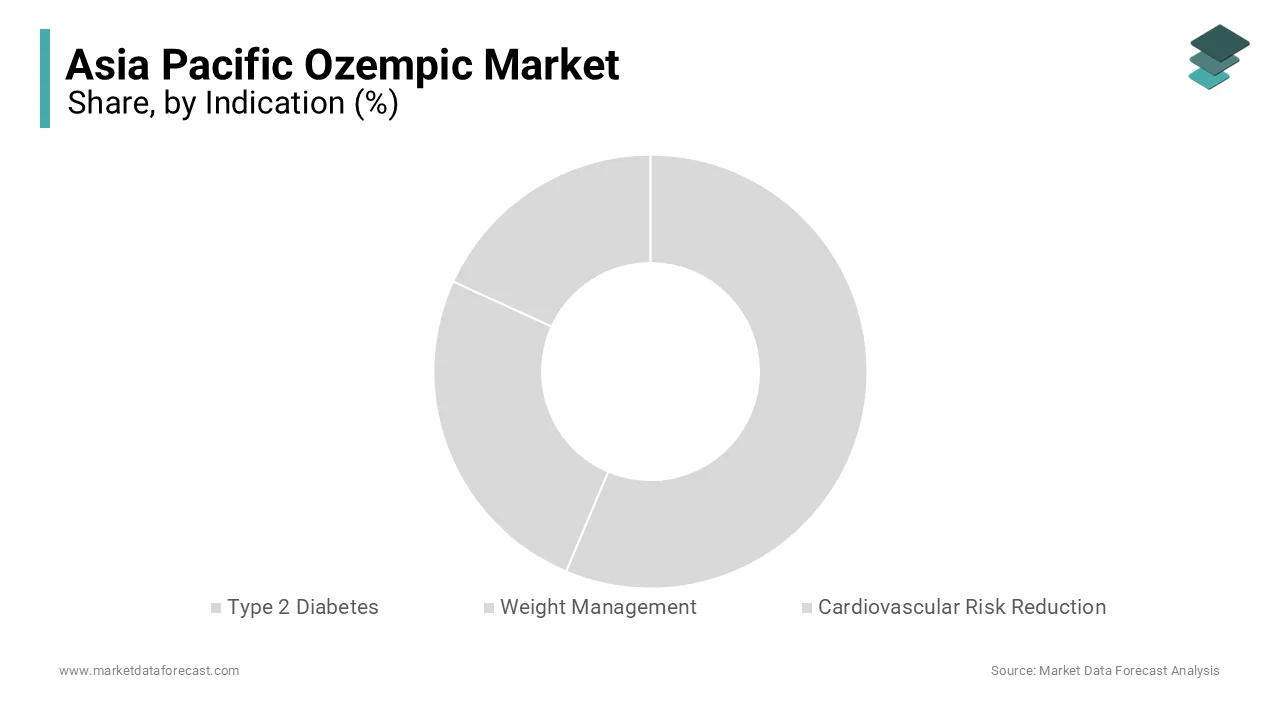
The cardiovascular risk reduction segment is on the rise and is expected to be the fastest growing segment in the market by witnessing a CAGR of 32.1% from 2026 to 2034 due to the extrapolation of global cardiovascular outcomes data into local clinical practice, particularly in advanced healthcare systems. Japanese, Australian, and South Korean physicians are adopting clinical guidelines to increase the use of Ozempic for secondary prevention in diabetic patients with established atherosclerotic disease, following trial data demonstrating a reduced risk of major adverse cardiovascular events. An increase in collaboration between cardiologists and endocrinologists in major East Asian cities is driving the early initiation of GLP-one receptor agonist therapy for secondary prevention in high-risk patients with type 2 diabetes. Furthermore, national cardiology societies in these countries have begun incorporating semaglutide into their consensus statements on metabolic risk management. The acceleration of evidence-based, off-label Ozempic usage, motivated by health systems’ focus on preventing costly cardiovascular events, is laying the foundation for future formal approval, making cardiovascular protection the leading growth vector in the APAC market.
By Route of Administration Insights
The injectable route segment led the APAC Ozempic market in 2025. It’s a reflection of both pharmacological necessity and regulatory status. Semaglutide, as a peptide, requires subcutaneous delivery to achieve therapeutic blood concentrations, and no oral formulation of Ozempic has been approved anywhere in the APAC region. Following its initial introduction in Japan, the pre-filled pen has established itself as a leading and preferred, rather than exclusive, method of delivery across key markets. Healthcare infrastructure in high income APAC nations has adapted to support this modality. For example, Japan’s universal nurse training programs include injection technique instruction, and Australia’s community pharmacies offer dedicated counseling for new users. A recent study of patient experiences across the Asia-Pacific region indicates that once familiar with the device, the majority of long-term users feel confident administering the medication themselves. This operational entrenchment, combined with the absence of any alternative delivery method under the Ozempic brand, ensures the injectable route’s absolute dominance for the foreseeable future in the region.
The oral route segment is expected to exhibit a noteworthy CAGR of 41.3% during the forecast period owing to Rybelsus, the oral semaglutide formulation approved in Japan South Korea and Australia, which serves as a critical proxy for future demand dynamics. Driven by convenience and cultural stigma regarding injections, urban type 2 diabetes patients across major Southeast Asian and South Asian nations demonstrate a strong preference for oral, non-injectable treatment options. Following its introduction, oral semaglutide is expanding its presence in the Japanese market, though injectable GLP-1 receptor agonists continue to lead in new treatment initiations. Similarly, the listing of oral semaglutide on the Australian PBS was accompanied by, and constrained by, severe supply shortages, triggering enhanced regulatory restrictions for initiating treatment. This trajectory signals immense pent up demand for needle free delivery, positioning oral formulations as the highest growth frontier and a potential strategic extension for the Ozempic franchise in the APAC region.
By Distribution Channel Insights
The hospital pharmacies segment held the majority share of 64.1% of the APAC Ozempic market in 2025. The supremacy of the segment is credited to the centralized nature of specialty medication access in many countries. In markets like Japan South Korea and China, biologics such as Ozempic are primarily dispensed through hospital outpatient pharmacies, especially during initiation, to ensure proper patient education, cold chain integrity, and monitoring for adverse events. In Japan’s universal health system, specialized institutions and major hospitals are key providers of Ozempic for diabetes management under national insurance, while also adhering to strict guidelines for obesity treatment. Similarly, in China’s tier one cities, public hospitals control the import and dispensing of high cost imported drugs, requiring patients to return for monthly refills. This model ensures clinical oversight but limits scalability. Even in Australia, where community access is broader, initial prescriptions are often written in hospital endocrinology clinics before transitioning to retail. The dominance of hospital pharmacies thus reflects the region’s cautious approach to managing complex, high cost injectables within tightly controlled institutional settings.
The online pharmacies segment is predicted to witness the highest CAGR of 38.7% from 2026 to 2034. The swift expansion of the segment is fueled by the rapid digitization of healthcare in tech advanced economies like South Korea Singapore and Australia, where telemedicine platforms and e prescription systems are now mainstream. Digital health providers offer seamless end to end services, from virtual consultations with licensed physicians to temperature controlled home delivery, addressing key barriers of convenience and access. In South Korea, where mobile health applications are widely used, government regulations have tightened around the online dispensing and delivery of medication, reversing earlier pandemic-era trends. Due to ongoing shortages, Australia's Therapeutic Goods Administration is actively restricting the supply chain and discouraging the compounded production of injectable weight loss drugs, prioritizing supplies for registered diabetes patients. This shift is particularly appealing for urban professionals and those seeking discreet access for weight related concerns, positioning online channels as the most dynamic and consumer centric growth vector in the APAC distribution landscape.
REGIONAL ANALYSIS
Japan Ozempic Market Analysis
Japan outperformed other countries in the APAC Ozempic market and accounted for a 32.8% share in 2025 by serving as the region’s regulatory and commercial anchor. Semaglutide maintains market leadership due to timely approval by the Pharmaceuticals and Medical Devices Agency, wide coverage under the national health insurance system with capped out-of-pocket expenses, and a high burden of type 2 diabetes within Japan’s rapidly aging demographic. A large and growing segment of the Japanese adult population lives with diabetes, and the need to manage comorbid cardiovascular risks, along with diabetes, has created strong clinical demand for therapeutic options that address both conditions simultaneously. The country’s universal healthcare infrastructure ensures broad access through designated diabetes specialty clinics, and physician familiarity with GLP one agonists is high. Research indicates that a significant number of Japanese patients are using semaglutide, with high adoption rates suggesting deep integration of the drug into standard care pathways for diabetes and obesity management under the national health system. Japan’s rigorous post marketing surveillance system also generates valuable real world safety data that influences regulatory decisions across the region, reinforcing its role as a strategic bellwether for APAC market development.
Australia Ozempic Market Analysis
Australia was the second largest country in the APAC Ozempic market and captured a 24.1% share in 2025. This growth is fuelled by its efficient Pharmaceutical Benefits Scheme and high standards of diabetes care. The Pharmaceutical Benefits Scheme approved subsidized access to semaglutide for people with type 2 diabetes, allowing it to be used alongside other glucose-lowering medications for those not achieving adequate control. Diabetes affects a large portion of the Australian population, with almost all of those diagnosed also experiencing significant additional cardiovascular risk factors. The country’s robust primary care network, supported by government funded diabetes education programs, facilitates appropriate prescribing and patient training. Research indicate high demand and substantial, sustained usage of semaglutide among patients with diabetes. Furthermore, Australia’s progressive regulatory stance on digital health has enabled the rise of integrated telehealth platforms that streamline access, making it a high performing and scalable model for other developed APAC markets.
South Korea Ozempic Market Analysis
South Korea is also a major player in the APAC Ozempic market due to rapid adoption of innovative therapies and a highly digitized healthcare ecosystem. The Ministry of Food and Drug Safety has approved Ozempic for, and the national health insurance system provides, regulated coverage of GLP-1 treatments for qualifying diabetes patients, encouraging usage among the general population. South Korea is experiencing a surge in diabetes prevalence, characterized by increasing obesity rates, with a significant rise in cases among the younger population. The country’s advanced telemedicine infrastructure and near universal smartphone penetration have enabled the proliferation of digital chronic disease management platforms that bundle Ozempic with virtual coaching and remote monitoring. The Korean Diabetes Association emphasizes an increasing adoption of advanced GLP-1 receptor agonist therapies for type 2 diabetes management in hospital settings. South Korea’s culture of early technology adoption and strong patient engagement make it a dynamic and influential market that often sets trends for neighboring countries in Northeast Asia.
China Ozempic Market Analysis
China is a lucrative region in the APAC Ozempic market and is the region’s highest potential growth engine despite recent entry. Novo Nordisk continues to leverage its established Tianjin manufacturing site to support the local production and increased accessibility of its diabetes treatments in the Chinese market. China has the largest population of adults living with diabetes, representing a vast, growing patient population for healthcare interventions. Initial access is concentrated in tier one cities like Beijing Shanghai and Guangzhou, where affluent patients and specialized endocrinology centers drive early adoption. Novo Nordisk is experiencing strong growth in China, with increasing patient reach and high clinician engagement for its innovative diabetes and GLP-1 products. Provincial negotiations for inclusion in regional reimbursement drug lists are underway, with Guangdong and Zhejiang showing early commitment. Despite nationwide affordability hurdles, China remains a critical, central player in setting regulatory standards for other large emerging Asian markets due to its sheer scale.
Singapore Ozempic Market Analysis
Singapore expanded steadily in the APAC Ozempic market. It serves as a regional hub for clinical innovation and regulatory excellence. The Health Sciences Authority approved Ozempic for use in Singapore, and the drug is available through both public restructured hospitals and private clinics, with subsidies available under the Chronic Disease Management Programme. Singapore's diabetic prevalence has risen to a high percentage among adults, prompting a world-class healthcare system to emphasize preventive cardiology and precision medicine. The country’s role as a center for multinational clinical trials, hosting numerous APAC sites for the SUSTAIN program, has fostered deep physician expertise in GLP one therapy. In Singapore, semaglutide is a commonly prescribed injectable for adults with type 2 diabetes, often utilized for patients with cardiovascular risk factors. Furthermore, Singapore’s advanced digital health infrastructure and high health literacy enable seamless integration of Ozempic into comprehensive care models, making it a high value, high influence market that shapes best practices across Southeast Asia.
COMPETITIVE LANDSCAPE
The APAC Ozempic market is characterized by a complex interplay of regulatory fragmentation economic disparity and cultural preferences that shape a uniquely challenging competitive environment. Novo Nordisk maintains originator exclusivity but faces intensifying pressure from Eli Lilly whose tirzepatide offers superior glycemic and weight loss outcomes and is gaining rapid traction in approved markets like Japan and Australia. Competition also extends to non GLP one classes such as SGLT2 inhibitors which provide oral alternatives aligned with regional aversion to injections. A more profound threat emerges from domestic pharmaceutical companies in China and India developing low cost semaglutide biosimilars and novel analogs supported by government innovation policies. Persistent barriers including high out of pocket costs limited reimbursement and absence of approval in populous nations like India further constrain market potential. Consequently competition transcends molecule versus molecule rivalry encompassing regulatory strategy manufacturing localization digital integration pricing innovation and cultural adaptation within Asia Pacific’s diverse and rapidly evolving healthcare ecosystems.
KEY MARKET PLAYERS
Some of the notable key players in the Asia Pacific Ozempic market are
- Novo Nordisk A/S
- Eli Lilly and Company
- Sanofi
- Bristol-Myers Squibb
- Pfizer Inc.
- Merck & Co., Inc.
- AstraZeneca
- Takeda Pharmaceutical Company Ltd.
- Sun Pharmaceutical Industries Ltd.
- Cipla Ltd.
Top Players in the Market
- Novo Nordisk is the sole originator and manufacturer of Ozempic in the APAC region, having secured approvals in key markets including Japan South Korea Australia Singapore and China. The company has played a pivotal role in establishing semaglutide as a standard of care through global clinical trials with significant APAC participation. The company has also launched digital health partnerships in South Korea and Australia, integrating Ozempic into telemedicine platforms that offer virtual consultations and adherence support. These initiatives reflect a strategic commitment to overcoming cost logistics and cultural barriers to expand access across diverse APAC healthcare systems.
- Eli Lilly and Company competes in the APAC metabolic health space through its dual GIP GLP one receptor agonist tirzepatide marketed as Mounjaro for type 2 diabetes. Although not a producer of Ozempic, Lilly exerts significant competitive pressure by demonstrating superior efficacy in head to head trials such as SURPASS two which included sites in Japan and South Korea. Eli Lilly has also expanded its biologics manufacturing capacity in Singapore and established regional distribution hubs to ensure reliable supply. By positioning tirzepatide as a more potent alternative, Lilly is reshaping treatment algorithms and challenging Ozempic’s clinical dominance across high income APAC markets.
- AstraZeneca influences the APAC Ozempic market through its SGLT2 inhibitor Farxiga, which competes in overlapping therapeutic areas including type 2 diabetes heart failure and chronic kidney disease. While not offering a GLP one agonist, AstraZeneca provides a non injectable oral alternative that appeals to patients and clinicians in regions with strong aversion to injections. The company has secured broad regulatory approvals for Farxiga across APAC and negotiated inclusion in national reimbursement lists in Japan Australia and South Korea. Recent real world evidence collaborations with academic institutions in Singapore and Melbourne have validated Farxiga’s long term cardio renal benefits, enabling it to capture a significant segment of patients who may otherwise be candidates for injectable therapies like Ozempic, thereby shaping competitive dynamics through therapeutic differentiation and route of administration preference.
Top Strategies Used by the Key Market Participants
Key players in the APAC Ozempic market employ several focused strategies to navigate the region’s complexity. They invest in local manufacturing to reduce costs and ensure supply chain resilience particularly in large markets like China. They pursue phased regulatory approvals starting with high income countries to generate early revenue and real world evidence. They form strategic partnerships with digital health platforms to overcome injection hesitancy and improve adherence through integrated care models. They conduct region specific health economics studies to support reimbursement negotiations with national payers. They engage in extensive physician education programs to build familiarity with GLP one therapy in primary care settings. They develop patient assistance programs to mitigate out of pocket costs in markets without full insurance coverage. They monitor and respond to emerging competition from domestic biosimilar developers through lifecycle management and next generation molecule development tailored to APAC patient profiles.
MARKET SEGMENTATION
This research report on the Asia Pacific ozempic market has been segmented and sub-segmented based on categories.
By Indication
- Type 2 Diabetes
- Weight Management
- Cardiovascular Risk Reduction
By Route of Administration
- Injectable
- Oral
By Distribution Channel
- Hospital Pharmacies
- Retail Pharmacies
- Online Pharmacies
By Patient Demographics
- Adults
- Elderly
- Pediatric
By Country
- UK
- France
- Spain
- Germany
- Italy
- Russia
- Sweden
- Denmark
- Switzerland
- Netherlands
- Turkey
- Czech Republic
- Rest of Europe
Frequently Asked Questions
1.What is the Asia Pacific Ozempic market?
The Asia Pacific Ozempic market refers to the commercial landscape covering the sales, distribution, and prescription use of Ozempic for type 2 diabetes management across countries in the region.
2.What is Ozempic and what is its active ingredient?
Ozempic is a brand name for semaglutide, a glucagon like peptide 1 receptor agonist used to improve blood glucose control in adults with type 2 diabetes.
3.What are the key growth drivers of the Asia Pacific Ozempic market?
Major growth drivers include the rising prevalence of type 2 diabetes, increasing obesity rates, expanding healthcare infrastructure, and growing adoption of advanced injectable therapies.
4.Which countries contribute significantly to the Asia Pacific Ozempic market?
China, Japan, India, South Korea, and Australia are major contributors due to large diabetic populations and improving access to innovative treatments.
5.What is the route of administration for Ozempic?
Ozempic is administered through a once weekly subcutaneous injection using a prefilled pen device.
6.How does Ozempic help in diabetes management?
It enhances insulin secretion in response to high blood glucose levels, reduces glucagon release, and slows gastric emptying, leading to improved glycemic control.
7.Is Ozempic used for weight management in the region?
Although primarily indicated for type 2 diabetes, Ozempic is associated with weight reduction, which supports demand among overweight and obese patients.
8.What distribution channels are used for Ozempic in Asia Pacific?
The product is distributed through hospital pharmacies, retail pharmacies, and regulated online pharmacy platforms depending on country specific regulations.
9.What challenges affect the Asia Pacific Ozempic market?
Key challenges include high treatment costs, reimbursement limitations, regulatory approval timelines, and competition from other antidiabetic drugs.
10.How do government healthcare policies influence market adoption?
National diabetes control programs, pricing regulations, and insurance reimbursement policies significantly influence product accessibility and uptake.
Access the study in MULTIPLE FORMATS
Purchase options starting from
$ 2000
Didn’t find what you’re looking for?
TALK TO OUR ANALYST TEAM
Need something within your budget?
NO WORRIES! WE GOT YOU COVERED!
Call us on: +1 888 702 9696 (U.S Toll Free)
Write to us: sales@marketdataforecast.com