Global Blueberry Market Size, Share, Trends & Growth Forecast Report By Product (Fresh, Frozen, Dried, Juice Concentrate and Puree), Application (Direct-to-eat, Blueberry Products and Others), By End-User (Food and beverages, Bakery and confectionary, Nutraceutical and Dietary Supplements and Others) and Region (North America, Europe, Asia Pacific, Latin America, and Middle East & Africa) - Industry Analysis (2026 to 2034)
Global Blueberry Market Size
The global blueberry market size was valued at USD 3.08 billion in 2025. The global market is anticipated to be worth USD 6.04 billion by 2034 from USD 3.32 billion in 2026, growing at a CAGR of 7.77% from 2026 to 2034.

Blueberries are Vaccinium corymbosum and related species valued for their nutritional density and culinary versatility. These berries are recognized as a superfood due to their high concentration of antioxidants, particularly anthocyanins, which contribute to various health benefits. The market includes fresh fruit, frozen products, and processed derivatives such as juices, powders, and extracts. As per the Food and Agriculture Organization of the United Nations, global production of blueberries has expanded significantly, and estimated global output crossed 2.0 million tons in 2024 as new plantings matured. According to the United States Department of Agriculture, the per capita consumption of blueberries in the United States stood at 3.05 pounds per person in 2023, which reflects a broader consumer shift towards functional foods. The World Health Organization emphasizes the role of diet in preventing noncommunicable diseases, noting that regular intake of fruits rich in antioxidants can reduce the risk of chronic conditions. This health consciousness drives demand across diverse demographics. Furthermore, the expansion of retail channels, including e-commerce platforms, has enhanced accessibility, allowing consumers to purchase high-quality berries year-round. The industry is characterized by seasonal variations in supply, necessitating robust cold chain logistics to maintain freshness and extend shelf life. Innovations in agricultural practices such as substrate culture and protected cropping have enabled production in non-traditional climates, thereby stabilizing supply chains. The convergence of health trends, technological advancements in farming, and improved distribution networks defines the current landscape of the blueberry market.
MARKET DRIVERS
Rising Consumer Awareness of Health Benefits and Antioxidant Properties
The escalating consumer awareness regarding the health benefits of blueberries, particularly their high antioxidant content, is one of the major factors propelling the growth of the global blueberry market. Blueberries are renowned for their ability to combat oxidative stress and inflammation, which are linked to aging and chronic diseases. As per the Harvard T.H. Chan School of Public Health, regular consumption of berries is associated with improved cognitive function and reduced risk of cardiovascular diseases. This scientific validation has propelled blueberries into the mainstream wellness narrative, influencing purchasing decisions across age groups. In Europe, the European Food Safety Authority has approved health claims related to the protective effects of polyphenols in berries against oxidative damage, further legitimizing their status as functional foods. According to the Global Nutrition Report, the prevalence of lifestyle-related diseases such as diabetes and obesity is rising globally, prompting individuals to seek preventive dietary solutions. Blueberries offer a low glycemic index option that satisfies sweet cravings without spiking blood sugar levels, making them ideal for health-conscious consumers. The integration of blueberries into daily diets through smoothies, breakfast bowls, and snacks has become a widespread trend supported by social media and nutritional influencers. Retailers respond to this demand by prominently featuring blueberries in health-focused marketing campaigns. The alignment of scientific evidence with consumer behavior creates a sustained demand trajectory. As individuals prioritize longevity and vitality, the perceived value of blueberries as a nutrient-dense food source continues to drive market expansion globally.
Expansion of Retail Channels and E-Commerce Platforms
The rapid expansion of retail channels and the proliferation of e-commerce platforms significantly propel the blueberry market by enhancing product accessibility and convenience. Traditional brick-and-mortar supermarkets remain dominant, but online grocery shopping has emerged as a critical growth vector, especially following shifts in consumer behavior during recent global health crises. As per the United Nations Conference on Trade and Development, e-commerce sales of food and beverages have grown substantially, with consumers increasingly relying on digital platforms for fresh produce procurement. Major retailers such as Amazon Fresh and Instacart have optimized their cold chain logistics to ensure the delivery of high-quality perishable items, including blueberries. According to the International Trade Centre, the availability of year-round supplies from counter-seasonal producers in the Southern Hemisphere allows online retailers to offer consistent stock levels. This reliability builds consumer trust and encourages repeat purchases. Additionally, direct-to-consumer models adopted by specialized berry farms enable customers to buy premium organic varieties directly from growers, often at competitive prices. The use of advanced packaging technologies, such as modified atmosphere packaging, extends shelf life during transit, reducing spoilage rates. Mobile applications and subscription services further simplify the buying process, offering personalized recommendations and automated replenishment. The seamless integration of digital convenience with fresh food delivery transforms the consumer experience. As internet penetration increases in emerging markets, the potential for online blueberry sales expands. This digital transformation broadens the customer base and drives volume growth in the blueberry market.
MARKET RESTRAINTS
High Perishability and Supply Chain Vulnerabilities
The inherent high perishability of blueberries and vulnerabilities within the supply chain are primarily hampering the blueberry market growth worldwide. Blueberries are delicate fruits with a short shelf life requiring precise temperature control and careful handling from farm to fork, and any deviation can lead to rapid spoilage and quality degradation. As per the Food and Agriculture Organization of the United Nations, post-harvest losses for fresh fruits and vegetables reach up to 50% in regions such as Sub-Saharan Africa due to inadequate infrastructure. Even in developed markets, maintaining an unbroken cold chain is logistically complex and costly. According to the International Institute of Refrigeration, energy-intensive refrigeration systems are essential to preserve the firmness and flavor of blueberries during long-distance transport. Disruptions in logistics, such as port delays or transportation strikes, can result in significant financial losses for producers and retailers. The reliance on air freight for exporting fresh berries from countries like Peru and Chile to North America and Europe increases the carbon footprint and cost, further constraining margins. Temperature fluctuations during the last mile delivery, particularly in e-commerce transactions, pose additional risks to product integrity. Consumers are increasingly sensitive to quality issues such as mold or softness, leading to returns and brand dissatisfaction. The need for specialized packaging materials adds to the overall cost structure. These logistical challenges limit the geographic reach of fresh blueberries and necessitate heavy investment in infrastructure. Until supply chain resilience is enhanced through technology and infrastructure improvements, perishability will remain a critical bottleneck restricting market potential.
Labor Shortages and Rising Production Costs
Acute labor shortages and escalating production costs present substantial barriers to the scalability of the blueberry market. Blueberry harvesting is traditionally labor-intensive, requiring skilled workers to pick the fruit gently to avoid damage. As per the International Labour Organization, agricultural sectors in many major producing countries face chronic labor deficits due to demographic shifts and migration patterns. In the United States, the Department of Labor reports that the agricultural workforce is aging and shrinking, making it difficult for farmers to secure sufficient seasonal labor. This scarcity drives up wage rates, increasing the overall cost of production. Similarly, in Europe, the European Commission highlights that labor shortages in the horticultural sector affect berry production in countries like Poland and Spain. The rising cost of inputs such as fertilizers, pesticides, and energy further squeezes profit margins. According to the World Bank, global fertilizer prices have experienced significant volatility, impacting the affordability of essential nutrients for crop growth. Mechanization offers a potential solution, but existing harvesting machines often lack the precision required for fresh market berries, leading to higher rejection rates. The transition to automated systems requires substantial capital investment, which is prohibitive for small and medium-sized growers. These economic pressures force some producers to reduce acreage or exit the market altogether. The combination of labor constraints and input cost inflation undermines the economic viability of blueberry farming, limiting supply growth and driving up consumer prices.
MARKET OPPORTUNITIES
Development of Value-Added Products and Functional Ingredients
The development of value-added products and the incorporation of blueberries as functional ingredients in various industries present lucrative opportunities for market expansion. Beyond fresh consumption, blueberries are increasingly processed into juices, jams, dried snacks, powders, and extracts, which offer longer shelf lives and diverse application possibilities. As per industry trends, the global market for fruit-based functional ingredients is growing, driven by demand from the nutraceutical and cosmetic sectors. Blueberry extracts rich in anthocyanins are utilized in dietary supplements for eye health and cognitive support. According to the National Institutes of Health, ongoing research supports the efficacy of blueberry compounds in managing metabolic syndrome, creating opportunities for targeted health products. The beverage industry is innovating with blueberry-infused waters, teas, and alcoholic beverages, catering to health-conscious consumers seeking natural flavors. In the cosmetic sector, blueberry oil is valued for its anti-aging properties, leading to its inclusion in skincare formulations. The convenience of freeze-dried blueberries appeals to busy consumers looking for nutritious on-the-go snacks. Manufacturers are also exploring plant-based meat alternatives where blueberry extracts serve as natural colorants and preservatives. These diversified applications reduce dependency on the fresh fruit market and mitigate risks associated with perishability. By tapping into these adjacent markets, producers can capture higher value segments. The versatility of blueberries allows for innovation in product formats appealing to varied consumer preferences. This strategic diversification enhances revenue streams and strengthens market resilience.
Adoption of Advanced Agricultural Technologies and Protected Cropping
The adoption of advanced agricultural technologies and protected cropping systems offers significant opportunities for the blueberry market. Traditional open field farming is susceptible to weather extremes and pests, but controlled environment agriculture provides stable growing conditions. As per the Association for Controlled Environment Agriculture, the use of greenhouses and high tunnels allows for extended growing seasons and improved yield consistency. Substrate culture using soilless media such as coconut coir enables precise nutrient management and reduces water usage. According to the International Water Management Institute, drip irrigation systems integrated with sensor technology optimize water efficiency, which is crucial in arid regions. The implementation of Internet of Things devices allows real-time monitoring of soil moisture, temperature, and humidity, facilitating data-driven decision-making. Genetic advancements have led to the development of new blueberry varieties with larger sizes, firmer textures, and longer shelf lives suitable for mechanical harvesting. In China, the Ministry of Agriculture and Rural Affairs promotes modern agricultural practices to boost high-value crop production, leading to increased investment in blueberry tech parks. Automated pruning and harvesting robots are being tested to address labor shortages and improve operational efficiency. These technological interventions reduce dependency on manual labor and minimize environmental impact. By embracing innovation, growers can achieve higher productivity and superior fruit quality. This modernization of farming practices ensures a sustainable supply and meets the evolving standards of global markets.
MARKET CHALLENGES
Climate Change and Environmental Volatility
Climate change and environmental volatility are majorly challenging the global blueberry market expansion. Blueberry plants require specific chilling hours during winter to break dormancy and produce fruit, making them highly sensitive to temperature fluctuations. As per the Intergovernmental Panel on Climate Change, rising global temperatures are altering weather patterns, leading to insufficient chilling hours in traditional growing regions. This phenomenon results in delayed flowering, reduced yields, and inconsistent fruit quality. In California, the University of California Agriculture and Natural Resources reports that warmer winters have negatively impacted blueberry production, forcing growers to adapt with low chill varieties. Extreme weather events such as hailstorms, droughts, and floods further threaten crops, causing physical damage and soil erosion. According to the World Meteorological Organization, the frequency of extreme weather events has increased, disrupting agricultural cycles globally. Water scarcity is another critical issue, as blueberries have shallow root systems requiring consistent moisture. Drought conditions in key producing areas like Chile and Spain strain water resources, leading to regulatory restrictions on irrigation. Pests and diseases thrive in changing climatic conditions, requiring increased use of pesticides, which raises production costs and environmental concerns. The unpredictability of the weather makes long-term planning difficult for farmers. Adapting to these changes requires significant investment in resilient infrastructure and new cultivars. The threat of climate-induced supply shocks remains a persistent challenge impacting market stability and pricing.
Stringent Regulatory Standards and Compliance Requirements
Stringent regulatory standards and compliance requirements regarding food safety and environmental sustainability are further challenging the growth of the global blueberry market. Different markets have varying maximum residue limits for pesticides and strict guidelines for labeling and packaging. As per the European Food Safety Authority, imports of blueberries into the European Union must comply with rigorous safety checks to ensure they are free from harmful contaminants. Non-compliance can lead to shipment rejections and financial penalties, damaging brand reputation. In the United States, the Food and Drug Administration enforces the Food Safety Modernization Act, which mandates comprehensive preventive controls for fresh produce. According to the United States Department of Agriculture, exporters must adhere to specific phytosanitary certificates to prevent the spread of pests. The complexity of navigating multiple regulatory frameworks increases administrative burdens and costs for international traders. Additionally, growing consumer demand for organic and sustainably certified products requires producers to undergo costly certification processes. The GlobalG.A.P. standard is widely recognized, but achieving compliance involves significant investment in training and infrastructure. Smallholders often struggle to meet these standards, limiting their access to premium markets. Traceability requirements are becoming more stringent, demanding transparent supply chains from farm to retail. Failure to provide adequate documentation can result in loss of market access. The dynamic nature of regulations requires continuous monitoring and adaptation. These compliance hurdles create barriers to entry and increase operational complexity for market participants.
REPORT COVERAGE
| REPORT METRIC | DETAILS |
| Market Size Available | 2025 to 2034 |
| Base Year | 2025 |
| Forecast Period | 2026 to 2034 |
| CAGR | 7.77% |
| Segments Covered | By Product, Application, End User, and Region |
| Various Analyses Covered | Global, Regional & Country Level Analysis, Segment-Level Analysis, DROC, PESTLE Analysis, Porter’s Five Forces Analysis, Competitive Landscape, Analyst Overview of Investment Opportunities |
| Regions Covered | North America, Europe, APAC, Latin America, Middle East & Africa |
| Market Leaders Profiled | FutureCeuticals, Nestle S.A, Berrico, Kellogg Company, Nutra Green Biotechnology Co., Ltd, Arctic bilberry, JF Natural, Bio-Botanica Inc., Michigan blueberry growers, Dole plc, Agrana Beteiligungs AG, Hortifrut, Blueberry LLC, Naturipe Berry Growers, and Sensient Technologies |
SEGMENTAL ANALYSIS
By Product Insights
The fresh blueberries segment was the dominating segment in the global market in 2025 and accounted for 58.8% of the global market share. The leading position of the fresh blueberries segment in the global market is primarily driven by consumer preference for whole fruits and the perception of freshness as a marker of nutritional value. The strong consumer preference for whole, unprocessed fruits that are perceived to retain maximum nutritional integrity is further contributing to the rapid expansion of the fresh blueberries segment in the global market. Consumers increasingly associate fresh produce with higher levels of vitamins, minerals, and antioxidants compared to processed alternatives. As per the United States Department of Agriculture Economic Research Service, fresh fruit consumption has remained robust, with blueberries ranking among the most consumed fruits in the United States. The visual appeal and texture of fresh berries make them a popular choice for immediate consumption, snacking, and culinary garnishes. In Europe, the European Commission’s promotion of healthy eating habits through initiatives like the School Fruit Scheme has reinforced the demand for fresh berries. According to the World Health Organization, consuming more than 400 grams of fruits and vegetables per day is suggested to improve overall health, which drives households to purchase fresh options that require minimal preparation. Fresh blueberries are often marketed as a convenient, ready-to-eat snack that fits seamlessly into busy lifestyles. The availability of high-quality fresh berries in supermarkets throughout the year, due to counter-seasonal sourcing from the Southern Hemisphere, ensures a consistent supply. Retailers prioritize fresh displays to attract health-conscious shoppers who are willing to pay a premium for firm, sweet, and visually appealing berries. This sustained demand for raw agricultural produce solidifies the leading market position of fresh blueberries.
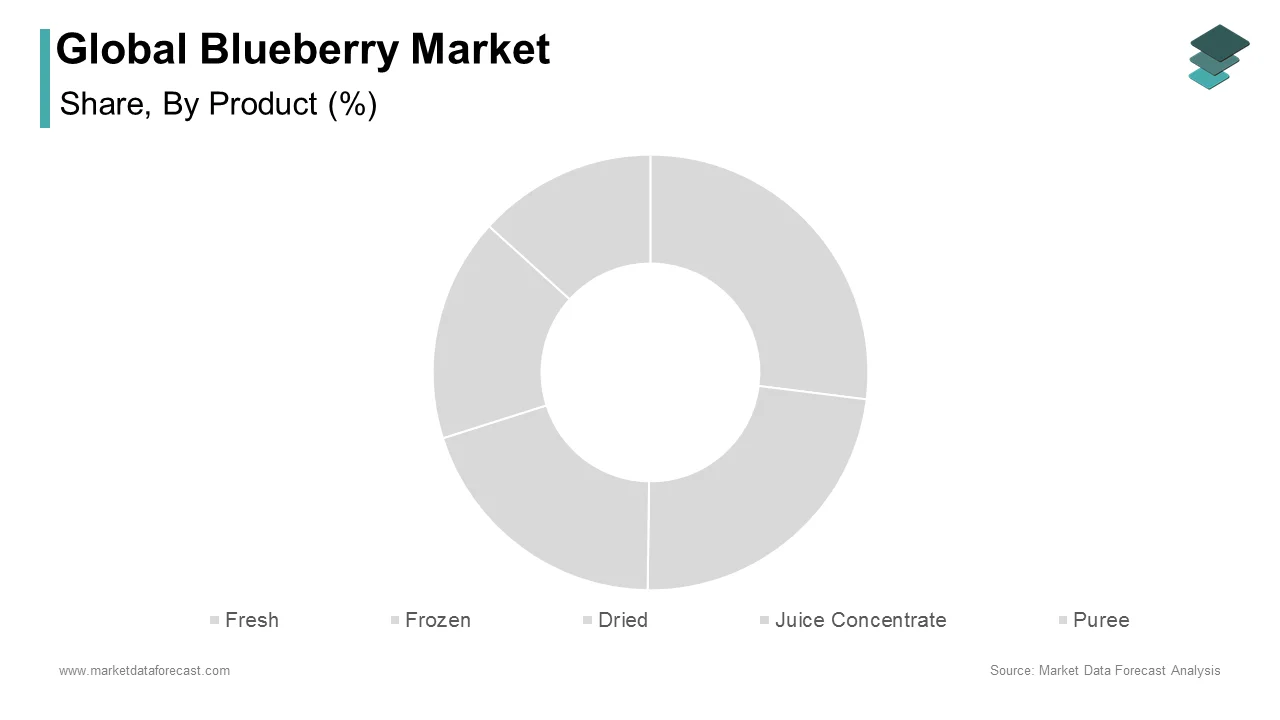
However, the frozen blueberries segment is estimated to register a CAGR of 7.2% over the forecast period in the global market, owing to the rising demand for convenience and year-round availability. The increasing demand for convenience and the need for year-round availability of blueberries are further propelling the rapid growth of the frozen segment. Frozen blueberries offer consumers the ability to enjoy the fruit regardless of seasonal constraints, providing a consistent supply when fresh berries are scarce or expensive. As per the American Frozen Food Institute, frozen fruits are recognized for their convenience and nutritional retention as they are typically harvested at peak ripeness and flash frozen. This process locks in nutrients, making frozen blueberries a viable alternative to fresh ones for health-conscious consumers. In North America, the busy lifestyles of working families drive the preference for ready-to-use ingredients that reduce preparation time. According to industry data, sales of frozen fruits have grown as consumers incorporate them into smoothies, baking, and oatmeal without the need for washing or chopping. The versatility of frozen blueberries allows them to be used in various culinary applications, including desserts, sauces, and beverages. Retailers benefit from the longer shelf life of frozen products, which reduces inventory waste and allows for bulk purchasing. The affordability of frozen blueberries compared to out-of-season fresh berries also appeals to budget-conscious shoppers. As consumers seek efficient and nutritious food solutions, the frozen segment continues to expand rapidly, capturing a larger share of the market.
By Application Insights
The direct-to-eat segment accounted for the highest share of 54.5% of the global market in 2025 due to the rising trend of healthy snacking and the convenience of consuming fresh berries. The global shift towards healthy snacking and lifestyle choices that prioritize natural and nutrient-dense foods is further boosting the dominance of the direct-to-eat segment in the worldwide blueberry market. Consumers are increasingly replacing processed snacks with fresh fruits to manage weight and improve overall health. As per the Nielsen Global Health and Wellness Survey, a significant majority of consumers actively seek out snacks that offer nutritional benefits such as high fiber and antioxidant content. Blueberries fit this criterion perfectly, offering a low-calorie sweet option that satisfies cravings without guilt. In North America, the prevalence of health-conscious diets such as keto, paleo, and vegan has boosted the consumption of fresh berries as staple snack items. According to the International Food Information Council Foundation, consumers are reading labels more carefully and preferring whole foods with minimal processing. The portability of blueberries makes them an ideal snack for school lunches, office breaks, and post-workout recovery. Retailers capitalize on this trend by placing fresh berries in prominent locations and offering single-serve packs for on-the-go consumption. The social media influence promoting healthy lifestyles further reinforces the habit of snacking on fresh fruits. As awareness of the link between diet and well-being grows, the direct consumption of blueberries remains the primary application driving market volume.
On the other hand, the blueberry products segment is expected to be the fastest-growing application segment in the blueberry market and record a CAGR of 8.2% over the forecast period, owing to product innovation and diversification. The continuous innovation in value-added food and beverage products is also fuelling the blueberry products segment in the global market. Manufacturers are developing a wide array of items such as blueberry-infused waters, yogurts, cereals, and confectionery to cater to diverse consumer tastes. As per industry trends, the launch of new products featuring blueberries as a key ingredient has increased significantly, reflecting industry efforts to capitalize on the fruit’s popularity. Blueberry purees and concentrates are used as natural colorants and flavorings in various processed foods appealing to consumers seeking clean label options. In Europe, the demand for artisanal jams and preserves made with real fruit pieces has risen, driving growth in the specialty food sector. According to the European Federation of Food, Drink and Tobacco Industries, the trend towards premiumization encourages manufacturers to use high-quality blueberry extracts in gourmet products. The beverage industry is also innovating with blueberry-flavored teas, alcoholic beverages, and functional drinks that promise health benefits. These products offer convenience and variety, attracting consumers who may not regularly purchase fresh fruit. The ability to incorporate blueberries into everyday items expands their reach beyond the fresh produce aisle. As companies continue to experiment with new formulations and flavors, the Blueberry Products segment experiences robust growth driven by constant innovation and consumer curiosity.
By End-User Insights
The food and beverages segment dominated the market with 64.1% of the global market share in 2025. This dominance is attributed to the widespread use of blueberries in culinary applications and beverages. The widespread culinary usage of blueberries in both home cooking and commercial food preparation is further contributing to the expansion of the food and beverages segment in the worldwide market. Blueberries are a versatile ingredient used in breakfast items, desserts, salads, and savory dishes. As per the National Restaurant Association, blueberries are a popular menu item in restaurants and cafes, appearing in pancakes, waffles, muffins, and smoothies. The beverage industry extensively uses blueberries for juices, smoothies, teas, and alcoholic drinks such as wines and craft beers. In North America, the tradition of using blueberries in baked goods ensures consistent demand from bakeries and food manufacturers. According to the American Bakers Association, the inclusion of fruits in baked products has grown as consumers seek healthier indulgence options. Commercial food processors utilize blueberry purees and concentrates to create consistent flavors in large-scale production. The adaptability of blueberries to various cooking methods and flavor profiles makes them a staple ingredient. Retail sales of blueberry-flavored products, such as yogurts and cereal,s also contribute to this segment’s dominance. The integration of blueberries into everyday food and drink items ensures high volume consumption. As culinary trends evolve, the continued use of blueberries in innovative recipes sustains the leading position of the end-user segment.
However, the nutraceutical and dietary supplements segment is estimated to witness a CAGR of 9.12% over the forecast period in the global market, owing to the rising demand for preventive healthcare and functional ingredients. The increasing focus on preventive healthcare and wellness is further boosting the rapid growth of the nutraceutical and dietary supplements segment. Consumers are proactively seeking supplements that support long-term health and prevent chronic diseases. As per the Council for Responsible Nutrition, roughly 75% of Americans continue to use dietary supplements, demonstrating the ongoing role supplements play in supporting health and wellness. Blueberry extracts rich in anthocyanins are marketed for their benefits to eye health, memory, and cardiovascular function. In Europe, the aging population drives demand for cognitive support supplements containing blueberry compounds. According to the European Federation of Pharmaceutical Industries and Associations, the market for botanical supplements is expanding as consumers prefer natural alternatives to synthetic drugs. The scientific backing for blueberry health claims enhances consumer confidence and encourages regular usage. Online platforms and health stores make these supplements easily accessible to a global audience. The trend towards personalized nutrition also leads to the development of targeted blueberry-based formulations. As health consciousness rises, the willingness to invest in preventive supplements grows. This shift in consumer behavior towards proactive health management fuels the rapid expansion of the nutraceutical segment.
REGIONAL ANALYSIS
North America Blueberry Market Analysis
North America dominated the market by capturing 38.8% of the worldwide market share in 2025. The North American market is characterized by high production volumes and mature consumption patterns. The driving factors include established agricultural infrastructure and strong consumer awareness of health benefits. As per the United States Department of Agriculture, the United States is one of the world’s largest producers of blueberries, and produced approximately 333,660 tons in 2023, with significant acreage in states like Washington, Oregon, and Georgia. Canada also contributes significantly to regional production, particularly in British Columbia and Quebec. According to the Harvard T.H. Chan School of Public Health, the high prevalence of health-conscious consumers in North America drives steady demand for fresh and frozen berries. The presence of major retail chains and robust cold chain logistics ensures wide availability. The region benefits from advanced farming technologies, including mechanized harvesting and substrate culture, which enhance yield and quality. Government support for agricultural research and development further boosts productivity. The well-established dietary guidelines promoting fruit consumption reinforce market stability. North America serves as a key export hub supplying berries to other regions during the off-season. The mature market focuses on value addition and product innovation to sustain growth. The strong domestic demand, coupled with export capabilities, positions North America as the dominant force in the global blueberry landscape.
Europe Blueberry Market Analysis
Europe captured the second biggest share of the global blueberry market in 2025. The European market is defined by growing production in Eastern Europe and high import demand in Western Europe. The primary driving factors are the increasing popularity of superfoods and supportive government health initiatives. As per the European Commission, the consumption of berries has risen due to promotional campaigns encouraging healthy eating habits. Poland, Spain, and Germany are major producers within the region, contributing to local supply. According to the Freshfel Europe association, imports from South America and North Africa complement domestic production, ensuring year-round availability. The European Food Safety Authority’s approval of health claims related to polyphenols boosts consumer confidence. The trend towards organic farming is gaining traction with many growers adopting sustainable practices. Retailers in Western Europe prioritize high-quality and certified produce, driving premium pricing. The diverse culinary traditions across European countries incorporate blueberries in various dishes, from desserts to savory sauces. The aging population in countries like Italy and France increases demand for cognitive health supplements containing blueberry extracts. The well-developed distribution network facilitates efficient movement of goods across borders. Europe’s focus on quality, sustainability, and health drives steady market growth.
Asia Pacific Blueberry Market Analysis
Asia Pacific is anticipated to be a rapidly emerging market in the global blueberry market and record the highest CAGR among all the regions in the global market during the forecast period, owing to the expanding production in China and rising consumption in urban centers. The key driving factors are the growing middle class and increasing health awareness. As per the Chinese Ministry of Agriculture and Rural Affairs, the blueberry cultivation area in China has expanded significantly, and produced approximately 563,000 tons in 2023. The rising disposable income in countries like India and Southeast Asian nations enables consumers to purchase premium fruits. According to the Asian Development Bank, urbanization and lifestyle changes are shifting dietary preferences towards Western fruits. The e-commerce boom in the region facilitates access to fresh produce in remote areas. Local governments are investing in agricultural technology to improve yield and quality. The demand for imported blueberries from Chile and Peru remains strong during the off-season. Health trends promoted by social media influencers drive youth consumption. The lack of local production in some countries creates reliance on imports, offering opportunities for exporters. The region’s large population base offers immense growth potential. As infrastructure improves and health consciousness spreads, the Asia Pacific is poised to become a critical growth engine for the global blueberry market.
COMPETITION OVERVIEW
The competition in the Blueberry Market is intense and characterized by a mix of large integrated agribusinesses and numerous independent growers. Leading multinational corporations leverage their proprietary genetics, extensive distribution networks, and brand recognition to maintain dominance. However, regional producers in countries like Chile, Peru, and Poland are gaining traction by offering cost-effective alternatives and exploiting counter-seasonal advantages. The market witnesses frequent entry of new varieties designed to improve taste, size,e and shelf life, driving continuous innovation. Price competition is evident in commodity segments, while differentiation through quality and sustainability dominates the premium sector. Strategic alliances with retailers and food manufacturers help secure long-term contracts and stable revenue streams. Regulatory compliance regarding food safety and labor standards serves as a barrier to entry for smaller players. The shift towards organic and sustainably grown berries creates niche opportunities for specialized producers. Climate change impacts add volatility, prompting investments in resilient farming technologies. This dynamic environment fosters continuous improvement in agricultural practices and supply chain efficiency across the globe.
KEY MARKET PLAYERS
A few major players of the global blueberry market include
- FutureCeuticals
- Nestle S.A
- Berrico
- Kellogg company
- Nutra Green Biotechnology Co., Ltd
- Arctic bilberry
- JF Natural
- Bio-Botanica Inc
- Michigan blueberry growers
- Dole plc
- AgranaBeteiligungs-AGG
- Hortifrut
- Blueberry LLC
- Naturipe Berry Growers
- Sensient Technologies
Top Strategies Used by the Key Market Participants
Key players in the Blueberry Market primarily employ strategies such as genetic innovation and proprietary variety development to enhance fruit quality and shelf life. Companies frequently expand their geographic footprint by establishing farms in counter-seasonal regions to ensure a year-round supply. Investment in protected cropping technologies helps mitigate climate risks and improve yield consistency. Strategic partnerships with retailers and distributors optimize supply chain efficiency and market access. Sustainability initiatives, including water conservation and organic farming practices, are increasingly adopted to meet consumer expectations. Branding efforts focus on differentiating premium products through quality certifications and marketing campaigns. These multifaceted approaches enable companies to strengthen their competitive positions and address the evolving demands of global consumers effectively while ensuring long-term business resilience.
Leading Players in the Market
- Driscolls Inc is a leading global supplier of fresh berries with a dominant presence in the blueberry market. The company contributes to the global market by maintaining strict quality standards and innovative breeding programs that enhance fruit flavor and shelf life. Recent actions include expanding its proprietary variety portfolio through strategic partnerships with independent growers in North America and Europe. Driscolls invests heavily in sustainable farming practices and water conservation technologies to ensure long-term supply chain resilience. The company also focuses on direct relationships with retailers to optimize distribution efficiency and reduce waste. By prioritizing consumer taste preferences and environmental stewardship, Driscolls strengthens its brand loyalty. Its commitment to innovation and quality assurance ensures a consistent premium product offering. These efforts reinforce its position as a trusted leader in the global berry industry without relying on specific market share metrics.
- Hortifrut SA is a major producer and exporter of blueberries based in Chile with significant influence in the global market. The company plays a crucial role in supplying counter-seasonal blueberries to Northern Hemisphere markets during the winter months. Recent strategies involve expanding cultivation areas in Peru and Argentina to diversify production risks and extend the harvest window. Hortifrut invests in advanced post-harvest technologies to maintain fruit firmness and freshness during long-distance transportation. The company actively promotes its NaturBlue brand to differentiate its premium quality products in international retail channels. Hortifrut also engages in sustainability initiatives such as carbon footprint reduction and responsible water management. By leveraging its geographic advantage and technological expertise, Hortifrut ensures a reliable supply to key markets. Its focus on quality and sustainability enhances its reputation among global buyers. These strategic moves solidify its standing as a key player in the international blueberry trade.
- Costa Group Holdings Limited is a prominent Australian agribusiness with a growing footprint in the global blueberry market. The company contributes to the market through its extensive domestic production and export capabilities to Asia and the Middle East. Recent actions include acquiring additional farmland and implementing protected cropping systems to improve yield consistency and fruit quality. Costa Group invests in proprietary genetics to develop varieties suited to subtropical climates, extending the growing season. The company focuses on vertical integration, controlling everything from breeding to packaging and distribution. This approach allows for greater quality control and operational efficiency. Costa Group also emphasizes sustainable agriculture practices to meet increasing consumer demand for environmentally responsible products. By expanding its international reach and enhancing production capabilities, Costa Group strengthens its competitive position. Its commitment to innovation and sustainability drives growth in the dynamic global blueberry sector.
MARKET SEGMENTATION
This research report on the global blueberry market has been segmented and sub-segmented based on product, application, end-user, and region.
By Product
- Fresh
- Frozen
- Dried
- Juice Concentrate
- Puree
By Application
- Direct-to-eat
- Blueberry Products
- Others
By End-User
- Food and beverages
- Bakery and confectionery
- Nutraceutical and Dietary Supplements
- Others
By Region
- North America
- Europe
- Asia-Pacific
- Latin America
- Middle East and Africa
Frequently Asked Questions
1. What is the current outlook of the blueberry market?
The blueberry market is experiencing steady growth due to rising demand for healthy, antioxidant-rich fruits worldwide.
2. What factors are driving blueberry market growth?
Key drivers include increasing health awareness, growing consumption of functional foods, and expanding use in processed food products.
3. Which region dominates the global blueberry market?
North America leads the market due to high production volumes, strong consumer demand, and advanced farming practices.
4. What are the major applications of blueberries?
Blueberries are widely used in fresh consumption, bakery products, dairy items, beverages, and dietary supplements.
5. Why are blueberries considered a superfood?
Blueberries are rich in antioxidants, vitamins, and fiber, supporting heart health, immunity, and brain function.
6. What challenges does the blueberry market face?
Challenges include high production costs, climate dependency, labor shortages, and post-harvest spoilage issues.
7. How does organic blueberry demand impact the market?
Rising preference for organic fruits is boosting demand and encouraging farmers to adopt organic cultivation practices.
8. What role does frozen blueberries play in the market?
Frozen blueberries are gaining popularity due to their longer shelf life and increased use in smoothies and processed foods.
9. How is technology influencing blueberry cultivation?
Advanced irrigation systems, precision farming, and improved cold storage are enhancing yield and quality.
10. What is the impact of export demand on the blueberry market?
Growing international trade is expanding market opportunities, especially for countries with off-season production.
Related Reports
Access the study in MULTIPLE FORMATS
Purchase options starting from
$ 2500
Didn’t find what you’re looking for?
TALK TO OUR ANALYST TEAM
Need something within your budget?
NO WORRIES! WE GOT YOU COVERED!
Call us on: +1 888 702 9696 (U.S Toll Free)
Write to us: sales@marketdataforecast.com