Europe Beach Market Size, Share, Trends & Growth Forecast Report By Service Type, By Traveler Type, and By Country (Spain, Italy, France, Greece, Turkey & Rest of Europe) – Industry Analysis and Forecast, 2026 to 2034
Europe Beach Market Size
The Europe beach market was valued at USD 76.49 billion in 2025, is estimated to reach USD 80.23 billion in 2026, and is projected to reach USD 117.54 billion by 2034, growing at a CAGR of 4.89% from 2026 to 2034.
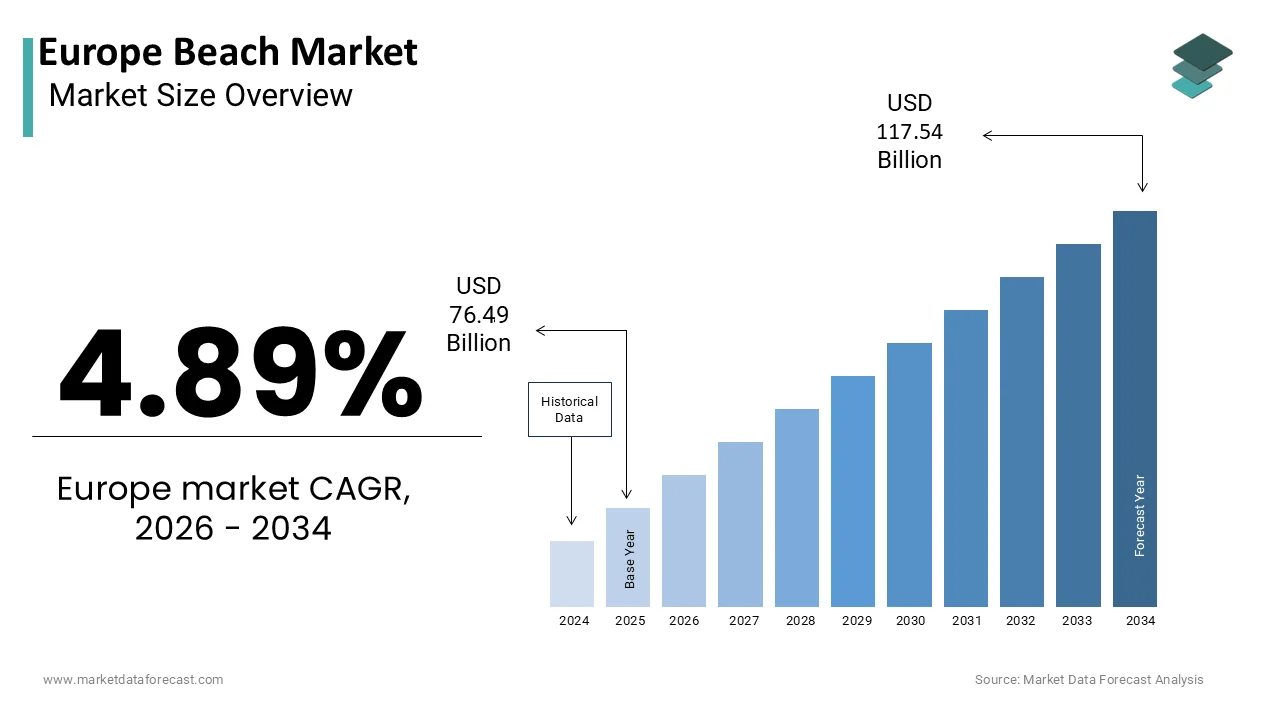
The beach is an economic ecosystem surrounding coastal tourism, recreational activities,s and infrastructure development along the continent’s extensive shoreline. As per Eurostat data from 2024, coastal regions in the European Union attracted approximately 180 million overnight stays, ys representing nearly 40% of total tourism activity in the bloc. The Mediterranean coastline remains the most visited area, with Spain, Italy, and Greece accounting for the majority of these figures. According to the European Environment Agency, over 30% of the EU population lives within 50 kilometers of the coast, highlighting the deep societal integration of beach culture. The World Tourism Organization noted in 2023 that beach tourism contributes significantly to local employment, with seasonal jobs comprising up to 25% of the workforce in certain coastal municipalities. Climate variability and environmental sustainability have become central themes influencing visitor behavior and policy decisions. The European Commission’s Integrated Coastal Zone Management framework emphasizes the balance between economic exploitation and ecological preservation.
MARKET DRIVERS
Resurgence of Post-Pandemic Leisure Travel Demand
The pent-up demand for leisure travel following global health restrictions is driving the growth of Europe beach market. Consumers prioritized open-air environments and natural settings, leading to a significant shift toward coastal destinations over urban centers. As per the European Travel Commission, international arrivals to European coastal regions increased by 15% in 2023 compared to pre-pandemic levels in 2019. This surge is driven by a psychological desire for relaxation and reconnection with nature, which beaches uniquely provide. The flexibility of remote work has also enabled longer stays known as bleisure trips,s where individuals combine business with extended leisure periods at coastal locations. This trend boosts revenue for local businesses, including hot, local restaurants and activity providers. Airlines and ferry operators expanded their routes to secondary coastal airports, facilitating access to less crowded beaches. The rise of digital nomad visas in countries like Croatia and Spain further supports this demographic. These visitors contribute to the local economy beyond traditional tourism seasons, ns helping to stabilize income for beach-dependent communities.
Expansion of Sustainable and Eco-Conscious Tourism Practices
The growing consumer awareness regarding environmental impact for sustainable beach tourism experiences is also fuelling the growth of Europe beach market. Travelers increasingly seek destinations that demonstrate commitment to conservation, waste reduction,n and community engagement. As per the Global Sustainable Tourism Council, il certified beach destinations in Europe saw a 20% increase in bookings in 2023. This shift is influenced by younger demographics who prioritize ethical consumption and carbon footprint reduction. Beach operators are responding by implementing plastic-free initiatives, renewable energy systems, and water conservation measures. This certification acts as a quality signal attracting environmentally conscious tourists willing to pay premium prices for responsible experiences. Local governments are investing in green infrastructure such as solar-powered facilities and eco-friendly transport options to enhance appeal. The European Union’s Green Deal provides funding for projects that align with sustainability goals, encouraging innovation in the sector. Hotels and resorts are adopting circular economy principles,s reducing food waste and sourcing locally. The alignment of business practices with environmental values creates a competitive advantage in an increasingly discerning market.
MARKET RESTRAINTS
Impact of Climate Change and Coastal Erosion
Climate change, driven by accelerated coastal erosion, ion rising sea levels, and extreme weather events, is restricting the growth of Europe beach market. These physical changes threaten the very existence of beach assets requiring costly mitigation efforts. As per the European Environment Agency, approximately 20% of Eu,, rope’s sandy coasts are experiencing significant erosion rates exceeding 1 meter per year. This loss of beach width reduces capacity for tourists and diminishes the aesthetic appeal of destinations. In 2023, severe storms in Italy caused damage estimated at 50 million euros to coastal infrastructure, according to the Italian Civil Protection Department. Such events disrupt tourism operations and deter future investments. Rising temperatures also lead to heatwaves that can make beach visits uncomfortable or dangerous during peak summer months. The frequency of jellyfish blooms and algae outbreaks linked to warming waters further degrades the visitor experience. Insurance costs for coastal properties are rising due to increased risk exposure affecting profitability for businesses. The uncertainty regarding long-term climate impacts complicates strategic planning for destination managers.
Regulatory Constraints and Capacity Limitations
The strict regulatory frameworks and capacity limits imposed by local authorities restrict the expansion and operational flexibility, hindering the growth of Europe beach market. Governments are implementing measures to prevent overtourism and protect fragile ecosystems, which can limit visitor numbers and commercial activities. As per the Spanish Ministry of Tourism, new regulations in the Balearic Islands capped the number of daily beach visitors in sensitive areas starting in 2024. These caps aim to preserve natural habitats but can reduce revenue potential for businesses reliant on high-volume traffic. Zoning laws often prohibit new construction or expansion of existing facilities near the shoreline, limiting infrastructure development. In France,e the Coastal Law strictly regulates land use within 100 meters of the shore, preventing the establishment of new permanent structures. This legal constraint forces operators to rely on seasonal temporary installations, which may offer lower-quality experiences. Permitting processes for beach concessions are becoming more rigorous and competitive, increasing administrative burdens. In 2023, the average time to obtain a beach operation permit in Greece increased to 1m1 monthaccording to the Hellenic Chamber of Hotels. Labor shortages exacerbated by the seasonal nature of work further constrain service deli, very. These regulatory and operational barriers create an environment of uncertainty and limited growth potential for market participants.
MARKET OPPORTUNITIES
Development of Digital Booking and Experience Platforms
The integration of advanced digital platforms for enhancing efficiency and customer engagement is substantially creating new opportunities for the growth of Europe beach market. Online booking systems, mobile applications,s and virtual reality tools enable seamless planning and personalized experiences for tourists. The digital shift allows businesses to reach wider audiences and optimize pricing through dynamic algorithms. Mobile apps provide real-time information on beach conditions, weather forecasts, ts and available amenities,,ies improving visitor satisfaction. In 2024, the adoption of contactless payment systems at beach clubs in Croatia increased by 40%, according to the Croatian National Bank. This technology reduces transaction times and enhances hygiene standards. Virtual reality previews allow potential visitors to explore destinations before booking, increasing conversions. Data analytics enable operators to understand consumer preferences and tailor offerings accordingly. Personalized recommendations for activities such as surfing lessons or guided tours drive additional revenue streams. Social media integration facilitates user-generated content, which serves as powerful marketing.
Diversification into Year-Round Wellness and Health Tourism
The expansion beyond seasonal sun bathing to offer year-round wellness and health tourism is an additional factor to escalate the growth of Europe beach market. Coastal environments are increasingly recognized for their therapeutic benefits, including thalassotherapy yoga retreats and mental health restoration. The diversification helps mitigate seasonality issues by attracting visitors during off-peak months. Spas and wellness centers located near beaches offer specialized treatments using seaweed, salt water,r and marine mud. The facilities attract older demographics and health-conscious travelers who prioritize longevity and relaxation. Collaborations with medical professionals enhance credibility and attract clients seeking specific health interventions. The integration of mindfulness practices such as beach meditation and forest bathing expands the appeal to urban dwellers seeking escape. Marketing campaigns emphasizing holistic well-being resonate with post-pandemic travelers. Infrastructure improvements, such as heated pools and indoor facilities, support year-round operations. This strategic shift transforms beaches from summer-only destinations into perennial wellness hubs.
MARKET CHALLENGES
Labor Shortages in the Seasonal Hospitality Sector
The acute labor shortages in the seasonal hospitality sector, affecting service quality and operational continuity, are one of the challenges for the growth of Europe beach market. The industry relies heavily on temporary workers who are increasingly difficult to recruit due to demographic changes and competition from other sectors. As per the European Hospitality Association, 60% of beach hotels reported staffing difficulties in 2023, leading to reduced operating hours or closed facilities. The aging population in many European countries means fewer young people are available for seasonal work. Additionally,y improved working conditions in other industries make hospitality less attractive due to its demanding nature and irregular hours. Language barriers and housing shortages for migrant workers further exacerbate the problem. Training new staff each season is costly and inefficient, resulting in inconsistent service standards. Customer complaints about slow service or lack of amenities can damage reputation and reduce repeat visits. The inability to secure adequate staff limits the capacity of businesses to expand or innovate. Addressing this structural issue requires long-term strategies such as automation, improved working conditions,s and targeted recruitment campaigns. Until labor constraints are resolved, they will remain a significant bottleneck for market growth.
Environmental Degradation: Long-term Concerns
The environment, including degradation and pollution, including plastic waste, water contamination, and air pollution, severely impacts the attractiveness and sustainability is also inhibits the growth of Europe beach market. Visitors are increasingly sensitive to cleanliness and ecological health, influencing their destination choices. Sewage discharges during heavy rains occasionally contaminate bathing water, leading to temporary closures and negative publicity. In 2024, several beaches in Italy were flagged for poor water quality according to the Italian Ministry of Health. Noise pollution from crowded beaches and nearby nightlife disturbs residents and wildlife, leading to social tension and regulatory crackdowns. The accumulation of waste requires significant cleanup efforts costing municipalities millions of euros annually. In 2023, the cost of beach cleaning in France exceeded 100 million euros, according to the French Ministry of Ecological Transition. Negative media coverage of polluted beaches can deter tourists for entire seasons. Businesses face pressure to adopt zero-waste practices, which require investment and operational changes. Failure to address these environmental issues risks long-term decline in visitor numbers. Maintaining pristine conditions is essential for competitiveness but requires coordinated effort among public and private stakeholders.
REPORT COVERAGE
| REPORT METRIC | DETAILS |
| Market Size Available | 2025 to 2034 |
| Base Year | 2025 |
| Forecast Period | 2026 to 2034 |
| Segments Covered | By Service Type, Traveler Type, and Region. |
| Various Analyses Covered | Global, Regional and Country-Level Analysis, Segment-Level Analysis, Drivers, Restraints, Opportunities, Challenges; PESTLE Analysis; Porter’s Five Forces Analysis, Competitive Landscape, Analyst Overview of Investment Opportunities |
| Countries Covered | UK, France, Spain, Germany, Italy, Russia, Sweden, Denmark, Switzerland, Netherlands, Turkey, Czech Republic, Rest of Europe |
| Market Leaders Profiled | TUI Group, Expedia Group, Inc., Booking Holdings Inc., Airbnb, Inc., Marriott International, Inc., Hilton Worldwide Holdings Inc., Accor S.A., InterContinental Hotels Group plc, Wyndham Hotels & Resorts, Inc., Royal Caribbean Cruises Ltd., Carnival Corporation & plc, Norwegian Cruise Line Holdings Ltd. |
SEGMENTAL ANALYSIS
By Service Type Insights
The accommodation segment was the largest by capturing 45.3% of the Europe beach market share in 2025, owing to the fundamental necessity of lodging for tourists who travel to coastal destinations for extended stays. Unlike day tripperorr o overnightvisitors incurhigh costsss for hotels, resorts,s and vacation rentals, which form the bulk of tourism expenditure. As per Eurostat data from 2023, the average daily spend on accommodation on the European coast, all regions was 120 EUR, os significantly higher than spending on other services. The proliferation of diverse lodging options ranging from luxury five-star resorts to budget-friendly hostels caters to a wide spectrum of travelers, ensuring broad market penetration. This high utilization rate underscores the critical role of accommodation in generating revenue. Furthermore, the short-term rental platforms have expanded capacity, allowing homeowners to monetize their properties,s thereby increasing the overall supply and accessibility of beachside lodging. The integration of hospitality services, short-term rentals, and spa treatments within accommodation facilities further boosts revenue per available room. This comprehensive service model ensures that accommodation remains the primary revenue generator in the beach tourism ecosystem.
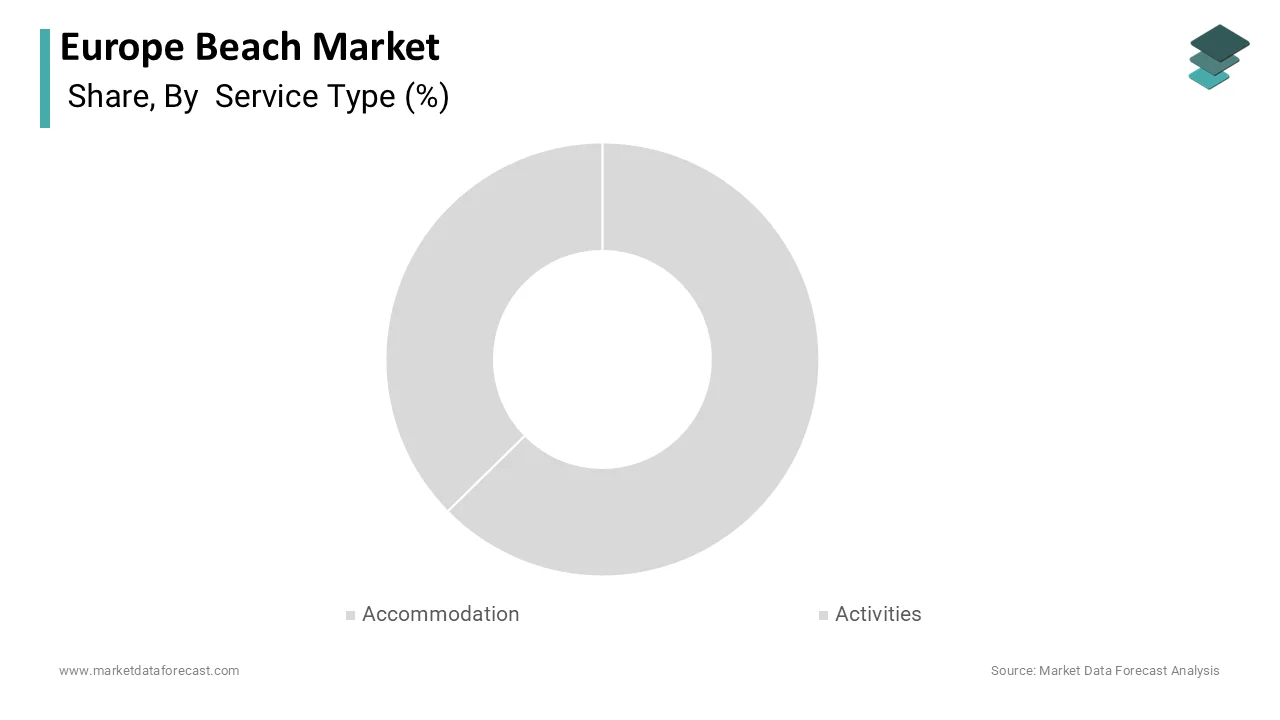
The activities segment is expected to expand at a CAGR of 7.8% from 2026 to 2034. The shifting consumer preference toward experiential travel, where participants seek active engagement rather than passive relaxation, is fuelling the growth of the segment. Water sports such as surfing, kiteboarding, and paddleboarding have gained immense popularity among younger demographics and fitness enthusiasts. Destinations like Portugal and France have invested heavily in infrastructure to support these sports,rts including school rental facilities and competition venues. The hosting of international events such as the World Surf League competitions attracts spectators and participants, boosting local economies. In 20, 24 revenue from water sport rentals in the Algarve, Portugal,l increased by 15% according to the Portuguese Tourism Board. The social media influence plays a crucial role as visually appealing activities encourage sharing and inspire others to participate. Tour operators are bundling activity packages with accommodation, creating convenient and attractive offers for tourists.
By Traveler Type Insights
The group travelers segment was accounted in Holdia as a significant share of the Europe beach market in 2025, with the enduring popularity of family vacations and multi-generational tratravelere relatives gather for shared experiences. Beach destinations offer safe and engaging environments for children and adults alike with amenities, such kids'ids c, shallow water, tables, and spacious accommodations. All-inclusive resorts are particularly attractive to families as they simplify budgeting and logistics, allowing parents to relax while children are supervised. The availability of interconnected rooms and suite configurations facilitates comfortable stays for larger groups. School holidays dictate peak travel periods, ensuring consistent demand during summer months. Group travel also extends to friends and extended families who share costs and enjoy social bonding. The economic advantage of splitting accommodation and transport expenses makes group travel affordable for many.
The solo travelers segment is projected to register the fastest CAGR of 9.2% from 2026 to 2034, with the increasing individualism and the desire for independent exploration and self-discovery. Modern travelers, especially millennials and Generation Z, prioritize freedom and flexibility, ty which solo travel affords. Single occupancy rooms, as well as hostels, have emerged to cater to this demographic, thus reducing the single supplement penalty. Social media platforms inspire individuals to embark on personal journeys showcasing transformative experiences. Safety improvements in popular destinations and the availability of digital connectivity reassure solo travelers. Tour operators now offer small group tours specifically designed for singles, facilitating social interaction without the pressure of large groups. The empowerment narrative associated with solo travel resonates strongly with contemporary values.
COUNTRY LEVEL ANALYSIS
Spain Beach Market Analysis
Spain was the top performer in the Europe beachmarket by accounting for 22.4% of the share in 2025. The extensive coastline, diverse climate, and world-renowned hospitality infrastructure are majorly fuelling the growth of the market in this country. As per the Spanish National Statistics Institute, international arrivals to coastal regions reached 65 million in 2023, surpassing pre-pandemic levels. The Mediterranean and Atlantic coasts offer varied experiences from vibrant party scenes in Ibiza to tranquil beaches in Galicia. Government initiatives promoting sustainable tourism have enhanced the quality of offerings while preserving natural assets. The strong brand recognition of destinations like Costa del Sol and the Balearic Islands ensures consistent demand. High connectivity through numerous airports facilitates easy access for European and intercontinental travelers. The integration of cultural heritage with beach tourism adds depth to the visitor experience. Spain’s ability to cater to both mass market and luxury segments broadens its appeal.
Italy Beach Market Analysis
Italy's market growth is likely to grow with the significant growth opportunities in the coming years, with a blend of historical charm and coastal beauty attracting culturally inclined tourists. As per the Italian National Institute of Statistics, beach tourism generated 45 billion euros in 2023, driven by high spending on luxury accommodations and gastronomy. Regions like the Amalfi Coast, Sardinia, and Sicily are iconic for their scenic landscapes and exclusive resorts. The emphasis on high-quality serviced authentic culinary experiences differentiates Italy from its competitors. Government efforts to reduce overtourism in hotspots have led to dispersal strategies promoting lesser-known beaches. This approach enhances sustainability and distributes economic benefits more evenly. The strong presence of luxury hotel chains and boutique properties appeals to affluent travelers. Italy’s rich artistic heritage complements beach holidays, offering multifaceted itineraries. Infrastructure improvements in transportation and digital connectivity support seamless travel experiences.
France Beach Market Analysis
France's beach market growth is likely to grow with its sophisticated appeal and diverse coastal offerings from the glamorous French Riviera to the rugged Brittany coast. Investment in marina facilities and yachting services boosts high-end tourism revenue. France’s strong regulatory framework ensures high environmental standards protecting beach quality. The popularity of camping and glamping along the coast appeals to family and budget travelers. This diversity allows France to capture various market segments effectively. The integration of wine tourism with beach holidays creates unique value propositions. Excellent rail connections, including high-speed trains, facilitate domestic and cross-border travel. French culinary excellence enhances the overall visitor experience. The country’s commitment to sustainability and quality maintains its attractiveness. France’s balanced approach to luxury and accessibility sustains its strong market position.
Greece Beach Market Analysis
Greemarketarket growth is driven by its archipelago geography, offering thousands of islands with pristine beaches and clear waters. Popular islands like Santorini, Mykonos,s and Crete drive significant revenue through luxury tourism and cruise ship visits. The government has invested in airport expansions and port facilities to handle growing passenger volumes. Recent improvements in digital infrastructure enhance the visitor experience and operational efficiency. Sustainability initiatives focus on waste management and water conservation in fragile island ecosystems. The extension of the tourist season through mild winters supports year-round operation. Greece’s unique cultural identity and hospitality tradition create strong emotional connections with visitors. Marketing campaigns highlighting hidden gems disperse crowds and promote lesser-known islands.
Turkey Beach Market Analysis
Turkey's beach market growth is likely to grow with the high volume of all-inclusive resorts, primarily along the Antalya and Aegean coasts. As per the Turkish Ministry of Culture and Tourism, the country welcomed 50 million international tourists in 202,3 with a significant portion visiting beach resorts. Thall-inclusive model offers exceptional value, attracting families and budget-conscious travelers from Europe and Russia. Competitive pricing and high service standards make Turkey a preferred choice for mass tourism. Significant investments in airport infrastructure improve accessibility from major European cities. The depreciation of the local currency enhances affordability for foreign visitors. Diversification efforts include promoting cultural sites alongside beach holidays to enrich the experience. Environmental certifications for hotels align with global sustainability trends. The government’s proactive marketing strategies target emerging markets, expanding the visitor base.
COMPETITIVE LANDSCAPE
The competition in the Europe beach market is intense and fragmented, characterized by a mix of large international hospitality chains,,egional operator,, an, and independent boutique hotels. Major players compete based on service quality, location exclusivity, and sustainability credentials. The market sees significant rivalry among tour operators who bundle flights and accommodations to offer convenient packages. Established companies leverage their scale to negotiate better rates with suppliers and invest in marketing campaigns that reach global audiences. Smaller niche providers focus on unique experiences, such as eco tourism or wellness retreats, to differentiate themselves. Regulatory pressures regarding environmental protection and labor standards add complexity to the competitive landscape. Technological adoption is becoming a key differentiator, with companies investing in mobile apps and artificial intelligence to enhance customer experiences. The rise of short-term rental platforms adds another layer of competition, pressuring traditional hotels to innovate. Companies that successfully integrate sustainability and digital convenience gain a competitive edge.
KEY MARKET PLAYERS
Some of the companies that are playing a dominating role in the global Europe Beach Market include
- TUI Group
- Expedia Group, Inc.
- Booking Holdings Inc.
- Airbnb, Inc.
- Marriott International, Inc.
- Hilton Worldwide Holdings Inc.
- Accor S.A.
- InterContinental Hotels Group plc
- Wyndham Hotels & Resorts, Inc.
- Royal Caribbean Cruises Ltd.
- Carnival Corporation & plc
- Norwegian Cruise Line Holdings Ltd.
TOP LEADING PLAYERS IN THE MARKET
- TUI Group stands as a leading integrated tourism enterprise with a dominant presence in the European beach market. The company operates an extensive network of hotels, airlines,s and cruise lines that facilitate seamless coastal travel experiences for millions of tourists annually. TUI contributes to the global market by setting high standards for sustainable tourism and digital innovation in travel services. Recent actions include the expansion of its Green Star hotel certification program, ram which promotes eco-friendly practices across its beachfront properties. The company has also invested heavily in digital platforms to enhance customer booking experiences and personalize travel itineraries. These strategic initiatives strengthen its market position by offering comprehensive and responsible holiday packages.
- Accor SA is a global hospitality leader with a significant footprint in the European beach destination market. The group manages a diverse portfolio of brands ranging from luxury resorts to budget-friendly hotels along the Mediterranean and Atlantic coasts. Accor contributes to the global market by pioneering lifestyle hospitality concepts that blend accommodation with local cultural experiences. Recent actions include the acquisition of premium beachfront properties in France and Spain to expand its luxury segment offerings. The company has also launched innovative loyalty programs that integrate wellness and dining experiences to enhance guest retention. Accor emphasizes sustainable development through its Planet 21 initiative, which reduces environmental impact in coastal operations. These efforts strengthen its market position by appealing to environmentally conscious travelers.
- Hotel Riu Plaza is a prominent family-owned hotel chain known for its all-inclusive beach resorts across Europe, particularly in Spain and Greece. The company plays a vital role in the market by providing high-quality, affordable vacation options for families and groups. Riu contributes to the global market by standardizing service excellence and operational efficiency in the resort sector. Recent actions include the renovation of existing properties to modernize facilities and incorporate sustainable technologies such as solar energy systems. The company has also expanded its digital check-in and customer service capabilities to improve guest convenience. Riu focuses on creating vibrant social atmospheres within itits resortsh whichappeal too younger demographics.
TOP STRATEGIES USED BY KEY MARKET PARTICIPANTS
Key players in the Europe beach market primarily employ sustainability integration and digital transformation to maintain a competitive advantage. Companies are increasingly adopting eco-friendly practices such as waste reduction and energy efficiency to align with regulatory requirements and consumer preferences. This strategic focus enhances brand reputation and attracts environmentally conscious travelers. Another major strategy involves the development of exclusive experiences and personalized services through data analytics. Operators utilize customer data to tailor offerings and improve engagement, leading to higher loyalty rates. Strategic partnerships with local businesses and tour operators help create comprehensive travel packages that add value for customers. Additionally, investments in infrastructure modernization ensure that facilities meet contemporary standards for comfort and technology.
MARKET SEGMENTATION
This research report on the europe beach market is segmented and sub-segmented into the following categories.
By Service Type
- Accommodation
- Activities
By Traveler Type
- Group Travelers
- Solo Travelers
By Country
- Spain
- Italy
- France
- Greece
- Turkey
- Rest of Europe
Related Reports
Access the study in MULTIPLE FORMATS
Purchase options starting from
$ 2000
Didn’t find what you’re looking for?
TALK TO OUR ANALYST TEAM
Need something within your budget?
NO WORRIES! WE GOT YOU COVERED!
Call us on: +1 888 702 9696 (U.S Toll Free)
Write to us: sales@marketdataforecast.com