Europe Cobblestone Market Size, Share, Trends & Growth Forecast Report Segmented By Type (Mechanical Pebble, Natural Cobblestone, Riverstone, Others), Construction Type, Application, And Country (UK, France, Spain, Germany, Italy, Russia, Sweden, Denmark, Switzerland, Netherlands, Turkey, Czech Republic & Rest Of Europe), Industry Analysis From 2026 To 2034
Europe Cobblestone Market Size
The Europe Cobblestone market size was calculated to be USD 2.76 billion in 2025 and is anticipated to be worth USD 4.15 billion by 2034, from USD 2.88 billion in 2026, growing at a CAGR of 4.65% during the forecast period.
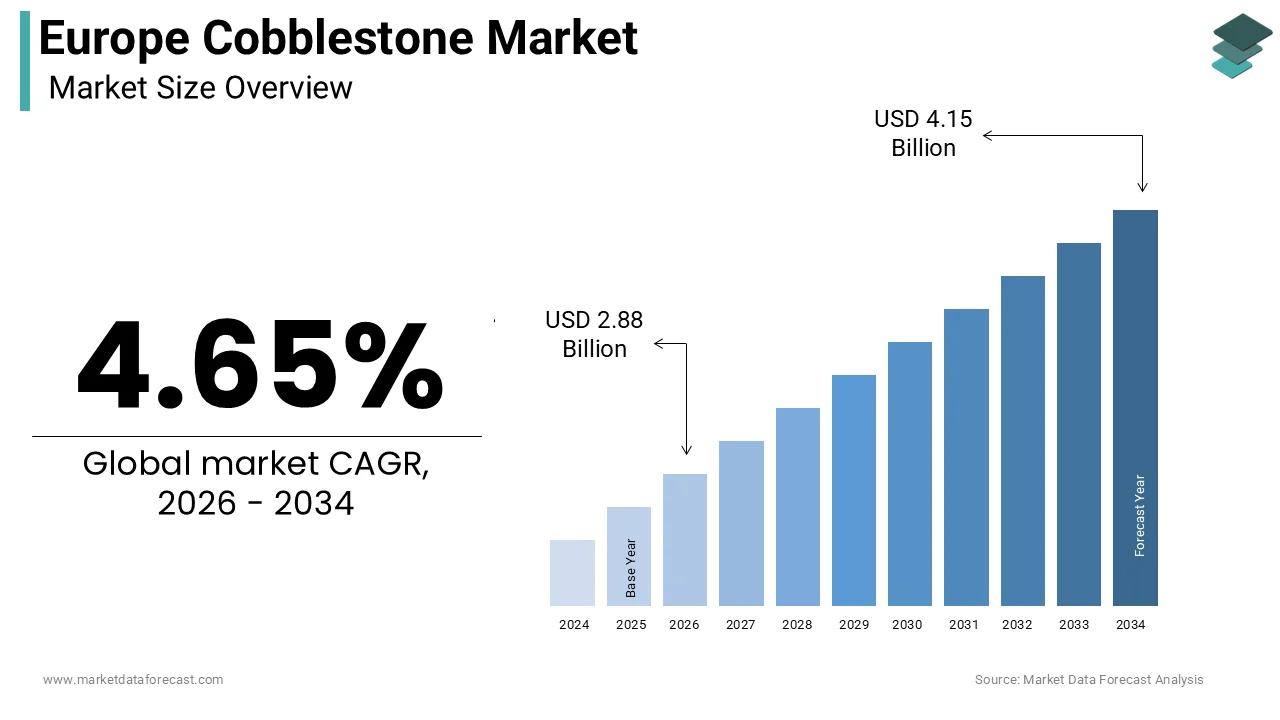
Cobblestone is a natural stone unit, primarily granite, basalt, and limestone, used for paving streets, squares, and pedestrian zones. This sector is deeply rooted in the continent’s architectural heritage, serving both functional infrastructure needs and aesthetic preservation goals. Cobblestones are distinct from modern concrete pavers due to their natural origin, durability, and historical significance. The market dynamics are influenced by urban renewal projects, heritage conservation mandates, and the growing preference for sustainable landscaping materials. As per Eurostat, the construction sector in the European Union is a significant contributor to gross value added, reflecting strong demand for building materials. The European Commission emphasizes the importance of preserving cultural heritage, which directly supports the continued use of traditional materials like cobblestones in historic city centers. According to the European Landscape Contractors Association, there is a rising trend towards permeable paving solutions to manage stormwater runoff, aligning with environmental sustainability goals. Natural stone paving offers superior longevity and low maintenance compared to asphalt or concrete, which contributes to its enduring appeal. As per the United Nations Educational, Scientific, and Cultural Organization, many European cities are designated World Heritage Sites, requiring strict adherence to traditional materials in restoration efforts. The interplay between modern urban planning requirements and historical preservation regulations defines the operational landscape. The market is characterized by a fragmented supply chain involving quarries, processors, and specialized laying contractors. Environmental regulations governing quarrying activities also shape production capabilities, ensuring that ecological impacts are minimized while meeting the demand for high-quality natural stone products.
MARKET DRIVERS
Heritage Conservation and Urban Restoration Initiatives
The preservation of historical city centers and urban restoration initiatives is propelling the growth of the Europe cobblestone market. Many European cities possess extensive historic districts where modern paving materials are prohibited to maintain architectural authenticity. According to the European Commission, the EU provides funding through programs such as Creative Europe to support cultural heritage preservation projects. As per the International Council on Monuments and Sites, heritage sites across Europe require regular maintenance and replacement of natural stone paving to prevent deterioration. Cities such as Prague, Lisbon, and Edinburgh strictly enforce guidelines that mandate the use of traditional materials in public spaces. The tourism industry relies on the aesthetic appeal of historic environments. According to the World Travel and Tourism Council, travel and tourism contribute significantly to global GDP, with Europe being a top destination. The visual charm of cobblestone streets enhances the visitor experience, driving local economies. Municipalities invest in restoring these areas to attract tourists and preserve cultural identity. The labor-intensive nature of cobblestone laying also supports local craftsmanship and traditional skills. Government policies prioritizing sustainable urban development often favor durable natural materials over disposable alternatives. This regulatory and economic framework ensures a steady demand for high-quality cobblestones in restoration projects.
Growing Demand for Sustainable and Permeable Paving Solutions
The increasing emphasis on sustainable urban drainage systems and environmentally friendly construction practices drives the demand for cobblestone paving in Europe, which is further fuelling the regional market expansion. Cobblestones installed with open joints allow for water infiltration, reducing surface runoff and mitigating flood risks in urban areas. According to the European Environment Agency, urban flooding is a growing concern due to climate change and increased impervious surfaces. Traditional asphalt and concrete pavements contribute to this problem, whereas natural stone paving offers a permeable alternative. As per the European Union Water Framework Directive, member states are required to implement measures to manage water resources sustainably, including the promotion of green infrastructure. Cobblestone streets facilitate groundwater recharge and reduce the burden on sewage systems during heavy rainfall events. The durability of natural stone means it has a longer lifespan than synthetic alternatives, reducing the frequency of replacement and associated waste. According to the European Landscape Contractors Association, the use of locally sourced natural stone reduces transportation emissions, supporting carbon reduction goals. Homeowners and commercial developers are increasingly choosing cobblestones for driveways, courtyards, and gardens due to their eco-friendly profile. The aesthetic versatility of natural stone allows for creative designs that blend with natural landscapes. Regulatory incentives for green building certifications further encourage the adoption of permeable paving. This shift towards sustainable infrastructure positions cobblestones as a preferred material for modern urban planning. The alignment with environmental objectives ensures long-term market growth.
MARKET RESTRAINTS
High Installation and Maintenance Costs
The high cost of installation and maintenance is a significant restraint to the widespread adoption of cobblestone paving in the Europe market. Unlike asphalt or concrete, which can be laid quickly using machinery, cobblestone installation is labor-intensive and requires skilled craftsmen. According to the European Construction Industry Federation, labor costs in the construction sector have risen steadily due to shortages of skilled workers and increasing wages. As per national statistical offices in countries such as Germany and France, wages for specialized masons are higher than those for general construction workers. This cost disparity makes cobblestone paving less attractive for budget-constrained municipal projects or private developments. Maintenance also poses a financial challenge as uneven settling or damage requires individual stone replacement, which is time-consuming. The initial investment for high-quality natural stone is substantial compared to manufactured alternatives. Economic downturns or budget cuts in public spending can lead to the postponement or cancellation of cobblestone projects. Private homeowners may opt for cheaper imitations such as concrete pavers that mimic the look of stone but lack its durability. The total cost of ownership, including periodic re-leveling and joint replenishment, adds to the financial burden. The scarcity of skilled labor further exacerbates the cost issue, creating a bottleneck for market expansion.
Competition from Concrete and Asphalt Alternatives
The availability of cost-effective and easier to install alternatives, such as concrete pavers and asphalt, is another major restraint to the Europe cobblestone market. Concrete pavers offer a similar aesthetic appeal at a lower cost and can be installed more rapidly using mechanized equipment. According to the European Concrete Paving Association, the production of concrete blocks has become highly efficien,t allowing for mass production and consistent quality. Asphalt remains the dominant material for roads due to its smooth surface and ease of repair. As per the European Asphalt Pavement Association, asphalt recycling rates are high, making it an attractive option for sustainable road construction. The performance of modern concrete pavers has improved with better color retention and durability, narrowing the gap with natural stone. Municipalities facing tight budgets often choose these alternatives for non-heritage areas. The perception that cobblestones are outdated or impractical for modern traffic also influences decision-making. While cobblestones are durable, they can be noisy and uncomfortable for vehicles compared to asphalt. The convenience of prefabricated solutions reduces the reliance on specialized labor. Manufacturers of artificial stone continue to innovate, offering realistic textures that further challenge the dominance of natural materials. The ease of sourcing and standardized dimensions of concrete products make them a preferred choice for many developers.
MARKET OPPORTUNITIES
Expansion in Landscape Architecture and Private Residential Projects
The growing interest in landscape architecture and high-end residential design is a significant opportunity for the Europe cobblestone market. Homeowners are increasingly investing in outdoor living spaces such as patios, driveways, and garden paths where natural stone adds value and aesthetic appeal. According to the European Garden Industry Association, the garden and outdoor living market has shown strong growth driven by the desire for personalized outdoor environments. As per real estate industry insights, properties with well-designed hardscaping features often command higher market values. The trend towards biophilic design, which integrates natural elements into built environments, favors the use of authentic materials like granite and basalt. Landscape architects are specifying cobblestones for their texture, color variation, and durability. The availability of diverse stone types allows for creative patterns and borders, enhancing visual interest. Online platforms and social media inspire homeowners with design ideas, increasing demand for premium paving materials. Local quarries can capitalize on this trend by offering customized cutting and finishing services. The rise of DIY culture has also led to the availability of smaller cobblestone kits for amateur installers. This segment offers higher margins compared to large municipal contracts. The emotional connection to natural materials drives consumer preference despite higher costs. The opportunity lies in marketing cobblestones as a luxury lifestyle enhancement rather than just a functional surface.
Development of Hybrid Paving Systems and Smart Infrastructure
The integration of cobblestone paving with smart infrastructure and hybrid systems offers a novel opportunity for market innovation. Technological advancements allow for the incorporation of sensors, lighting, and drainage systems within cobblestone installations. According to the European Smart Cities Marketplace, initiatives are underway to develop intelligent urban surfaces that monitor traffic, pollution, and pedestrian flow. As per research from leading technical universities in Europe, permeable cobblestone systems can be combined with underground storage tanks for efficient stormwater management. This hybrid approach addresses multiple urban challenges simultaneously. The development of modular cobblestone units that facilitate easy access to underground utilities reduces maintenance disruptions. Smart cities initiatives funded by the European Union encourage the adoption of such innovative solutions. Manufacturers can collaborate with technology firms to create integrated products that offer added functionality. The ability to generate energy through piezoelectric materials embedded in paving stones is also being explored. These innovations differentiate natural stone from conventional materials and open new revenue streams. Governments seeking to modernize infrastructure while preserving heritage are likely to adopt these hybrid solutions. This technological integration enhances the value proposition of cobblestone paving.
MARKET CHALLENGES
Supply Chain Disruptions and Raw Material Scarcity
The Europe cobblestone market faces significant challenges from supply chain disruptions and the scarcity of high-quality raw materials. Quarrying operations are subject to strict environmental regulations, which can limit extraction volumes and increase compliance costs. According to the European Aggregate Minerals Association, the availability of suitable stone deposits is finite, and locating new quarries near urban centers is increasingly difficult. As per logistics industry reports, fuel price volatility and driver shortages have impacted the timely delivery of construction materials. Geopolitical tensions affecting trade routes can also disrupt the import of specific stone types from outside Europe. The dependence on a limited number of quarries for certain colors or textures creates vulnerability to supply shocks. Natural variations in stone quality mean that not all extracted material is suitable for paving, leading to waste. Climate change impacts, such as extreme weather events, can halt quarrying operations temporarily. The fragmentation of the supply chain involving multiple intermediaries complicates coordination and transparency. Ensuring a consistent supply of uniform quality stones is challenging for large projects. Delays in material availability can postpone construction schedules, leading to financial penalties. The industry must invest in sustainable quarrying practices and efficient logistics to mitigate these risks. However, these improvements require significant capital investment. The uncertainty of supply affects project planning and customer confidence.
Labor Shortages and Declining Craftsmanship Skills
A critical challenge facing the Europe cobblestone market is the shortage of skilled labor and the decline in traditional craftsmanship skills. Laying cobblestones is a specialized trade that requires years of training and experience to master. According to the European Construction Industry Federation, there is a growing gap between the demand for skilled workers and the available workforce in the construction sector. As per vocational training data in countries such as Italy and Spain, the number of apprentices in stone masonry has decreased in recent years. This skills shortage results in higher labor costs and longer project durations. The lack of experienced craftsmen can compromise the quality and durability of installations, leading to premature failure. Training programs are often insufficient to meet industry needs. The physical demands of the work also contribute to high turnover rates. Municipalities and developers struggle to find contractors capable of executing complex cobblestone designs. The loss of traditional knowledge threatens the authenticity of heritage restoration projects. Efforts to revive vocational training and promote the trade are ongoing, but take time to yield results. The reliance on a shrinking pool of experts limits the scalability of the market. Without a steady influx of skilled workers, the industry faces a bottleneck that hinders growth. Addressing this challenge requires collaborative efforts between industry associations, educational institutions, and government bodies.
REPORT COVERAGE
| REPORT METRIC | DETAILS |
| Market Size Available | 2025 to 2034 |
| Base Year | 2025 |
| Forecast Period | 2026 to 2034 |
| CAGR | 4.65% |
| Segments Covered | By Type, Construction Type, Application, And Region |
| Various Analyses Covered | Global, Regional & Country Level Analysis; Segment-Level Analysis; DROC, PESTLE Analysis; Porter’s Five Forces Analysis; Competitive Landscape; Analyst Overview of Investment Opportunities |
| Regions Covered | UK, France, Spain, Germany, Italy, Russia, Sweden, Denmark, Switzerland, Netherlands, Turkey, and the Czech Republic |
| Market Leaders Profiled | Boral Limited, LafargeHolcim Ltd, CRH plc, HeidelbergCement AG, Cemex S.A.B. de C.V., Wienerberger AG, Marshalls plc, Tobermore, Stone Market Ltd, Brett Landscaping & Building Products, Bradstone, Kilsaran International, Stonemarket, Pavestone Company, Aggregate Industries |
SEGMENTAL ANALYSIS
By Type Insights
The natural cobblestone segment held the leading position in the Europe cobblestone market by holding 55.7% of the European market share in 2025. The growth of the natural segment in the European market is driven by the unparalleled durability and authentic aesthetic appeal of natural stone such as granite, basalt, and limestone, which are essential for heritage conservation. According to the European Commission, strict regulations governing World Heritage Sites and historic city centers mandate the use of original materials for restoration projects, ensuring that natural stone remains the primary choice. As per the International Council on Monuments and Sites, protected urban areas across Europe require periodic maintenance and replacement of paving stones with materials that match historical specifications. The longevity of natural cobblestone,s which can last for over 100 years with minimal maintenance, makes them a cost-effective solution in the long term despite higher initial costs. The European Landscape Contractors Association notes that natural stone is preferred for its ability to withstand heavy traffic and harsh weather conditions without degrading. Furthermore, the unique texture and color variations of natural stone provide a visual richness that manufactured alternatives cannot replicate. This aesthetic value is crucial for tourism-driven economies where the charm of historic streetscapes attracts visitors annually. The availability of local quarries in countries like Germany and Portugal ensures a steady supply of high-quality granite and basalt. The cultural significance of natural stone in European architecture reinforces its dominant market position.
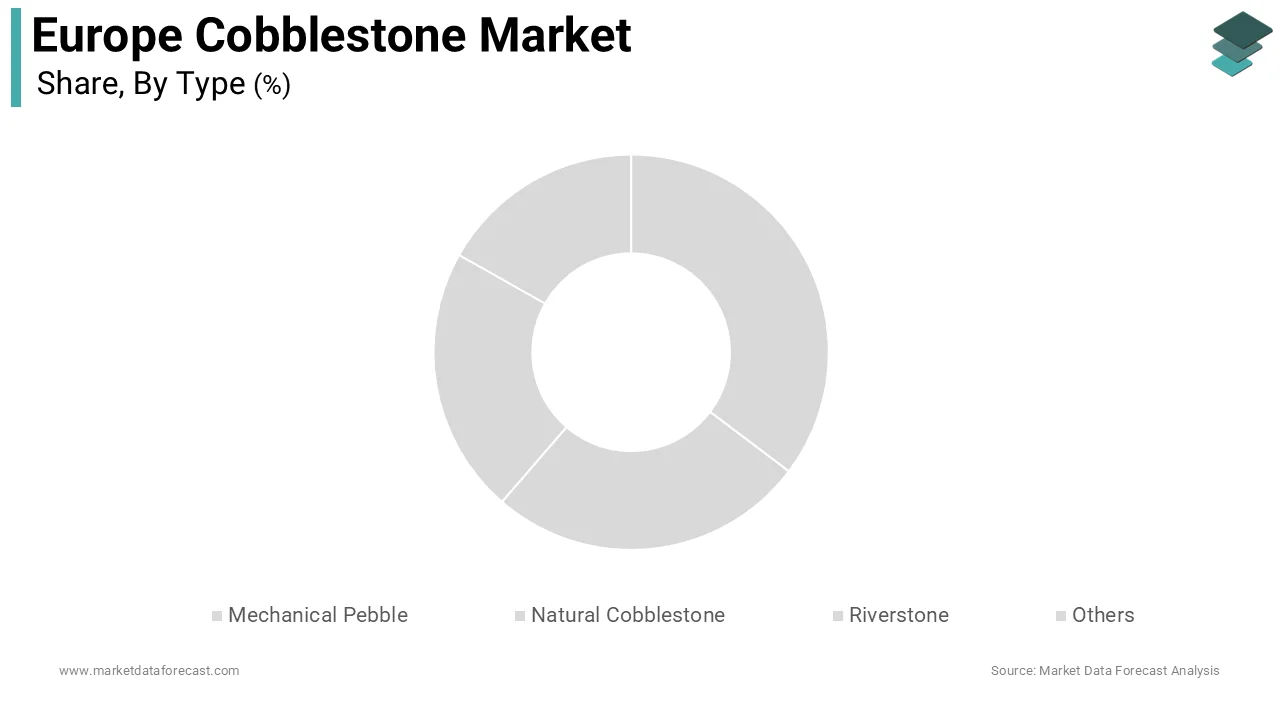
However, the mechanical pebble segment is projected to register the highest CAGR of 7.4% over the forecast period, owing to the increasing demand for cost-effective and uniform paving solutions in modern residential and commercial landscaping projects. Mechanical pebbles, which are machine-cut and shaped, offer consistent dimensions and easier installation compared to irregular natural cobblestones. According to the European Construction Industry Federation, the rise in new residential developments and suburban infrastructure projects has created strong demand for standardized paving materials that reduce labor costs and installation time. As per industry analysis from construction consultancies, mechanical pebbles are increasingly used in private driveways, garden paths, and public parks where the rustic look of cobblestone is desired, but the budget is limited. The ability to produce these stones from various rock types, including recycled concrete aggregates, aligns with sustainability goals by reducing waste. The European Aggregate Minerals Association highlights that the efficiency of mechanized production allows for lower prices, making it accessible to a broader consumer base. Additionally, the uniformity of mechanical pebbles facilitates the use of automated laying machines, further speeding up construction processes. This segment benefits from the trend towards quick and efficient urban beautification projects. The versatility in design and color options also appeals to landscape architects seeking customizable solutions. These factors collectively drive the accelerated adoption of mechanical pebbles in the European market.
By Construction Type Insights
The renovation segment commanded the highest share of 66.1% of the European market in 2025. This dominance is attributed to the extensive network of historic cities and towns across Europe that require continuous preservation and restoration of their original street surfaces. According to the European Commission, the EU provides funding through programs such as Creative Europe and Horizon Europe to support the conservation of cultural heritage sites. As per the International Council on Monuments and Sites, the majority of cobblestone usage is directed towards restoring medieval and early modern streetscapes in cities such as Prague, Rome, and Edinburgh. The regulatory framework in many European countries prohibits the replacement of historic paving with modern materials, necessitating the use of traditional cobblestones for any repair or upgrade work. The European Landscape Contractors Association reports that municipal budgets prioritize the maintenance of existing heritage assets over new constructions due to their cultural and economic value. Tourism plays a crucial role as wel,l with historic districts generating substantial revenue that justifies investment in high-quality restoration. The skilled labor force required for renovation work is well established in Europe, ensuring that projects are executed with authenticity. The longevity of original cobblestones means that renovation is often about re-laying and repairing rather than complete replacement, which sustains a steady demand for specialized services and materials. This structural focus on preservation ensures that renovation remains the primary driver of market activity.
On the other hand, the new construction segment is anticipated to record a CAGR of 7.4% over the forecast period, owing to the increasing incorporation of cobblestone aesthetics in modern urban planning and luxury residential developments. According to the European Construction Industry Federation, there is a rising trend in creating pedestrian-friendly zones and mixed-use spaces that utilize natural stone paving to enhance visual appeal and walkability. As per urban planning authorities in countries such as Germany and the Netherlands, new residential complexes and commercial districts are integrating cobblestone elements to create a sense of place and community. The demand for sustainable and permeable paving solutions in new builds also supports this growth, as cobblestones allow for better water management compared to asphalt. The European Environment Agency emphasizes the importance of green infrastructure in new developments to mitigate urban heat islands and manage stormwater. Developers are using cobblestones in courtyards, plazas, and access roads to differentiate their projects and attracthigh-endd buyers. The availability of pre-assembled cobblestone panels has simplified the installation process, making it more viable for large-scale new construction projects. This innovation reduces labor costs and timelines, encouraging wider adoption. The aesthetic versatility of cobblestones allows them to complement contemporary architecture, providing a blend of tradition and modernity. These factors contribute to the accelerating growth of the new construction segment.
By Application Insights
The roading segment had the leading share of 51.6% of the European market in 2025. This dominance is primarily due to the extensive use of cobblestones in historic city centers, where they serve as the primary surface for streets and thoroughfares. According to the European Commission, many European cities have preserved their original road networks as part of their cultural heritage, requiring regular maintenance and occasional replacement with matching cobblestones. As per the International Road Federation, cobblestone roads are valued for their durability and ability to handle heavy loads, although they are increasingly restricted to low-speed zones. The aesthetic contribution of cobblestone roads to the overall character of historic districts is invaluable for tourism, which is a major economic driver in countries such as Italy and France. The European Landscape Contractors Association notes that municipalities invest heavily in the upkeep of these roads to ensure safety and visual integrity. While modern asphalt is used for major arteries, cobblestones remain indispensable for secondary streets, squares, and pedestrian zones. The tactile and visual experience of driving or walking on cobblestones is considered an integral part of the European urban identity. Regulatory protections prevent the removal of these surfaces, ensuring a consistent demand for road-related cobblestone applications. The integration of cobblestones with modern drainage systems in road renovations further sustains their relevance in infrastructure projects.
However, the architecture segment is experiencing the fastest growth and is estimated to witness a CAGR of 8.5% over the forecast period, owing to the innovative use of cobblestones in facade cladding, interior design, and landscape architecture beyond traditional paving. According to the European Architectural Heritage Network, there is a growing trend among architects to incorporate natural stone elements into building designs to create texture and visual interest. As per industry reports from architectural firms, cobblestones are being used for feature walls, courtyards, and indoor flooring in high-end residential and commercial properties. The desire for biophilic design, which connects occupants with nature, favors the use of authentic materials like granite and basalt. The European Green Building Council promotes the use of durable and natural materials to enhance the sustainability credentials of buildings. Cobblestones offer excellent thermal mass and longevity, contributing to energy efficiency and reduced lifecycle costs. The customization potential of cobblestones allows for unique artistic expressions in architectural projects. Social media and design publications showcase these innovative applications, inspiring homeowners and developers to adopt similar styles. The expansion of outdoor living spaces has also increased the use of cobblestones in patios and terraces. This diversification of application beyond roads opens new markets and drives rapid growth in the architectural segment. The perceived value addition to properties further encourages investment in cobblestone architectural features.
REGIONAL ANALYSIS
Germany Cobblestone Market Analysis
Germany had a dominant position in the Europe cobblestone market with 23.6% of the regional market share in 2025. The country’s strong commitment to heritage preservation and robust construction industry drives substantial demand for natural stone paving. According to the German Federal Ministry for Economic Affairs and Energy, the construction sector is a key pillar of the economy, with investment in urban renewal projects. Germany is home to numerous UNESCO World Heritage Sites and historic city centers such as Munich and Cologne, which require meticulous maintenance of their cobblestone streets. As per the German Stone Industry Association, domestic production of granite and basalt supports a steady supply of high-quality cobblestones. The government’s focus on sustainable urban development encourages the use of permeable paving solutions like cobblestones to manage stormwater. The presence of skilled craftsmen and specialized contractors ensures high standards of installation and restoration. Germany’s central location in Europe facilitates the trade and distribution of stone materials. The market status is characterized by high regulatory standards and a preference for durable local materials. Investment in digital tools for heritage documentation further supports precise restoration efforts.
Italy Cobblestone Market Analysis
Italy ranks as the second-largest market for cobblestones in Europe. The country’s rich historical heritage and tourism industry are the primary drivers of demand for natural stone paving. According to the Italian National Institute of Statistics, tourism contributes significantly to the GDP, with millions of visitors attracted to historic cities such as Rome, Florence, and Venice. As per the Italian Ministry of Cultural Heritage and Activities, strict regulations protect these historic surfaces, ensuring continuous demand for authentic materials. The Italian stone industry is renowned for its quality and craftsmanship, producing some of the finest granite and limestone cobblestones globally. The export of Italian stone products also boosts the market presence. The construction sector in Italy is recovering with increased investment in residential and commercial renovations. The aesthetic preference for traditional materials in Italian architecture supports the widespread use of cobblestones in both public and private spaces. The market status is defined by a deep cultural connection to stone masonry and heritage conservation.
France Cobblestone Market Analysis
France occupies a notable position in the Europe cobblestone market. The country’s extensive network of historic towns and cities drives demand for cobblestone preservation and restoration. According to the French Ministry of Culture, the protection of architectural heritage is a national priority, with budgets allocated for the maintenance of historic monuments and public spaces. Cities such as Paris, Lyon, and Strasbourg feature iconic cobblestone streets that are integral to their identity and tourist appeal. As per the French Federation of Building Public Works, the construction industry is adapting to sustainable practices, favoring natural materials for urban projects. The wine tourism sector in regions such as Bordeaux and Burgundy also contributes to demand as chateaus and vineyards use cobblestones for driveways and courtyards. The French stone industry benefits from local quarries producing high-quality granite and sandstone. The market status is characterized by a balance between heritage conservation and modern urban planning.
Spain Cobblestone Market Analysis
Spain holds a prominent share in the Europe cobblestone market during the forecast period. The country’s vibrant tourism sector and historic urban centers are the main drivers of cobblestone demand. According to the Spanish Ministry of Industry, Trade, and Tourism, tourism is a vital economic sector with historic cities such as Barcelona, Seville, and Toledo attracting millions of visitors annually. As per the Spanish Stone Industry Association, the production of natural stone, including granite and slate, supports both domestic and export markets. The construction sector in Spain is experiencing growth driven by residential renovations and infrastructure improvements. Municipalities are investing in pedestrianization projects that often involve the installation or restoration of cobblestone surfaces. The market status is defined by a strong emphasis on aesthetic appeal and tourism-driven economics.
United Kingdom Cobblestone Market Analysis
The United Kingdom is expected to account for a notable share of the Europe cobblestone market during the forecast period. The country’s rich history and numerous heritage sites drive demand for natural stone paving. According to the UK Office for National Statistics, the construction sector is a major contributor to the economy with investments in infrastructure and housing. Historic cities such as London, Edinburgh, and York feature cobblestone streets that are protected and maintained as part of their cultural heritage. As per Historic England, there is a strong emphasis on using authentic materials for restoration projects. The UK stone industry produces high-quality granite and sandstone cobblestones primarily from quarries in Scotland and Northern Ireland. The trend towards sustainable urban drainage systems in new developments also supports the use of permeable cobblestone paving. The market status is characterized by a mix of heritage conservation and modern landscaping applications. Investment in urban renewal projects continues to drive market activity.
COMPETITION OVERVIEW
The Europe cobblestone market exhibits a fragmented competitive landscape characterized by numerous regional quarries and specialized stone processors. Competition is primarily driven by product quality, authenticity, and adherence to heritage conservation standards rather than price alone. Major players leverage their access to local stone deposits and established logistics networks to maintain market leadership. The market sees intense rivalry in providing customized solutions for historic restoration projects, with companies investing significantly in skilled labor and traditional craftsmanship. New entrants face barriers due to high capital requirements for quarrying operations and complex regulatory compliance needs. Strategic collaborations with construction firms and landscape architects are common tactics to secure long-term contracts. The shift towards sustainable and permeable paving has intensified competition in eco-friendly product segments. Companies differentiate themselves through unique stone textures, colors, and finishing techniques. This dynamic environment fosters continuous improvement in extraction and processing technologies among participants striving to maintain competitive edges in a mature market influenced by cultural preservation mandates and urban planning trends.
KEY MARKET PLAYERS
A few major players of the Europe cobblestone market include
- Boral Limited
- LafargeHolcim Ltd
- CRH plc
- HeidelbergCement AG
- Cemex S.A.B. de C.V
- Wienerberger AG
- Marshalls plc
- Tobermore
- Stone Market Ltd
- Brett Landscaping & Building Products
- Bradstone
- Kilsaran International
- Stonemarket
- Pavestone Company
- Aggregate Industries
Top Strategies Used by the Key Market Participants
Key players in the Europe cobblestone market predominantly focus on sustainable sourcing and production methods to comply with environmental regulations. Companies invest in modern quarrying technologies to enhance efficiency and reduce waste. Strategic partnerships with local municipalities and heritage organizations ensure steady demand for restoration projects. Participants also prioritize product customization to meet specific architectural requirements. Expansion into digital sales channels helps reach broader customer bases, including architects and designers. Manufacturers leverage certifications for sustainable stone to differentiate their offerings. Continuous investment in workforce training preserves traditional craftsmanship skills. These strategies collectively strengthen market positions by improving operational efficiency, ensuring regulatory compliance, and meeting evolving customer preferences in a niche yet vital industry sector.
Leading Players in the Market
- Granit Import Export A S is a leading Czech producer of natural stone products with a strong presence in the Europe cobblestone market. The company specializes in extracting and processing granite for paving curbs and architectural elements. Granit recently invested in modernizing its quarrying equipment to enhance production efficiency and reduce environmental impact. The company focuses on sustainable practices, ensuring compliance with strict European regulations. Recent actions include expanding its product range to include recycled stone materials, aligning with circular economy goals. These initiatives strengthen its position as a reliable supplier for heritage restoration projects. Granit collaborates with municipalities and contractors across Central Europe to deliver high-quality solutions. Its commitment to durability and aesthetic consistency drives customer loyalty. The company continues to explore new markets while maintaining its stronghold in domestic and regional sectors.
- Margaritelli S R L is a prominent Italian manufacturer known for its high-quality natural stone paving and cobblestones. The company leverages Italy’s rich geological resources to produce premium granite and limestone products for global markets. Margaritelli recently focused on enhancing its digital marketing strategies to reach international architects and designers. The company invested in advanced cutting technologies to offer customized shapes and finishes. These actions strengthen its reputation for craftsmanship and innovation. Margaritelli participates in major international trade fairs to showcase its latest collections. The company emphasizes sustainability by optimizing waste management in its production processes. Its extensive export network ensures timely delivery to clients worldwide. Margaritelli’s dedication to preserving traditional stone masonry techniques while embracing modern technology supports its competitive edge.
- Steinwerke Wittorf GmbH is a key German player in the Europe cobblestone market, specializing in natural stone processing and distribution. The company supplies high-grade granite cobblestones for road construction and landscape architecture. Steinwerke Wittorf recently upgraded its logistics infrastructure to improve supply chain efficiency and reduce carbon emissions. The company partners with local quarries to ensure a consistent supply of raw materials. Recent actions include developing eco-friendly packaging solutions for stone products. These efforts enhance its appeal to environmentally conscious customers. Steinwerke Wittorf adheres to rigorous quality standards, ensuring product durability and safety. The company actively engages in community projects supporting urban renewal initiatives. Its strong regional presence and technical expertise make it a preferred partner for large-scale infrastructure projects.
MARKET SEGMENTATION
This research report on the Europe cobblestone market has been segmented and sub-segmented based on type, construction type, application & region.
By Type
- Mechanical Pebble
- Natural Cobblestone
- Riverstone
- Others
By Construction Type
- New construction
- Renovation
By Application
- Roading
- Architecture
- Others
By Region
- UK
- France
- Spain
- Germany
- Italy
- Russia
- Sweden
- Denmark
- Switzerland
- Netherlands
- Turkey
- Czech Republic
- Rest of Europe
Frequently Asked Questions
1. What factors are driving the growth of the market?
The growth of the Europe cobblestone market is driven by rising urbanization, increasing investments in public infrastructure, and growing preference for sustainable and long-lasting paving materials.
2. What are cobblestones made of?
Cobblestones are primarily made from natural stones such as granite, basalt, limestone, and sandstone, which provide durability, strength, and resistance to weather conditions.
3. What are the main applications of cobblestones?
Cobblestones are widely used in roads, pedestrian walkways, patios, driveways, public squares, and landscaping projects due to their durability and aesthetic appeal.
4. What are the major trends in the Europe cobblestone market?
Major trends include increasing use of eco-friendly materials, growing demand for heritage-style urban development, and rising adoption of permeable paving solutions.
5. What challenges does the market face?
The market faces challenges such as high installation costs, labor-intensive processes, and competition from alternative paving materials like concrete and asphalt.
6. Why are cobblestones preferred over other materials?
Cobblestones are preferred due to their durability, low maintenance requirements, long lifespan, and ability to enhance the visual appeal of outdoor spaces.
7. What role does sustainability play in the market?
Sustainability plays a crucial role as cobblestones are natural, recyclable, and environmentally friendly, making them suitable for green construction projects.
8. What distribution channels are prominent in this market?
Key distribution channels include direct sales to construction companies, contractors, landscaping firms, and retail sales through building material suppliers.
9. What opportunities exist in the market?
Opportunities include increasing restoration of historic sites, expansion of smart city projects, and growing demand for decorative outdoor flooring solutions.
10. What is the future outlook of the Europe cobblestone market?
The Europe cobblestone market is expected to grow steadily due to increasing infrastructure investments, rising demand for sustainable construction materials, and growing interest in aesthetic urban designs.
Related Reports
Access the study in MULTIPLE FORMATS
Purchase options starting from
$ 2000
Didn’t find what you’re looking for?
TALK TO OUR ANALYST TEAM
Need something within your budget?
NO WORRIES! WE GOT YOU COVERED!
Call us on: +1 888 702 9696 (U.S Toll Free)
Write to us: sales@marketdataforecast.com