Europe Pickup Truck Market Size, Share, Trends, Covid-19 Impact and Growth, Forecast Research Report, Segmented By Type, Product, and And By Country (Germany, United Kingdom, France, Italy, Spain and the Rest of Europe), Industry Analysis From 2026 to 2034
Europe Pickup Truck Market Size
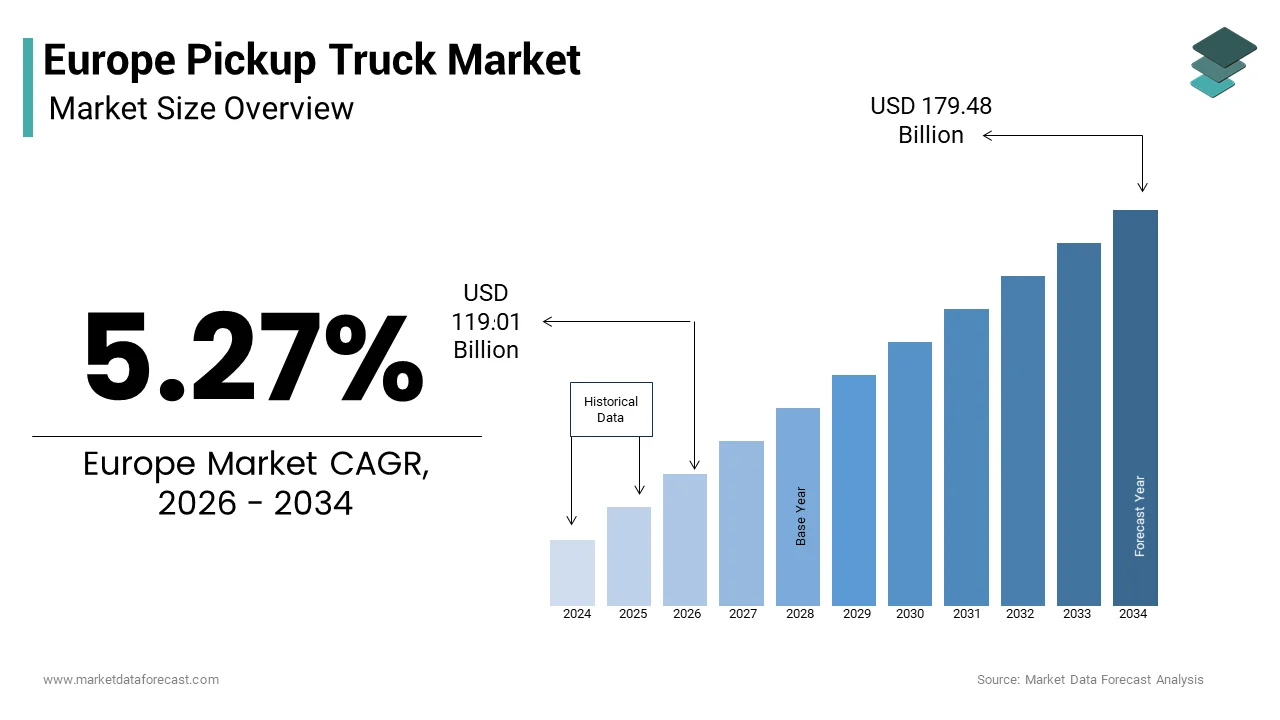
The Europe pickup truck market size was valued at USD 113.05 billion in 2025 and is anticipated to reach USD 119.01 billion in 2026 to reach USD 179.48 billion by 2034, growing at a CAGR of 5.27% during the forecast period from 2026 to 2034.
Current Market Introduction of the Europe Pickup Truck Market
A pickup truck is a versatile light-duty vehicle featuring an enclosed passenger cabin and an open rear cargo bed with low sides and a tailgate. These vehicles serve a dual purpose, functioning as robust utility tools for industrial and agricultural sectors while increasingly appealing to private consumers seeking versatile lifestyle vehicles. Unlike North America where pickups dominate passenger vehicle sales, the European market is niche, driven primarily by specific regulatory advantages and functional requirements in rural and semi urban areas. According to the European Automobile Manufacturers Association, light commercial vehicles accounted for approximately 12 percent of total vehicle registrations in the European Union in 2023, with pickups representing a distinct subset within this category. The market is heavily influenced by tax regulations that often classify these vehicles as commercial assets, offering fiscal benefits to business users. Research identifies the agriculture and construction sectors as key markets for pickup trucks. According to Eurostat, while the construction sector generates a notable share of value added in member states like France, Germany, and Poland, the agricultural sector comprises a comparatively smaller proportion of their respective economies. The shift towards electrification is also beginning to impact this segment, with manufacturers introducing battery electric variants to comply with stringent emission norms. The definition of the market extends beyond mere transportation to include specialized applications in emergency services, forestry, and outdoor recreation. This unique positioning requires a nuanced understanding of both legislative frameworks and consumer behavior patterns that differ markedly from other global regions.
MARKET DRIVERS
Favorable Tax Regulations and Commercial Vehicle Classification
Favorable tax regulations and the classification of these trucks as commercial vehicles are the key forces leading the growth of the Europe pickup trucks market. In many European countries, pickup trucks are categorized as light commercial vehicles rather than passenger cars, which results in significant tax advantages for business owners and self employed individuals. This classification allows companies to reclaim value added tax on purchases and operating costs, while also benefiting from lower benefit in kind taxes for employees using these vehicles for personal use. The European Commission supports national tax policies that align with industrial decarbonisation, though specific incentives for commercial vehicles are increasingly tied to zero-emission performance. These frameworks aim to reduce the administrative and compliance burdens for small and medium-sized enterprises transitioning to sustainable transport solutions. For instance, in the United Kingdom and Ireland, the flat rate benefit in kind tax for pickup trucks is substantially lower than that for equivalent sport utility vehicles, leading to increased corporate fleet adoption. The Society of Motor Manufacturers and Traders (SMMT) indicate that commercial vehicle demand is influenced by shifting fiscal regulations and tax classifications. Businesses continue to evaluate their vehicle fleets to navigate changing tax liabilities and economic conditions, often prioritizing utility and operational efficiency. The ability to deduct operational expenses such as fuel, maintenance, and insurance further enhances the total cost of ownership appeal. This regulatory framework encourages industries such as construction, agriculture, and landscaping to prefer pickup trucks over vans for tasks requiring both passenger transport and cargo capacity. The consistency of these tax benefits across multiple jurisdictions ensures a stable baseline demand, insulating the market from some of the volatility seen in the passenger car sector.
Growth in Outdoor Recreation and Lifestyle Adoption
The growing popularity of outdoor recreation and the adoption of these trucks as lifestyle vehicles fuels the overall expansion in the Europe pickup truck market. Consumers are increasingly engaging in activities such as camping, cycling, surfing, and skiing, which require vehicles capable of transporting bulky equipment and navigating diverse terrains. Pickup trucks offer the versatility of an open cargo bed for gear storage and the towing capacity needed for trailers and boats, making them ideal for active lifestyles. The European Outdoor Group has identified a significant increase in public appetite for outdoor activity, driven by a cultural shift toward health and nature-based leisure. This trend is reflected in a growing interest in various outdoor sports and a heightened appreciation for natural environments following global health events. Moreover, studies shows that the camping and caravanning sector in Europe is a major segment of the leisure travel market, characterized by consistent consumer interest. A substantial number of European households engage with this market through the purchase or rental of specialized recreation equipment and services. This trend is particularly pronounced in Northern and Western European countries where access to natural landscapes is highly valued. Manufacturers have responded by designing pickup trucks with enhanced comfort features, advanced infotainment systems, and stylish aesthetics that appeal to private buyers. The rise of double cab models provides sufficient seating for families while maintaining utility, bridging the gap between work and leisure. Social media influence also plays a role, with lifestyle branding promoting the rugged and adventurous image associated with pickup trucks. This demographic expansion beyond traditional commercial users diversifies the customer base and drives incremental sales volumes, particularly in premium segments where features and brand prestige are key purchasing factors.
MARKET RESTRAINTS
Stringent Emission Standards and Environmental Regulations
Stringent emission standards and environmental regulations act as a major restraint on the Europe pickup truck market. This imposes significant compliance burdens on manufacturers and increases vehicle costs. The European Union has implemented rigorous Euro 7 emission norms and carbon dioxide reduction targets that challenge the traditional diesel powered powertrains commonly used in pickup trucks. According to the European Environment Agency, the transport sector remains a primary source of greenhouse gas emissions in the European Union, lagging behind the decarbonisation rates seen in other industrial sectors. This trend has led to the implementation of more rigorous regulatory frameworks to align the sector with broader climate goals. The International Council on Clean Transportation (ICCT) indicates that meeting new emission standards involves the integration of sophisticated engine technologies and emissions control systems. While these advancements involve investment in research and development, modern engineering solutions aim to preserve the operational performance and hauling capabilities of commercial vehicles. The push towards zero emission zones in major cities further limits the usability of internal combustion engine pickups, discouraging urban and suburban buyers. Additionally, the impending ban on the sale of new petrol and diesel cars by 2035 in several European countries creates uncertainty for long term investment in conventional pickup models. Manufacturers must invest heavily in research and development to create compliant engines or transition to electric alternatives, which are currently limited in range and towing capability. These regulatory pressures squeeze profit margins and may lead to higher retail prices, reducing affordability for price sensitive commercial users. The complexity of navigating differing national implementations of EU directives also complicates market strategy for global manufacturers, potentially slowing down the introduction of new models and restricting market growth.
Limited Charging Infrastructure for Electric Variants
Limited charging infrastructure for electric variants is a significant restraint on the adoption of electric trucks in the Europe pickup trucks market. Consequently, this hinders the market's transition towards sustainability. While manufacturers are introducing battery electric pickup models, the existing charging network is often insufficient to support the high energy demands of these heavy duty vehicles, particularly for users who rely on towing and hauling capabilities. Statistics from the European Alternative Fuels Observatory (EAFO) reveal that the availability of public charging infrastructure varies across the European Union. While urban centers often have higher concentrations of charging points, strategic efforts are being made to improve the accessibility and distribution of charging networks in diverse geographic regions to support all vehicle types. The International Energy Agency (IEA) emphasizes that the expansion of high-capacity charging networks is essential for the widespread adoption of electric vehicles used for heavy-duty tasks and long-distance travel. The development of this infrastructure, alongside improvements in vehicle battery architecture, is key to enhancing the practicality of electric options for professional and commercial applications. Towing significantly reduces the range of electric vehicles, exacerbating range anxiety among potential buyers who need reliable performance for professional applications. The time required for charging also impacts productivity for commercial users who cannot afford extended downtime. Furthermore, the installation of home charging solutions is challenging for residents in apartment buildings or older properties without dedicated parking spaces. This infrastructure gap creates a barrier to entry for early adopters and slows down the replacement cycle of diesel pickups. Widespread adoption of electric pickup trucks will remain constrained until the charging network expands and fast-charging technology improves. This limitation hinders the market's ability to meet regulatory goals and consumer demand for cleaner alternatives.
MARKET OPPORTUNITIES
Expansion of Electric and Hybrid Powertrain Offerings
The expansion of electric and hybrid powertrain offerings unlocks possibilities for the Europe pickup truck market. This allows manufacturers to align with sustainability goals and capture environmentally conscious consumers. Regulatory pressure is intensifying, making it essential for companies to develop battery electric and plug-in hybrid variants. This approach enables them to maintain market relevance and access government incentives for zero-emission vehicles. BloombergNEF indicates that the cost of lithium-ion battery packs is expected to continue its long-term decline as production scales and technology improves. This trend is a key factor in closing the price gap between electric commercial vehicles and traditional internal combustion engine models. Several major automotive manufacturers have signaled their intention to introduce electric pickup models to the European market. These upcoming vehicles are designed to meet regional requirements for range, utility, and towing capacity, reflecting a broader industry shift toward the electrification of the light commercial vehicle segment. These vehicles offer lower operating costs due to reduced maintenance requirements and cheaper electricity compared to diesel fuel, appealing to fleet operators focused on total cost of ownership. Additionally, electric pickups provide instant torque, enhancing performance in off road and loading scenarios. The integration of vehicle to load technology allows users to power tools and equipment directly from the vehicle battery, adding value for professional users. Governments are also introducing subsidies and tax breaks for electric commercial vehicles, further stimulating demand. By pioneering this segment, manufacturers can establish brand leadership and differentiate themselves in a crowded market. The opportunity extends to developing specialized charging solutions and partnerships with energy providers to create a comprehensive ecosystem that supports electric pickup adoption.
Growth in Last Mile Delivery and Urban Logistics
The growth in last-mile delivery and urban logistics offers a significant opportunity for the European pickup truck market. It is particularly suited for compact and electric models designed for city environments. The surge in e commerce has increased the demand for efficient delivery vehicles that can navigate narrow streets and access restricted zones while carrying substantial cargo. Data from Eurostat shows a sustained increase in the percentage of businesses and consumers engaging in e-commerce across the European Union. This growth in digital trade is a primary driver of increased activity within the regional transport and delivery sectors. Studies emphasizes that the final stage of the delivery process accounts for a substantial share of total supply chain expenses. To manage these costs, transport operators are increasingly evaluating vehicle efficiency and specialized fleet configurations to improve operational performance in diverse delivery environments. Pickup trucks with smaller footprints and electric powertrains can operate in low emission zones where larger vans are restricted, providing a competitive advantage for delivery firms. The open bed design allows for easy loading and unloading of parcels, reducing delivery times and improving worker ergonomics. Manufacturers can capitalize on this trend by designing specialized configurations with secure storage compartments and modular accessories tailored for courier services. Partnerships with logistics providers can facilitate fleet trials and bulk purchases, establishing a steady revenue stream. The adaptability of pickup trucks for various urban tasks, including maintenance and municipal services, further broadens their application scope. Manufacturers can tap into a growing segment that values agility, sustainability, and operational efficiency by addressing the specific needs of urban logistics. This approach drives market expansion beyond traditional rural and industrial uses.
MARKET CHALLENGES
Intense Competition from Sport Utility Vehicles and Vans
Intense competition from SUVs and vans poses a critical challenge to the European pickup truck market. These alternatives often offer similar utility with greater comfort and lower operating costs. Sport utility vehicles have evolved to provide substantial cargo space and towing capacity while delivering a smoother ride and better fuel efficiency, appealing to both private and commercial users. The European Automobile Manufacturers’ Association (ACEA) shows that sport utility vehicles now represent more than half of all new passenger car registrations in the European Union. This segment's growth reflects a major shift in consumer preference toward versatile vehicle body styles across the continent. Study by JATO Dynamics suggests that vehicle segments in Europe are increasingly specialized, with vans remaining a primary choice for dedicated cargo transport and SUVs leading in passenger comfort. Within this landscape, pickup trucks serve a distinct role, catering to users who require a combination of off-road capability and utility. The higher purchase price and running costs of pickup trucks, driven by their commercial vehicle classification and heavier build, make them less attractive for budget conscious buyers. Additionally, the limited variety of models available in Europe compared to North America restricts consumer choice and innovation. Manufacturers struggle to differentiate pickups in a market saturated with versatile alternatives that meet diverse needs without the compromises associated with open bed designs. The dominance of established brands in the sport utility vehicle and van segments creates high barriers to entry for pickup manufacturers trying to expand their footprint. Overcoming this competition requires significant marketing efforts and product differentiation to highlight the unique benefits of pickup trucks, such as durability and payload capacity, which remain difficult against the convenience of competing vehicle types.
Supply Chain Disruptions and Raw Material Volatility
Supply chain disruptions and raw material volatility are a significant inhibitor to the Europe pickup truck market. This affects production schedules and pricing stability. The manufacturing of pickup trucks relies on a complex global supply chain for components such as semiconductors, steel, and battery materials, which have been subject to shortages and price fluctuations in recent years. The European Central Bank (ECB) notes that while global supply chains have stabilized, the automotive sector continues to navigate a complex environment of evolving producer prices. The industry is currently balancing production levels with changing consumer demand and regional economic conditions. In addition, the International Monetary Fund (IMF) tracks how geopolitical developments and trade policies influence the global supply of critical minerals. While these factors impact the availability of materials for electric vehicle batteries, the market has seen significant price adjustments for key components like lithium and cobalt as global production capacity expands. These disruptions force manufacturers to adjust production plans and pass increased costs onto consumers, potentially dampening demand in a price sensitive market. The reliance on single source suppliers for critical components further increases vulnerability to disruptions, as seen during the semiconductor crisis. For commercial users, delays in vehicle availability can impact business operations and profitability, leading to frustration and potential switching to alternative transport solutions. Manufacturers must invest in supply chain diversification and inventory management strategies to mitigate these risks, but these measures require significant capital and time. The ongoing uncertainty in global trade networks means that market participants must remain agile and resilient to navigate these challenges effectively while maintaining competitive pricing and product availability in the European market.
REPORT COVERAGE
| REPORT METRIC | DETAILS |
| Market Size Available | 2025 to 2034 |
| Base Year | 2025 |
| Forecast Period | 2026 to 2034 |
| CAGR | 5.27% |
| Segments Covered | By Type, Product, and Country. |
| Various Analyses Covered | Global, Regional, and country Analysis, Segment-Level Analysis, DROC, PESTLE Analysis, Porter’s Five Forces Analysis, Competitive Landscape, Analyst Overview of Investment Opportunities |
| Regions Covered | North America, Europe, APAC, Latin America, Middle East & Africa |
| Market Leaders Profiled | Ashok Leyland Ltd., Beijing Automotive Group Co. Ltd., Toyota Motor Corporation, Volkswagen AG, Dr. Ing. h.c. F. Porsche AG, Ford Motor Co., General Electric Co., Great Wall Motor Co. Ltd., Honda Motor Co. Ltd., Hyundai Motor Co., Isuzu Motors Ltd., Jiangling Motors Corp. Ltd., KG Mobility, Mahindra and Mahindra Ltd., Mercedes Benz Group AG, Mitsubishi Motors Corp., Renault SAS, Rivian Automotive LLC, Stellantis NV, Suzuki Motor Corp., Tata Motors Ltd. |
SEGMENTAL ANALYSIS
By Type Insights
The double cab segment held the majority share of 65.3% of the Europe pickup truck market in 2025. This prominence of the segment is attributed to the versatility of the double cab configuration, which offers seating for five passengers alongside a functional cargo bed, making it suitable for both family use and professional applications. Trends observed by automotive analysts indicate a growing interest in vehicles that offer a blend of passenger comfort and utilitarian features. This shift reflects a broadening of consumer preferences as buyers look for versatile options that serve both professional requirements and personal leisure activities. The double cab allows businesses to transport work crews efficiently while maintaining the ability to carry tools and equipment in the rear bed. In markets such as the United Kingdom and Ireland, the demand for light commercial vehicles has historically been influenced by fiscal policies and tax structures. While double-cab configurations have been popular, recent changes in tax classifications are prompting businesses and fleet operators to re-evaluate their vehicle choices for company schemes. The enhanced interior space and modern amenities in double cab models, such as advanced infotainment systems and safety features, appeal to lifestyle users who engage in outdoor activities. Manufacturers have focused their product development efforts on this segment, offering a wider variety of trim levels and customization options. The ability to tow substantial loads while providing comfortable long distance travel makes the double cab the preferred choice for agricultural and construction professionals who require a multi purpose vehicle. This broad appeal across diverse user groups sustains its market leadership and drives consistent sales volumes across the region.
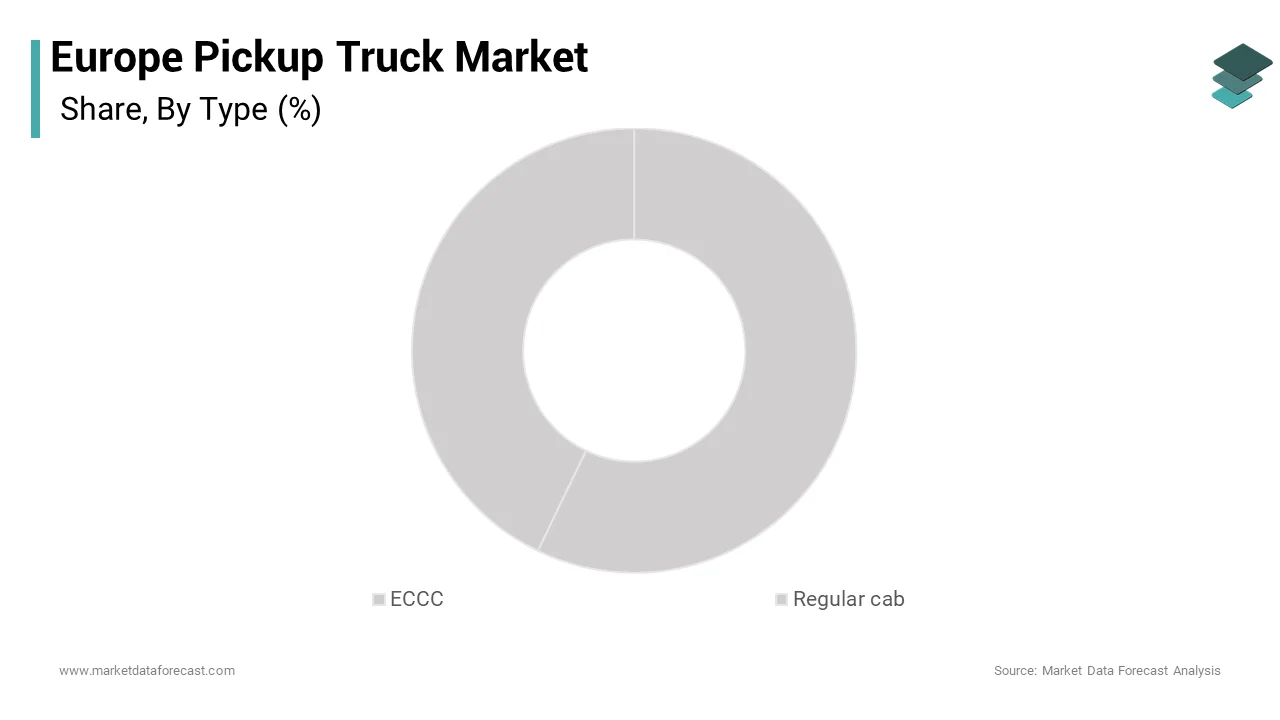
The single cab and regular cab segment is predicted to witness the highest CAGR of 4.2% over the forecast period owing to specialized industrial and municipal sectors that prioritize payload capacity and cost efficiency over passenger comfort. Single cab pickups offer a longer cargo bed and higher payload limits compared to double cab variants, making them ideal for utility companies, landscaping firms, and agricultural operations that need to transport large equipment or materials. Eurostat confirms that the agriculture and forestry sectors remain major components of the European economy, with ongoing investments in modern equipment. These sectors rely on a variety of utility-focused transport solutions to maintain productivity and operational efficiency in demanding environments. Small business owners in rural regions often prioritize cost-effectiveness and durability when selecting commercial vehicles. Decisions between different vehicle configurations are typically driven by specific operational needs, such as maximizing load space or minimizing total cost of ownership over the vehicle's lifespan. These vehicles are often used as base units for specialized conversions, such as mobile workshops, refrigerated transport, or emergency response units. The simplicity of the single cab design also translates to better fuel efficiency and lower emissions, aligning with corporate sustainability goals. Government contracts for infrastructure maintenance and public services frequently specify single cab pickups for their practicality and ease of modification. While the overall volume is smaller than the double cab segment, the targeted demand from professional users ensures stable growth. Manufacturers are responding by offering rugged, no frills models that emphasize durability and functionality, catering to the specific needs of this essential but often overlooked market segment.
By Product Insights
The small size and mid size pickup truck segment led the Europe pickup truck market and held a significant share in 2025 because of the suitability of these vehicles for European road conditions, urban environments, and regulatory frameworks. Unlike the full size trucks popular in North America, mid size pickups offer a balance of maneuverability, fuel efficiency, and payload capacity that aligns with European consumer preferences and infrastructure constraints. According to sources, narrower roads and limited parking spaces in many European cities make smaller vehicles more practical for daily use. These vehicles comply with European emission standards more easily than larger counterparts and are often eligible for favorable tax treatments as light commercial vehicles. The availability of diesel engines with high torque output suits the towing and hauling needs of European businesses without the excessive fuel consumption associated with full size trucks. Additionally, the pricing of mid size pickups is more accessible to small and medium sized enterprises, which form the backbone of the European economy. The widespread dealer network and after sales support for these models further reinforce their market dominance. Manufacturers continue to refine these vehicles with enhanced technology and comfort features, ensuring they remain competitive against sport utility vehicles while retaining their utility advantages.
The full size pickup truck segment is estimated to register the fastest CAGR of 6.5% between 2026 and 2034 due to a niche luxury landscape and specific industrial applications requiring maximum towing and payload capacity. Full size pickups, such as the Ford F 150 and Ram 1500, are increasingly imported for specialized tasks in construction, agriculture, and leisure activities like horse towing. The expansion of e commerce and logistics has also created demand for high capacity delivery vehicles in rural areas where size restrictions are less stringent. Although regulatory hurdles such as higher import duties and emission penalties exist, the distinct advantages of full size trucks in heavy duty applications sustain their growth. Manufacturers are exploring ways to adapt these vehicles for the European market, including offering diesel engine options and ensuring compliance with local safety standards. The exclusivity and capability of full size pickups create a dedicated customer base willing to pay a premium, driving disproportionate growth in this segment compared to the saturated mid size market.
COUNTRY LEVEL ANALYSIS
United Kingdom Pickup Truck Market Analysis
The United Kingdom dominated the Europe pickup truck market and occupied a 28.2% share in 2025. This growth of the UK market is driven by a strong culture of commercial vehicle usage and favorable tax regulations that incentivize business purchases. According to research, pickup trucks are among the most popular light commercial vehicles in the UK, driven by their classification for benefit in kind tax purposes. This fiscal advantage makes them an attractive option for company car drivers and self employed individuals seeking to minimize tax liabilities. The UK’s diverse geography, from rural farmlands to coastal regions, supports varied usage scenarios for pickup trucks in agriculture, leisure, and trade. Major manufacturers have established strong distribution networks and marketing campaigns tailored to the British market, emphasizing durability and lifestyle appeal. The presence of key manufacturing facilities, such as the Nissan plant in Sunderland, also contributes to local supply chain resilience. Government initiatives promoting rural development and infrastructure projects further boost demand for utility vehicles. The UK’s exit from the European Union has introduced some regulatory complexities, but the domestic market remains robust due to entrenched consumer preferences and established industry practices. The continued popularity of models like the Ford Ranger and Toyota Hilux underscores the UK’s pivotal role in the European pickup truck landscape.
Germany Pickup Truck Market Analysis
Germany followed closely behind in the Europe pickup truck market and held a 18.1% share in 2025. This position of the German market is propelled by a strong industrial base and a preference for high quality, efficient vehicles that meet strict environmental standards. German consumers prioritize engineering excellence, fuel efficiency, and technological innovation, prompting manufacturers to offer advanced diesel and hybrid models. The government’s emphasis on sustainability and emission reduction shapes purchasing decisions, with businesses increasingly considering electric pickup options. The extensive Autobahn network and well maintained rural roads facilitate the use of pickup trucks for both long distance travel and off road tasks. Major automotive brands headquartered in Germany, such as Volkswagen and Mercedes Benz, contribute to the market through competitive offerings and strong brand loyalty. Regulatory frameworks regarding vehicle safety and emissions are strictly enforced, ensuring high standards for all vehicles on the road. The integration of pickup trucks into corporate fleets for mixed use purposes further supports market growth. Germany’s economic stability and industrial strength provide a solid foundation for sustained demand in the pickup truck segment.
France Pickup Truck Market Analysis
France plays a major role in the Europe pickup truck market due to the country’s significant agricultural sector and extensive rural landscapes, which require versatile and durable vehicles. According to studies, the agricultural industry is a major consumer of pickup trucks for transporting equipment, livestock, and produce. As per sources, pickup truck sales in France are supported by government subsidies for farmers and rural businesses investing in modern machinery. The diverse terrain of France, from mountainous regions to coastal areas, necessitates vehicles with strong off road capabilities and towing capacity. French consumers also appreciate the lifestyle aspect of pickup trucks, with increasing adoption for leisure activities such as skiing and boating. The government’s push for rural development and infrastructure improvement enhances the utility of pickup trucks in remote areas. Environmental regulations are becoming stricter, prompting a gradual shift towards cleaner engine technologies and electric variants. Major dealerships and service networks are well established in rural communities, ensuring easy access to maintenance and support. The cultural affinity for outdoor activities and the practical needs of the agricultural workforce sustain steady demand. France’s commitment to supporting its rural economy and promoting sustainable agriculture ensures that pickup trucks remain a vital component of the national vehicle fleet.
Italy Pickup Truck Market Analysis
Italy witnessed a consistent growth in the Europe pickup truck market owing to a growing interest in lifestyle and leisure applications, particularly in northern regions and coastal areas. According to research, pickup truck registrations have seen a gradual increase as consumers seek versatile vehicles for outdoor adventures and family trips. As per sources, the tourism sector in Italy benefits from the flexibility of pickup trucks for transporting sports equipment and luggage to various destinations. The rugged terrain of the Alps and the extensive coastline provide ideal conditions for using pickup trucks in both recreational and professional contexts. Italian consumers value design and performance, leading to a preference for premium models with advanced features and stylish aesthetics. The agricultural sector in regions like Emilia Romagna and Sicily also contributes to demand, although to a lesser extent than in France or Germany. Government incentives for rural development and tourism infrastructure support the utilization of utility vehicles. The presence of international brands and local distributors ensures a wide range of choices for consumers. Environmental awareness is rising, encouraging the adoption of more efficient engines and hybrid technologies. Italy’s rich cultural heritage of outdoor living and its diverse geographical features create a unique market dynamic that favors versatile and attractive pickup truck models.
Spain Pickup Truck Market Analysis
Spain is anticipated to expand significantly in the Europe pickup truck market over the forecast period due to a robust tourism industry and a active construction sector, both of which utilize pickup trucks for various operational needs. The warm climate and extensive coastline make Spain a popular destination for water sports and outdoor activities, further boosting leisure related sales. Spanish consumers appreciate the durability and versatility of pickup trucks, with models like the Ford Ranger and Mitsubishi L200 being popular choices. Government investments in rural tourism and agricultural modernization support the uptake of utility vehicles in less developed regions. The regulatory environment is evolving to include stricter emission standards, prompting manufacturers to introduce cleaner engine options. The presence of major automotive manufacturing plants in Spain facilitates local supply and reduces costs. The combination of industrial utility and leisure appeal ensures a balanced demand profile. Spain’s strategic location and economic activities continue to drive steady growth in the pickup truck segment, reflecting its dual role in professional and personal context.
COMPETITIVE LANDSCAPE
The competition in the Europe pickup truck market is characterized by a limited number of global manufacturers vying for dominance in a niche but stable segment. Leading companies differentiate themselves through brand reputation vehicle reliability and specialized features tailored to European regulations. The market exhibits a high degree of brand loyalty particularly among commercial users who prioritize durability and low operating costs. Intense rivalry exists between established players like Ford Toyota and Volkswagen who continuously update their models to incorporate advanced technology and improved efficiency. The entry of new electric variants adds a layer of technological competition as manufacturers race to offer sustainable solutions without compromising payload or towing capacity. Price competitiveness remains important but is often secondary to total cost of ownership considerations including fuel efficiency and maintenance expenses. Strategic partnerships and platform sharing are common tactics to reduce development costs and accelerate time to market. The ability to provide comprehensive after sales support and flexible financing options also influences purchasing decisions. As environmental regulations tighten manufacturers must balance performance with compliance creating a dynamic competitive environment where innovation and adaptability are crucial for sustained success and market relevance in Europe.
KEY MARKET PLAYERS
A few of the market players that are dominating the Europe pickup truck market
- Ashok Leyland Ltd.
- Beijing Automotive Group Co. Ltd.
- Toyota Motor Corporation
- Volkswagen AG
- Dr. Ing. h.c. F. Porsche AG
- Ford Motor Co.
- General Electric Co.
- Great Wall Motor Co. Ltd.
- Honda Motor Co. Ltd.
- Hyundai Motor Co.
- Isuzu Motors Ltd.
- Jiangling Motors Corp. Ltd.
- KG Mobility
- Mahindra and Mahindra Ltd.
- Mercedes Benz Group AG
- Mitsubishi Motors Corp.
- Renault SAS
- Rivian Automotive LLC
- Stellantis NV
- Suzuki Motor Corp.
- Tata Motors Ltd.
Top Players In The Market
- Ford Motor Company maintains a dominant presence in the Europe pickup truck market through its highly popular Ranger model. The company leverages its global engineering expertise to deliver vehicles that meet specific European regulatory and consumer needs. Ford recently introduced the all new electric Ranger variant to align with stringent emission standards and growing demand for sustainable transport solutions. This strategic move strengthens its position by appealing to environmentally conscious commercial fleets and private buyers. The company also enhances its digital services offering connected vehicle technologies that improve fleet management efficiency. Ford continues to invest in local manufacturing capabilities ensuring supply chain resilience and faster market response. Its robust dealer network provides comprehensive after sales support reinforcing customer loyalty. Ford combines rugged utility with modern technology to solidify its reputation as a leader in the European segment. Through continuous innovation and market adaptation, the company also significantly strengthens its global commercial vehicle portfolio.
- Toyota Motor Corporation is a key player in the Europe pickup truck market renowned for the reliability and durability of its Hilux model. The company focuses on providing dependable utility vehicles that cater to diverse industrial and agricultural sectors across the continent. Toyota recently updated the Hilux with enhanced safety features and improved fuel efficiency to comply with evolving European regulations. The introduction of hybrid powertrain options demonstrates its commitment to sustainability and reducing carbon emissions. Toyota strengthens its market position by expanding its service network and offering tailored financing solutions for business customers. The brand’s reputation for longevity and low maintenance costs attracts loyal users in demanding work environments. Toyota also engages in strategic partnerships with local businesses to promote specialized vehicle configurations. Its global leadership in hybrid technology provides a competitive edge as the market transitions towards electrification. Toyota continues to drive growth and maintain a strong foothold in the competitive European pickup truck landscape. They achieve this by prioritizing quality and innovation.
- Volkswagen AG competes strongly in the Europe pickup truck market with its Amarok model which blends utility with premium comfort. The company leverages its extensive engineering resources and brand prestige to appeal to both commercial and lifestyle users. Volkswagen recently launched a new generation Amarok developed in collaboration with Ford enhancing its technological sophistication and performance capabilities. This partnership allows Volkswagen to share development costs while delivering a product tailored to European preferences. The company focuses on integrating advanced driver assistance systems and connectivity features to differentiate its offerings. Volkswagen strengthens its position by promoting the Amarok as a versatile vehicle suitable for professional use and leisure activities. Its widespread dealership network ensures easy access to sales and service across the region. The emphasis on high quality interiors and refined driving dynamics attracts customers seeking a more car like experience. Volkswagen captures a unique segment of the market by balancing ruggedness with refinement. In doing so, they reinforce their status as a major contributor to the global pickup truck market.
Top Strategies Used By The Key Market Participants
Key players in the Europe pickup truck market primarily employ strategies such as product electrification strategic collaborations and enhanced digital connectivity to strengthen their competitive positions. Companies invest heavily in developing battery electric and hybrid models to comply with strict environmental regulations and meet growing consumer demand for sustainable vehicles. Partnerships between manufacturers enable shared technology development and cost reduction while expanding product portfolios. Firms also focus on integrating advanced telematics and fleet management software to provide added value to commercial clients. Marketing efforts emphasize versatility targeting both professional users and lifestyle consumers through tailored messaging. Expanding service networks and offering flexible financing options help attract small business owners and individual buyers. Manufacturers continuously upgrade safety features and interior comfort to compete with sport utility vehicles. These strategic initiatives allow market participants to adapt to regulatory changes and shifting consumer preferences while maintaining leadership in the evolving European landscape.
MARKET SEGMENTATION
This research report on the Europe pickup truck market is segmented and sub-segmented into the following categories.
By Type
- ECCC
- Regular cab
By Product
Full-size pickup truck
Small-size and mid-size pickup truck
By Country
- UK
- Russia
- Germany
- Italy
- France
- Spain
- Sweden
- Denmark
- Poland
- Switzerland
- Netherlands
- Rest of Europe
Frequently Asked Questions
What is driving demand in the Europe pickup truck market today?
Increasing need for versatile utility vehicles in construction, agriculture, and small businesses is driving demand.
Why are pickup trucks gaining popularity in Europe despite being a niche segment?
Their combination of cargo capacity and everyday usability is attracting both commercial and lifestyle users.
How would you define a pickup truck in simple terms?
It is a light-duty vehicle with an open cargo bed designed for both work and personal use.
Where are pickup trucks most commonly used across Europe?
They are widely used in rural areas, construction sites, and outdoor industries.
What makes pickup trucks suitable for both work and leisure purposes?
They offer durability, towing capability, and passenger comfort in a single vehicle.
Are pickup trucks considered cost-effective for businesses in Europe?
Yes, they provide a practical solution for transporting goods and equipment with lower operational complexity.
What challenges are affecting the Europe pickup truck market?
Strict emission regulations and urban driving limitations are key challenges.
How is electrification influencing pickup trucks in Europe?
Manufacturers are introducing electric and hybrid models to meet environmental standards.
Which countries are leading pickup truck demand in Europe?
Germany, the UK, and France are among the major contributors to regional demand.
Is the Europe pickup truck market growing steadily?
Yes, the market is experiencing gradual growth supported by utility-driven demand
Access the study in MULTIPLE FORMATS
Purchase options starting from
$ 2000
Didn’t find what you’re looking for?
TALK TO OUR ANALYST TEAM
Need something within your budget?
NO WORRIES! WE GOT YOU COVERED!
Call us on: +1 888 702 9696 (U.S Toll Free)
Write to us: sales@marketdataforecast.com