Global Industrial Hemp Market Size, Share, Trends & Growth Forecast Report By Type (Hemp Seed, Hemp Seed Oil, CBD Hemp Oil and Hemp Fiber), Application (Food, Beverages, Personal care products, Textiles, Pharmaceuticals and Others) and Region (North America, Europe, Asia-Pacific, Latin America, Middle East and Africa), Industry Analysis From 2025 To 2033.
Global Industrial Hemp Market Summary
The global industrial hemp market was valued at USD 9.6 billion in 2024 and is projected to reach USD 72.57 billion by 2033, increasing from USD 12.02 billion in 2025 at an impressive CAGR of 25.2% (2025–2033). The growth of the industrial hemp market is majorly fueled by rising applications across textiles, food & beverages, pharmaceuticals, and bio-based materials.
Key Market Trends
- Growing demand for sustainable and eco-friendly raw materials across industries.
- Expanding applications in plant-based food, beverages, and dietary supplements.
- Increasing government support and legalization of hemp cultivation in many countries.
- Rising use of hemp in construction (hempcrete) and automotive lightweight composites.
Segmental Insights
- Based on type, the hemp fiber segment dominated the market in 2024, supported by its large-scale use in textiles, ropes, bio-composites, and industrial materials.
- Based on application, the hemp seeds and oil segment is gaining rapid adoption in nutritional and personal care products, while hemp hurd is increasingly used in construction materials.
Regional Insights
- Asia Pacific held a significant share of the global market in 2024, led by large-scale cultivation in China, India, and other countries with favorable climate and government support.
- North America is expected to witness robust growth, driven by expanding legalization and the strong presence of hemp-based product manufacturers.
- Europe is seeing steady adoption due to rising demand for eco-friendly fibers and plant-based nutrition.
- Latin America & Middle East & Africa are emerging markets with growing hemp cultivation potential and new regulatory frameworks.
Competitive Landscape
The global industrial hemp market is highly competitive, with key players such as Hempco, Ecofibre, Hemp Inc., Gencanna, Hempflax BV, Konoplex Group, Hemp Oil Canada, BAFA, Hemp Poland, Dun Agro, Colorado Hemp Works, Canal International, South Hemp Tecno, Plains Industrial Hemp Processing, and MH Medical Hemp.
Global Industrial Hemp Market Size
The size of the global industrial hemp market was worth USD 9.6 billion in 2024. The global market is anticipated to grow at a CAGR of 25.2% from 2025 to 2033 and be worth USD 72.57 billion by 2033 from USD 12.02 billion in 2025.
Industrial hemp is the cultivation, processing, and commercial utilization of Cannabis sativa L. plants containing less than 0.3% tetrahydrocannabinol (THC) for non-psychoactive applications across textiles, construction, biofuels, bioplastics, animal feed, and nutritional products. Unlike marijuana, industrial hemp is cultivated for its fibrous stalks, seeds, and hurd, offering a renewable raw material with high tensile strength, low environmental footprint, and versatile byproducts. In the Asia Pacific region, renewed interest in this crop stems from its drought resilience, minimal pesticide requirement, and capacity to remediate degraded soils through phytoremediation. As per the Food and Agriculture Organization of the United Nations, hemp can sequester up to 15 metric tons of carbon dioxide per hectare annually, positioning it as a strategic component in climate-smart agriculture initiatives.
MARKET DRIVERS
Growing Demand for Sustainable Construction Materials Fuels Industrial Hemp Adoption
The construction sector’s shift toward low-carbon and renewable building solutions is significantly increasing the demand for industrial hemp in the form of hempcrete and bio-based insulation. Hempcrete is a composite material made from hemp hurd and lime that offers superior thermal regulation, moisture resistance, and carbon sequestration capabilities. According to the International Energy Agency, buildings account for nearly 37% of global energy-related carbon dioxide emissions, prompting governments and developers to explore alternative materials. Similarly, South Korea’s Green Building Certification System now awards additional points for bio-sourced materials, incentivizing their integration into new developments. As per the Asian Development Bank, retrofitting urban infrastructure in Southeast Asia will require over 1.5 billion square meters of sustainable materials by 2030, creating substantial opportunity for hemp-based products. Pilot collaborations between Australian hemp processors and Singaporean architectural firms have already yielded modular housing units with 30% lower embodied energy than conventional concrete structures.
Expansion of Plant-Based Nutrition and Functional Food Markets Drives Seed-Derived Demand
The consumer demand for plant-based proteins and nutrient-dense functional foods is propelling the growth of the industrial hemp market. Hemp seeds contain all nine essential amino acids, deliver a balanced ratio of omega-3 to omega-6 fatty acids, and offer up to 33 grams of protein per 100 grams, according to the United States Department of Agriculture’s National Nutrient Database. Urban populations in India and China are increasingly adopting protein-rich diets due to rising fitness awareness and lactose intolerance prevalence exceeding 70%, as documented by the National Center for Biotechnology Information. Additionally, clinical research conducted by the University of Wollongong confirmed that daily intake of hemp seed oil improves lipid profiles in adults with metabolic syndrome.
MARKET RESTRAINTS
Persistent Legal and Regulatory Ambiguity Hinders Commercial Scalability
The inconsistent and often restrictive legal frameworks that conflate hemp with psychoactive cannabis varieties are restraining the growth of the industrial hemp market. As per the United Nations Office on Drugs and Crime, over 65% of nations in the region,n including Indonesia, Malaysia, and South Korea, classify all forms of Cannabis sativa under controlled substances acts regardless of cannabinoid profile. In Thailand, although medical and wellness cannabis was briefly decriminalized in 2022, subsequent regulatory reversals have created uncertainty affecting investor confidence in hemp-based ventures. Similarly, in India, while states like Uttarakhand have permitted pilot farming, the absence of a unified national food safety standard for hemp ingestion from the Food Safety and Standards Authority of India delays the commercialization of seed-derived products. This patchwork of regulations discourages cross-border trade, limits research funding, and deters private sector investment. According to the International Hemp Association, only 12 countries in the region have established dedicated licensing systems for industrial hemp cultivation compared to 42 globally.
Limited Availability of High-Yield Certified Seeds and Processing Infrastructure
The scarcity of genetically optimized certified seeds and localized processing facilities tailored for fiber and grain separation is likely to hinder the growth of the industrial hemp market. As per the Food and Agriculture Organization, the United Nations, less than 5% of hemp grown in the Asia Pacific is cultivated from officially registered high-yield varieties adapted to regional agro-climatic conditions. The absence of seed banks and public breeding programs restricts farmers’ access to disease-resistant, uniform crops essential for commercial viability. Additionally, post-harvest processing remains a major challenge due to the labor-intensive nature of decortication, the process of separating bast fibers from hurd. In Nepal and northern India, manual processing still dominates, with only 8% of production units equipped with mechanical decorticators as reported by the Asian Development Bank. This inefficiency increases production costs, reduces output consistency, and limits supply for large-scale manufacturing.
MARKET OPPORTUNITIES
Integration into Circular Agricultural Systems Enhances Soil Health and Crop Rotation Efficiency
The sustainable farming practices, by serving as a regenerative rotational crop that improves soil structure and reduces chemical dependency, are ascribed to bolster the growth opportunities for the industrial hemp market. Its deep taproot system, which can extend up to two meters, breaks up compacted soil layers, enhances water infiltration, and prevents erosion. According to the Food and Agriculture Organization of the United Nations, fields cultivated with hemp exhibit a 30% reduction in soil compaction compared to conventional row crops like maize or cotton. In Japan, pilot programs under the Ministry of Agriculture, Forestry, and Fisheries are testing hemp as a rotational crop in rice paddies to interrupt pest cycles and restore organic matter.
Rising Investment in Biodegradable Packaging and Plastic Alternatives Accelerates Industrial Hemp Utilization
The global shift toward replacing petroleum-based plastics with renewable biocomposites is expected to create new opportunities for the growth of the industrial hemp market. Hemp cellulose offers high tensile strength, thermal stability, and rapid biodegradability, making it ideal for producing compostable containers, protective wraps, and single-use food service items. Companies such as Evoware and Greenhope in Bali have already commercialized edible and compostable packaging using plant-based blends incorporating hemp. In India, the Central Pollution Control Board reported that 68 out of 122 cities failed to meet plastic waste processing targets in 2023, intensifying pressure for scalable alternatives. Research conducted at the University of Queensland confirms that hemp-based bioplastics degrade completely within 90 days under industrial composting conditions, significantly faster than polylactic acid (PLA) derivatives.
MARKET CHALLENGES
Lack of Standardized Quality Grading and Certification Systems Impedes Market Trust
The absence of unified quality benchmarks undermines commercial confidence and limits large-scale procurement by manufacturers and food processors, which is a major challenge for the industrial hemp market players. As per the International Organization for Standardization, only three countries in the region, such as Australia, Japan, and China, have developed partial national standards for hemp fiber quality, leaving the majority of producers without formal grading frameworks. In India, where pilot cultivation is expanding, a 2023 study by the Central Institute of Medicinal and Aromatic Plants found that hemp samples from different farms varied in fiber tensile strength by up to 42%, rendering them unsuitable for textile manufacturing that requires uniform input. Similarly, in Nepal, informal trade dominates due to the absence of certification bodies, resulting in price volatility and buyer skepticism.
Competition from Established Natural Fibers Limits Industrial Hemp’s Market Penetration
The intense competition from well-entrenched natural fibers such as cotton, jute, and bamboo, which benefit from decades of infrastructure, processing expertise, and consumer familiarity, is expected to impede the growth of the industrial hemp market. Jute is predominantly cultivated in Bangladesh and Eastern India, which remains the most widely used bast fiber for packaging and geotextiles, supported by government subsidies and over 300 decortication mills operating across the Ganges Delta, as reported by the Bangladesh Jute Mills Corporation. Bamboo, though less processed, is promoted aggressively in Southeast Asia under green economy initiatives, with Thailand and Vietnam investing heavily in bamboo composite research through their respective ministries of agriculture.
REPORT COVERAGE
| REPORT METRIC | DETAILS |
| Market Size Available | 2024 to 2033 |
| Base Year | 2024 |
| Forecast Period | 2025 to 2033 |
| Segments Covered | By Type, Application, and Region |
| Various Analyses Covered | Global, Regional and Country-Level Analysis, Segment-Level Analysis, Drivers, Restraints, Opportunities, Challenges; PESTLE Analysis; Porter’s Five Forces Analysis, Competitive Landscape, Analyst Overview of Investment Opportunities |
| Regions Covered | North America, Europe, Asia Pacific, Latin America, Middle East & Africa |
| Market Leaders Profiled | Hempco, Ecofibre, Hemp Inc., Gencanna, Hempflax BV, Konoplex Group, Hemp Oil Canada, BAFA, Hemp Poland, Dun Agro, Colorado Hemp Works, Canal International, South Hemp Tecno, Plains Industrial Hemp Processing and MH Medical Hemp. |
SEGMENTAL ANALYSIS
By Type Insights
The hemp fiber segment accounted in holding 48.2% of the industrial hemp market share in 2024, with its extensive use in durable and renewable material applications across textiles, construction, and composite manufacturing. According to the China Textile Industry Federation, domestic production of hemp-blended fabrics reached 18,500 metric tons in 2023, with major brands like JNBY and Exception Fashion incorporating hemp into sustainable fashion lines. Additionally, hemp fiber is increasingly used in biocomposites for automotive interiors, with Toyota Motor Corporation confirming in 2022 that it had integrated hemp-based panels in door trims across select models produced in Thailand and India. The construction sector further amplifies demand, particularly in Japan and South Korea, where developers are experimenting with hempcrete for insulation due to its carbon-sequestering capacity. As per the Building Research Institute in Tsukuba, one cubic meter of hemp-lime wall material can sequester up to 160 kilograms of CO₂ over its lifecycle.
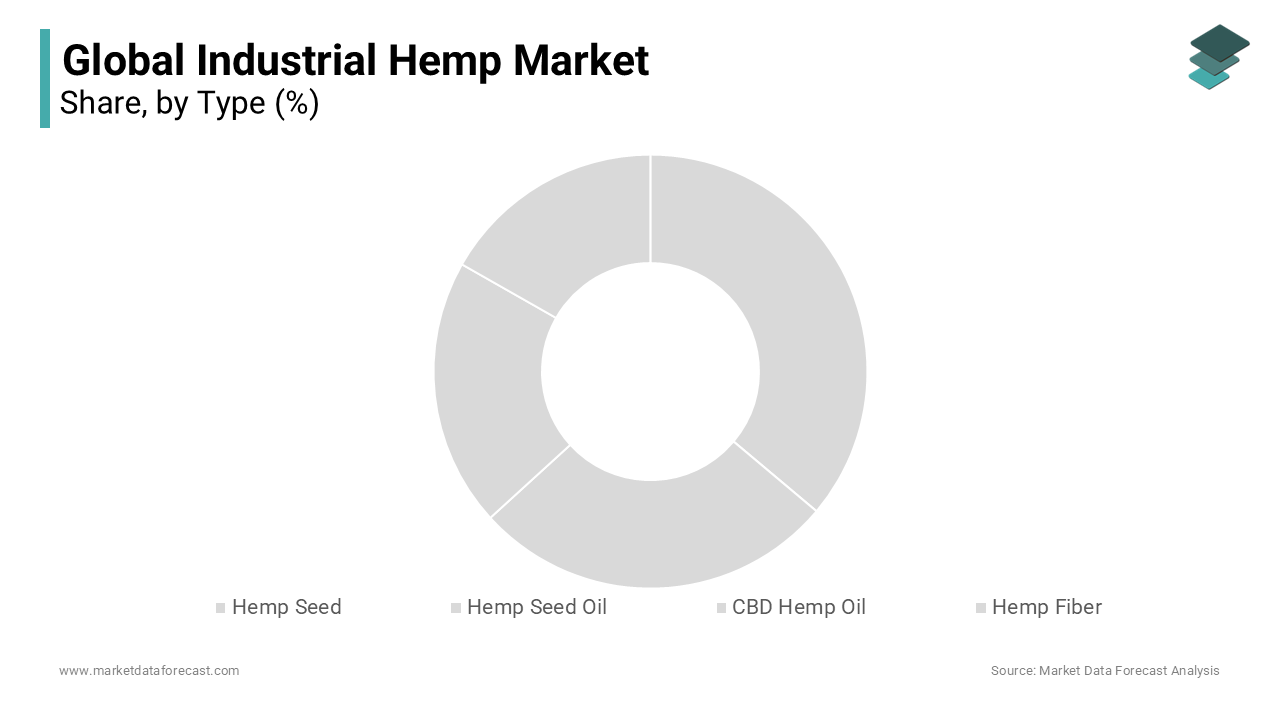
The CBD hemp oil segment is likely to grow with an anticipated CAGR of 21.3% during the forecast period, with the rising consumer interest in natural therapeutics and regulatory easing in select Asia Pacific countries. In Australia, the Therapeutic Goods Administration permitted licensed sale of low-dose CBD products for over-the-counter use in December 2021, resulting in a 150% increase in registered CBD oils by mid-2023, as confirmed by the Australian Department of Health. Clinical studies conducted by the University of Sydney’s Brain and Mind Centre indicate that daily CBD supplementation reduces anxiety symptoms in 68% of trial participants, reinforcing medical credibility. Additionally, wellness markets in urban India and South Korea are witnessing rapid adoption, with e-commerce platforms like Nykaa and Coupang reporting triple-digit growth in CBD-infused tinctures and topicals between 2021 and 2023.
By Application Insights
During the forecast period, the pharmaceuticals segment is projected to grow at a lucrative growth rate owing to the growing number of R&D activities and increasing investments. In addition, the growing awareness regarding the health benefits associated with cannabidiol is further promoting the segment’s growth rate. Cannabidiol is one of the components of industrial hemp.
In 2024, the textiles application segment accounted for a substantial share of the global industrial hemp market. Factors such as increasing demand for consumer textiles such as clothes, fabrics, denim, fine materials, and industrial textile products such as twine, rope, nets, canvas bags, tarps, carpets, and geotextiles, the textiles segment is predicted to grow at a promising CAGR over the forecast period. Fabrics and textiles, yarns and spun fibers, carpeting, home furnishings, construction products, paper, insulating materials, automobile parts, and composites are just a few of the uses for hemp fibers. In addition, Hurds are used in animal bedding, oil absorbents, and paper production. Furthermore, Hemp seeds and oil cakes are utilized in food and beverages and food and feed as an alternative protein source.
The food segment is anticipated to witness a notable CAGR during the forecast period, owing to the increasing awareness among people regarding CBD supplements and snacks.
The personal care products segment had a considerable share of the global market in 2024 and is expected to grow steadily during the forecast period.
REGIONAL ANALYSIS
Asia Pacific Market Analysis
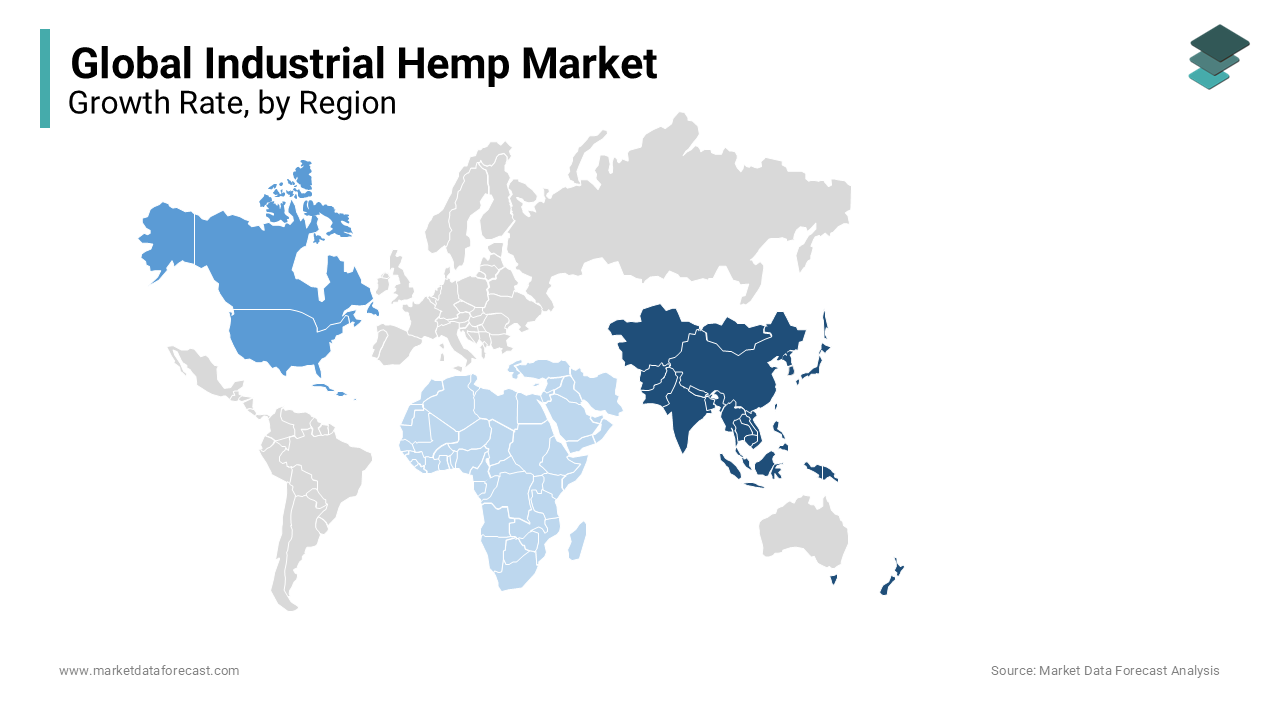
Asia Pacific was the top performer of the global industrial hemp market by accounting for 37.6% of share in 2024. China’s unparalleled production capacity, which supplies over half of the world’s natural hemp fiber and a significant portion of processed hurd and seed. Yunnan and Heilongjiang provinces collectively cultivate more than 150,000 hectares of industrial hemp annually, according to China’s Ministry of Agriculture and Rural Affairs, primarily for textiles, traditional medicine, and export. In addition to fiber leadership, countries such as Australia and India are advancing regulatory frameworks to support food-grade hemp cultivation, with Australia licensing over 4,000 hectares for edible seed production by 2023 as per the Australian Hemp Association. Japan permits limited processing for cosmetics and construction materials, while South Korea allows research-based cultivation under strict government supervision. Urbanization and rising environmental consciousness are driving demand for sustainable alternatives in packaging and building materials.
Europe Market Analysis
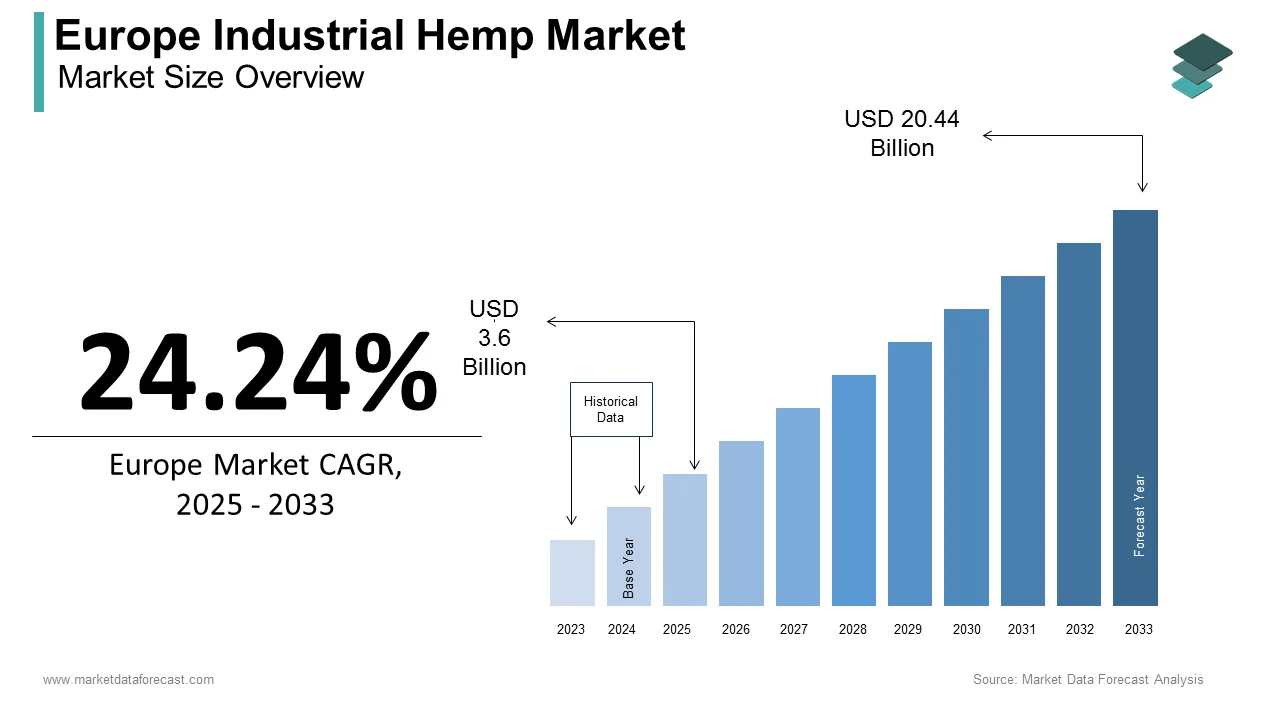
Europe industrial hemp market growth is expected to grow at the highest CAGR during the forecast period. The European Union supports industrial hemp cultivation through the Common Agricultural Policy, providing subsidies to over 12,000 farmers across France, Germany, Romania, and the Netherlands. France alone harvested 18,000 metric tons of hemp fiber in 2023, making it the continent’s largest producer, as confirmed by the French Agency for Food, Environmental, and Occupational Health Safety. The region’s strength lies not in raw output but in high-value downstream applications, particularly in automotive composites, bio-based insulation, and organic textiles. Companies such as BMW and Porsche have integrated hemp-reinforced bioplastics into interior panels, reducing vehicle weight and carbon footprint. As per the European Commission’s Circular Economy Action Plan, bio-sourced materials must constitute at least 25% of all packaging by 2030, accelerating R&D in hemp-based films and molded pulp. Additionally, the EU Novel Food Regulation has approved hemp seed derivatives for human consumption, enabling widespread use in protein bars, plant-based milks, and oils.
North America Market Analysis
North America industrial hemp market is likely to grow steadily in the coming years. The 2018 Farm Bill federally legalized industrial hemp cultivation in the U.S., which is triggering a surge in licensed acreage that peaked at 214,000 acres in 2021 before stabilizing due to market corrections, as reported by the USDA’s National Agricultural Statistics Service. However, fiber utilization is gaining momentum, supported by pilot projects from companies like Ford Motor Company testing hemp-based biocomposites for car interiors. Canada, though smaller in scale, maintains a mature regulatory system under Health Canada and the Canadian Food Inspection Agency, permitting hempseed foods since 1998.
Latin America Market Analysis
Latin America industrial hemp market is likely to grow eventually in the future. While large-scale commercial production remains limited, countries such as Colombia, Argentina, and Uruguay are advancing pilot programs to evaluate hemp’s potential in fiber, see,d and CBD markets. Colombia issued over 2,300 industrial hemp licenses by 2023, primarily for CBD extraction, as reported by the National Narcotics Council, positioning itself as a low-cost cultivation hub for export-oriented ventures. Argentina cultivated approximately 1,500 hectares in 2023 under Law 27.352, focusing on seed and oil production for regional markets. In Brazil, the Ministry of Agriculture authorized research trials in 2022, with Embrapa initiating agronomic studies to assess yield potential in tropical climates.
Middle East and Africa Market Analysis
The Middle East and Africa industrial hemp market is experiencing steady growth opportunities. South Africa leads the region in research and limited commercial activity by having granted over 70 industrial hemp licenses by 2023 under regulations administered by the Department of Agriculture, Land Reform, and Rural Development. The country focuses on CBD oil exports and seed cultivation, with trials conducted at the University of the Free State demonstrating viable yields under dryland farming. Zimbabwe amended its Medicines Control Authority Act in 2022 to permit hemp cultivation for medicinal use, attracting investment from international biotech firms. In the Gulf, the United Arab Emirates has emerged as a regional trade and formulation hub, with Dubai Science Park hosting over 40 cannabis-related research and processing companies as per the Dubai Health Authority.
COMPETITIVE LANDSCAPE
The competition in the industrial hemp market remains fragmented and regionally concentrated, characterized by a mix of specialized agri processors, vertically integrated startups, and established agricultural enterprises vying for dominance across diverse application segments. Unlike commoditized crops with consolidated supply chains, the industrial hemp sector is still evolving, with no single entity holding overarching control due to varying regulatory landscapes and divergent end uses such as fiber, seed, oil, and construction materials. In the Asia Pacific, Chinese state-supported cooperatives dominate fiber production while Australian and Indian firms focus on food-grade seeds and sustainable materials, creating niche leadership rather than broad market supremacy. North American players emphasize CBD and wellness products, whereas European companies excel in high-value biocomposites and automotive applications. This functional segmentation allows regional innovators to establish strong footholds without direct global confrontation. However, increasing investment from multinational agribusinesses and private equity funds is beginning to reshape the competitive dynamics. Companies are differentiating through technological capabilities, traceability systems, and sustainability certifications rather than price alone. The absence of standardized quality benchmarks and processing infrastructure further limits large-scale consolidation, enabling smaller players to compete on innovation and localization.
KEY MARKET PLAYERS
Some of the companies that are playing a dominating role in the global industrial hemp market include
- Hempco
- Ecofibre
- Hemp Inc.
- Gencanna
- Hempflax BV
- Konoplex Group
- Hemp Oil Canada
- BAFA
- Hemp Poland
- Dun Agro
- Colorado Hemp Works
- Canal International
- South Hemp Tecno
- Plains Industrial Hemp Processing
- MH Medical Hemp
Top Players in the Market
- Hempco Food and Fiber operates as a vertically integrated industrial hemp enterprise with significant influence across Asia Pacific supply chains. The company specializes in cultivating non-genetically modified hemp varieties for food, seed, and fiber production primarily in Canada, with export networks extending into Australia, Japan, and India. It supplies high-protein hemp seeds and cold-pressed hemp oil to plant-based food manufacturers while supporting research on hemp-derived animal feed.
- Frost Innovations has emerged as a key player in Australia’s industrial hemp sector by pioneering large-scale processing infrastructure for both fiber and seed. Based in regional Queensland, the company operates one of the few fully mechanized decortication facilities in the Asia Pacific, enabling efficient separation of bast fibers from hurd for use in construction and biocomposites. Frost Innovations collaborates with universities on developing hempcrete formulations suited to tropical climates and supplies fiber to manufacturers of biodegradable packaging.
- Lanvin Agro Products is an Indian agribusiness driving localized industrial hemp cultivation and value addition in South Asia. Licensed under Uttarakhand state regulations, the company works with smallholder farmers to grow certified low THC hemp for seed and biomass while ensuring fair trade practices and technical training. Lanvin processes harvested crops into organic hemp flour, cold-milled seeds, and livestock fodde,r catering to health food brands and rural nutrition programs. It introduced fortified hemp-based snacks in 2023 through urban retail chains and partnered with the Council of Scientific and Industrial Research to develop scalable extraction methods.
Top Strategies Used By Key Market Participants
Vertical Integration to Control Supply Chain Quality and Efficiency. Leading players in the industrial hemp market are adopting vertical integration to maintain control over cultivation, processing, and distribution. By owning or contracting farms and operating proprietary processing units, companies ensure consistent raw material quality and reduce dependency on third parties. This strategy enables faster time to market, better traceability, and compliance with food safety and environmental standards. It also supports premium positioning in segments such as organic food and sustainable construction.
Investment in Research and Development for Product Innovation. Key market participants are prioritizing research and development to unlock new applications and improve the performance of industrial hemp derivatives. Companies are collaborating with academic institutions and government agencies to develop disease-resistant cultivars, efficient extraction techniques, and advanced biomaterials. Focus areas include biodegradable packaging, hemp-based bioplastics, and functional food ingredients with enhanced nutritional profiles. These innovations not only broaden market reach but also support sustainability claims required by eco-conscious consumers and regulators.
Strategic Partnerships with Governments and Agricultural Cooperatives Market leaders are forming strategic alliances with national governments, rural development agencies, and farmer cooperatives to scale cultivation and ensure ethical sourcing. These collaborations help establish pilot farms, provide training in best practices, and create stable procurement channels for smallholders. In India and Nepal, companies like Lanvin Agro Products work under state-backed programs to promote hemp as a climate-resilient cash crop. Similarly, in Australia, firms partner with agricultural extension services to disseminate data on yield optimization and soil health.
GLOBAL INDUSTRIAL HEMP MARKET NEWS
- In February 2024, Hempz, an innovative company in the industrial hemp market, introduced two new products that will pique the interest of consumers and industry players alike. The Beauty Actives Vanilla Lux Herbal Body Moisturizer with Niacinamide and Beauty Actives Tea Tree Herbal Body Moisturizer with Tea Tree Oil are not just new additions to their product line, but they are also developed from 100% pure hemp seed oil, showcasing the company's commitment to harnessing the full potential of industrial hemp.
- In January 2023, Bast Fibre Technologies Inc., a Canadian natural fiber manufacturer, made a strategic move that is set to bolster the industrial hemp market in North America. They acquired Lumberton Cellulose LLC, a North Carolina, U.S.-based natural fiber processing facility. This acquisition is not just a business transaction but a clear indication of the market's growth potential and the industry's commitment to meeting sustainable natural fiber demand.
- In January 2023, HempMeds Brazil launched two new full-spectrum products. These products are expected to meet the requirements of Brazilian doctors when prescribing for patients.
- In April 2023, Manitoba Harvest, the world's leading hemp foods brand and a wholly-owned subsidiary of Tilray Brands, Inc., will debut its first regenerative organic certified hemp hearts exclusively at selected whole foods market stores across the United States.
- In February 2023, Hemp, Inc. announced its largest industrial product sale. Four semi-trucks hauled 120,000 pounds of Hemp Inc.'s DrillWall, the only all-natural hemp Loss Circulation Material blend of its kind on the market for oil and gas well drilling industries.
MARKET SEGMENTATION
This research report on the global industrial hemp market has been segmented and sub-segmented based on the type, application, and region.
By Type
- Hemp Seed
- Hemp Seed Oil
- CBD Hemp Oil
- Hemp Fiber
By Application
- Food
- Snacks & Cereals
- Soup, Sauces and Seasonings
- Bakery
- Dairy & Frozen Desserts
- Others (Cold Cereals, Pasta, Chocolate Spreads and Pet Food)
- Beverages
- Hot Beverages
- Sports & Energy Drinks
- Ready To Drink
- Others (Meal Replacement Drinks, Beverage Mixes, Beverage Concentrates, And Juice Drinks)
- Personal Care Products
- Textiles
- Pharmaceuticals
- Others (Paper, Automobiles, Construction & Materials and Furniture)
By Region
- North America
- Europe
- Asia Pacific
- Latin America
- Middle East and Africa
Frequently Asked Questions
1. What is the Industrial Hemp Market?
The Industrial Hemp Market encompasses the global cultivation, processing, and commercialization of non-psychoactive hemp for fiber, seeds, oil, CBD products, and numerous applications across textiles, food, construction, and personal care industries
2. What are the main product segments in the Industrial Hemp Market?
Key segments are hemp fiber, hemp seeds, hemp seed oil, CBD hemp oil, and specialty products for food, textiles, bioplastics, construction, and wellness
3. What drives growth in the Industrial Hemp Market?
Growth is fueled by demand for sustainable raw materials, legalization trends, wellness and personal care market expansion, automotive lightweight composites, and eco-friendly packaging
4. How is hemp used in the automotive industry within the Industrial Hemp Market?
Automakers such as BMW and Mercedes use hemp-reinforced composites and lightweight panels for vehicle interiors to reduce carbon footprint and improve fuel efficiency
5. Who are the leading companies in the Industrial Hemp Market?
Top players include Canopy Growth, Charlotte's Web Holdings, Hempco Food and Fiber Inc., HempFlax, Konoplex Group, Ecofibre, GenCanna, Nutiva, Dun Agro, and Colorado Hemp Works
6. What is the role of bioplastics in the Industrial Hemp Market?
Hemp-derived bioplastics are used as eco-friendly alternatives to petroleum-based plastics in packaging, films, and containers, expanding market opportunities
7. How is hemp agriculture evolving globally in the Industrial Hemp Market?
Trends include organic and regenerative farming, integrated production, geo-tagging, seed bank development, and government-supported crop diversification initiatives
8. What are the environmental benefits of the Industrial Hemp Market?
Hemp has low resource demands, supports soil health through crop rotation, captures carbon effectively, and offers biodegradable, sustainable alternatives across product segments
9. How do regulatory changes affect the Industrial Hemp Market?
Legalization and updated regulations in North America, Europe, and Asia Pacific unlock market growth, support non-narcotic applications, and encourage investment
10. What are the major applications of hemp in the Industrial Hemp Market?
Textiles, biodegradable packaging, construction materials, automotive interiors, food & beverages, dietary supplements, cosmetics, and pharmaceuticals dominate market use
Related Reports
Access the study in MULTIPLE FORMATS
Purchase options starting from
$ 2500
Didn’t find what you’re looking for?
TALK TO OUR ANALYST TEAM
Need something within your budget?
NO WORRIES! WE GOT YOU COVERED!
Call us on: +1 888 702 9696 (U.S Toll Free)
Write to us: sales@marketdataforecast.com