U.S. Bicycle Market Size, Share, Trends, and Growth Analysis Report, Segmented by Technology, Type, End User, Design, Distribution Channel, and Country – Industry Forecast From 2026 to 2034
U.S. Bicycle Market Size
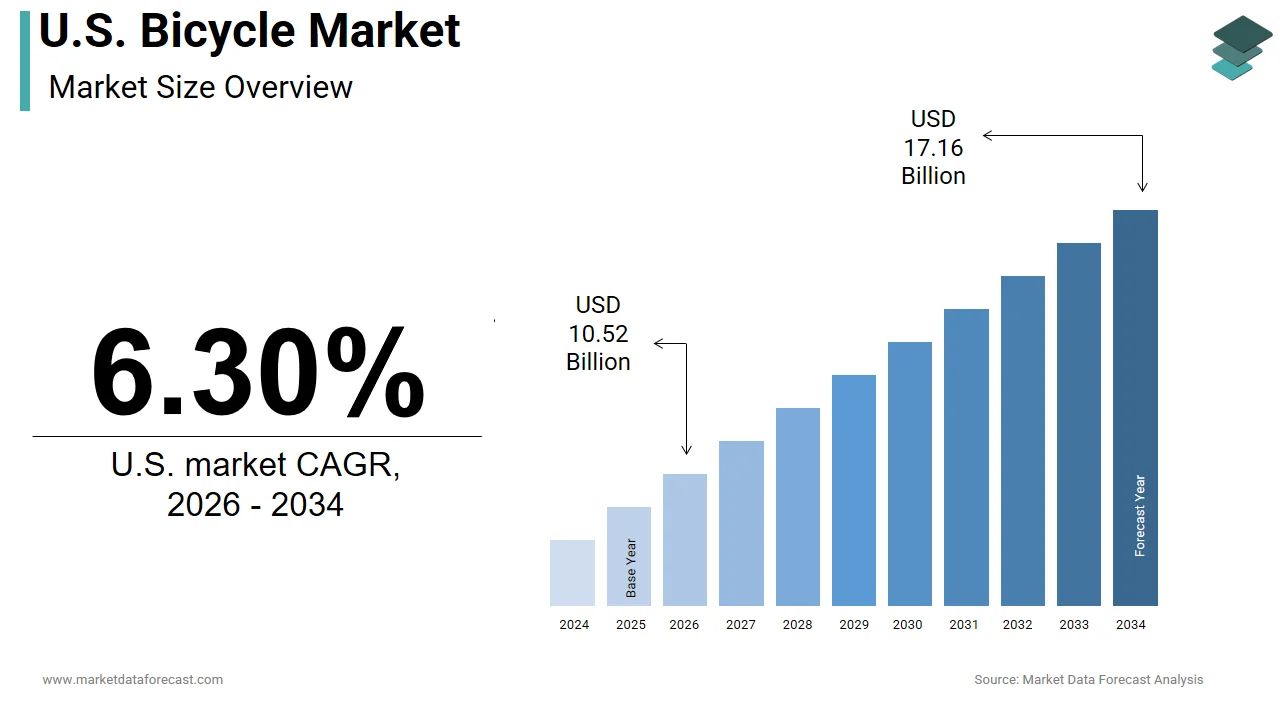
The U.S. bicycle market reached USD 9.90 billion in 2025 and is expected to grow to USD 10.52 billion in 2026, and is anticipated to touch USD 17.16 billion by 2034, at a CAGR of 6.30% from 2026 to 2034.
The bicycle is a two-wheeled human-powered and electric-assisted vehicle designed for recreation, commuting, and competitive sports. As per the PeopleForBikes Foundation, bicycle riding participation in the United States reached approximately 47 million individuals in recent years, reflecting a broad cultural shift towards active lifestyles. Consumer preferences are increasingly influenced by health consciousness, environmental awareness, and the need for efficient last-mile transportation solutions. Regulatory frameworks vary across states, particularly regarding electric bicycle classification and usage rights on public roads and trails. The number of Bicycle Friendly Communities has steadily increased, indicating a supportive policy environment. Retail dynamics have shifted towards specialized independent shops and direct-to-consumer online platforms offering customized fitting and service. The integration of technology such as GPS tracking and smart connectivity features is becoming standard in higher-end models. This evolving ecosystem supports a robust aftermarket for accessories, maintenance, and upgrades.
MARKET DRIVERS
Rising Health Consciousness and Active Lifestyle Adoption
The increasing emphasis on physical fitness and mental well-being is majorly fuelling the growth of the United States bicycle market. Consumers are actively seeking low-impact cardiovascular exercises that can be easily integrated into daily routines. According to the Centers for Disease Control and Prevention, regular physical activity reduces the risk of chronic diseases, such as heart disease and diabetes, prompting many Americans to adopt cycling as a consistent exercise regimen. The accessibility of cycling makes it appealing to a wide demographic range, from young adults to seniors. Public health campaigns promoting active transportation further reinforce this trend by highlighting the benefits of replacing short car trips with bicycle rides. The post-pandemic era has accelerated this shift as individuals prioritize outdoor activities that allow for social distancing and fresh air. Fitness trackers and mobile applications have gamified the cycling experience, enabling users to monitor progress and connect with communities. This digital engagement fosters long-term adherence to cycling habits. Additionally, the rise of gravel and mountain biking has attracted enthusiasts seeking adventure and connection with nature. These segments offer vigorous workouts while providing recreational enjoyment. The psychological benefits of cycling, including stress reduction and improved mood, also contribute to its popularity.
Expansion of Urban Infrastructure and Government Initiatives
The development of dedicated cycling infrastructure and supportive government policies is additionally elevating the growth of the United States bicycle market. Municipalities are increasingly recognizing the role of bicycles in reducing traffic congestion and lowering carbon emissions. According to the Federal Highway Administration, investments in non-motorized transportation infrastructure have increased, with billions of dollars allocated to bike lane construction and trail development. Cities like New York, Chicago, and Portland have expanded their protected bike lane networks, resulting in higher ridership rates. These improvements enhance rider safety, which is a critical factor for potential cyclists hesitant to share roads with motor vehicles. Local governments are also implementing bike share programs that introduce residents to cycling without the initial investment of purchasing a bicycle. These programs often serve as gateways to private ownership as users develop confidence and interest. Zoning laws are being updated to require bicycle parking in new commercial and residential developments, further facilitating adoption. The integration of bicycles into public transit systems allows for multimodal commuting, extending the reach of cycling. These structural changes create an enabling environment that encourages regular bicycle use.
MARKET RESTRAINTS
Safety Concerns and Traffic-Related Risks
The persistent safety concerns and the risk of traffic-related accidents is restricting the growth of the United States bicycle market. Many potential cyclists are deterred by the perceived danger of sharing roads with motor vehicles, especially in areas lacking dedicated infrastructure. As per the study, thousands of bicyclists are injured or killed in traffic crashes annually, highlighting the vulnerability of riders. High-profile incidents receive significant media attention, amplifying public fear and hesitation. The lack of consistent enforcement of traffic laws protecting cyclists further exacerbates these concerns. This unsafe environment discourages parents from allowing children to cycle independently, limiting the development of lifelong riding habits. Urban sprawl and high-speed arterial roads in many American cities create barriers to safe cycling routes. The absence of protected lanes forces cyclists into mixed traffic, which increases stress and anxiety. Insurance costs and liability issues also pose challenges for both riders and businesses. The psychological impact of traffic danger cannot be overstated, as it directly influences the decision to purchase and use a bicycle.
Supply Chain Disruptions and Component Shortages
The global supply chain disruptions and shortages of components are additionally hindering the growth of the United States bicycle market. The industry relies heavily on manufacturing hubs in Asia, particularly for frames, wheels, and electronic components. Lead times for inventory replenishment have extended significantly due to logistical hurdles and port congestion. The semiconductor shortage has specifically impacted the production of electric bicycles, which require complex control systems and batteries. These delays result in empty shelves and limited model availability, frustrating consumers and retailers alike. The unpredictability of shipping costs and schedules complicates inventory management for distributors. Small independent bike shops struggle to compete with larger retailers who may have better access to limited stock. The reliance on single-source suppliers increases vulnerability to geopolitical tensions and trade policy changes. Tariffs on imported bicycles and parts further inflate costs, reducing affordability for consumers. Manufacturers face difficulties in planning production schedules due to uncertain material availability. This instability hampers innovation and new product launches as companies focus on securing basic inventory.
MARKET OPPORTUNITIES
Growth of the Electric Bicycle Segment and Technological Integration
The rapid expansion of the electric bicycle is one of the major opportunities for the expansion of the United States bicycle market. Electric bicycles appeal to a broader demographic, including older adults and commuters who seek assistance with hills and longer distances. The decreasing cost of battery technology and improvements in motor efficiency make electric bikes more accessible and practical. These vehicles enable users to replace car trips for daily commutes, reducing transportation costs and environmental impact. The integration of smart technology, such as GPS navigation, anti-theft systems, and fitness tracking, enhances the user experience. Connectivity features allow riders to monitor battery life and performance metrics via smartphone apps. Manufacturers are developing specialized models for cargo delivery and family transport, expanding the utility of electric bicycles. Corporate fleets are adopting electric bikes for last-mile logistics, creating a new business-to-business market segment. Government incentives, such as tax credits and rebates, further stimulate demand by lowering upfront costs. The versatility of electric bicycles allows them to serve multiple purposes, from recreation to utility.
Expansion into Bike Tourism and Recreational Trails
The growing popularity of bike tourism and recreational trail networks is another attribute to enhance new opportunities for the growth of the United States bicycle market. Travelers are increasingly seeking active vacation experiences that combine physical activity with scenic exploration. According to the Adventure Travel Trade Association, bicycle tourism generates billions of dollars in economic impact annually, supporting local businesses and hospitality sectors. The development of long-distance trails such as the Great Divide Mountain Bike Route and the Katy Trail attracts enthusiasts from across the country. These destinations drive demand for specialized bicycles equipped for touring and off-road conditions. Local communities benefit from increased visitor spending on accommodations, dining, and guide services. The rise of gravel biking has opened up new rural routes connecting small towns and natural landmarks. Event organizers are launching curated cycling tours and festivals that celebrate regional culture and landscapes. These events foster community engagement and promote destination marketing. Retailers can capitalize on this trend by offering rental services, guided tours, and package deals. Partnerships between bike brands and tourism boards help promote specific regions as cycling destinations. The emotional connection formed during travel often leads to brand loyalty and repeat purchases.
MARKET CHALLENGES
Theft and Security Issues
The bicycle theft that undermines consumer confidence and stability is one of the major challenges for the growth of the United States bicycle market. High rates of theft in urban areas discourage individuals from investing in high-quality bicycles. The lack of secure parking facilities in public spaces and apartment complexes exacerbates the problem. Thieves target expensive models and electric bicycles due to their high resale value. The fear of loss leads some consumers to purchase cheaper, lower-quality bikes or avoid cycling altogether. Insurance options for bicycles are often limited or expensive, leaving owners financially vulnerable. Retailers face challenges in educating customers about effective security measures, such as high-quality locks and registration systems. The psychological impact of theft creates a barrier to entry for new riders who perceive cycling as risky. Community initiatives to improve security through better lighting and surveillance are often underfunded. Manufacturers are integrating tracking devices into frames, but these solutions add cost and complexity.
Regulatory Fragmentation and Legal Uncertainty
The fragmented regulatory landscape regarding bicycle classification and usage rights also hinders the growth of the United States bicycle market. Laws governing electric bicycles vary significantly between states and even municipalities, creating confusion for consumers and manufacturers. The lack of uniform definitions for electric bike classes complicates compliance and enforcement. Some jurisdictions restrict where certain types of electric bikes can be ridden, limiting their utility. The ambiguity around helmet requirements, age restrictions, and licensing creates legal uncertainty for riders. Manufacturers must navigate a complex web of regulations when designing and marketing products for national distribution. This fragmentation increases compliance costs and slows down product launches. Retailers struggle to provide accurate information to customers about local laws, leading to potential liability issues. The inconsistency in enforcement further confuses users who may inadvertently violate regulations. Advocacy groups are working towards standardized legislation, but progress is slow and uneven. The lack of clear guidelines discourages investment in infrastructure and innovation. International manufacturers face additional hurdles in adapting products to meet diverse local standards.
REPORT COVERAGE
| REPORT METRIC | DETAILS |
| Market Size Available | 2025 to 2034 |
| Base Year | 2025 |
| Forecast Period | 2026 to 2034 |
| Segments Covered | By Technology, Type, End User, Design, Distribution Channel, and Country. |
| Various Analyses Covered | Global, Regional, and Country-Level Analysis, Segment-Level Analysis, Drivers, Restraints, Opportunities, Challenges; PESTLE Analysis; Porter’s Five Forces Analysis, Competitive Landscape, Analyst Overview of Investment Opportunities |
| Countries Covered | New York, Massachusetts, Pennsylvania, Illinois, Ohio, Michigan, Texas, Florida, Georgia, California, Washington, Colorado. |
| Market Leaders Profiled |
|
SEGMENTAL ANALYSIS
By Technology Insights
The conventional bicycles segment accounted in holding 26.4% of the United States bicycle market share in 2025 due to a deeply entrenched user base and superior cost accessibility compared to electric alternatives. The initial purchase price of a mechanical bicycle is significantly lower, making it an attractive option for budget-conscious consumers and families purchasing multiple units. The simplicity of mechanical systems appeals to users, who prefer minimal maintenance and do not require electrical assistance. Traditional cycling clubs and competitive racing leagues predominantly utilize conventional bikes, reinforcing their cultural significance and continued demand. The extensive availability of replacement parts and repair services for mechanical components ensures long-term usability and reduces ownership costs. Retailers benefit from higher inventory turnover rates for entry-level conventional models, which drives volume sales. The lack of battery degradation concerns also makes conventional bikes a reliable choice for long-term ownership. This segment benefits from decades of manufacturing optimization, resulting in high-quality, durable products at various price points. The familiarity of riding a non-assisted bicycle requires no learning curve, encouraging widespread adoption across all age groups.
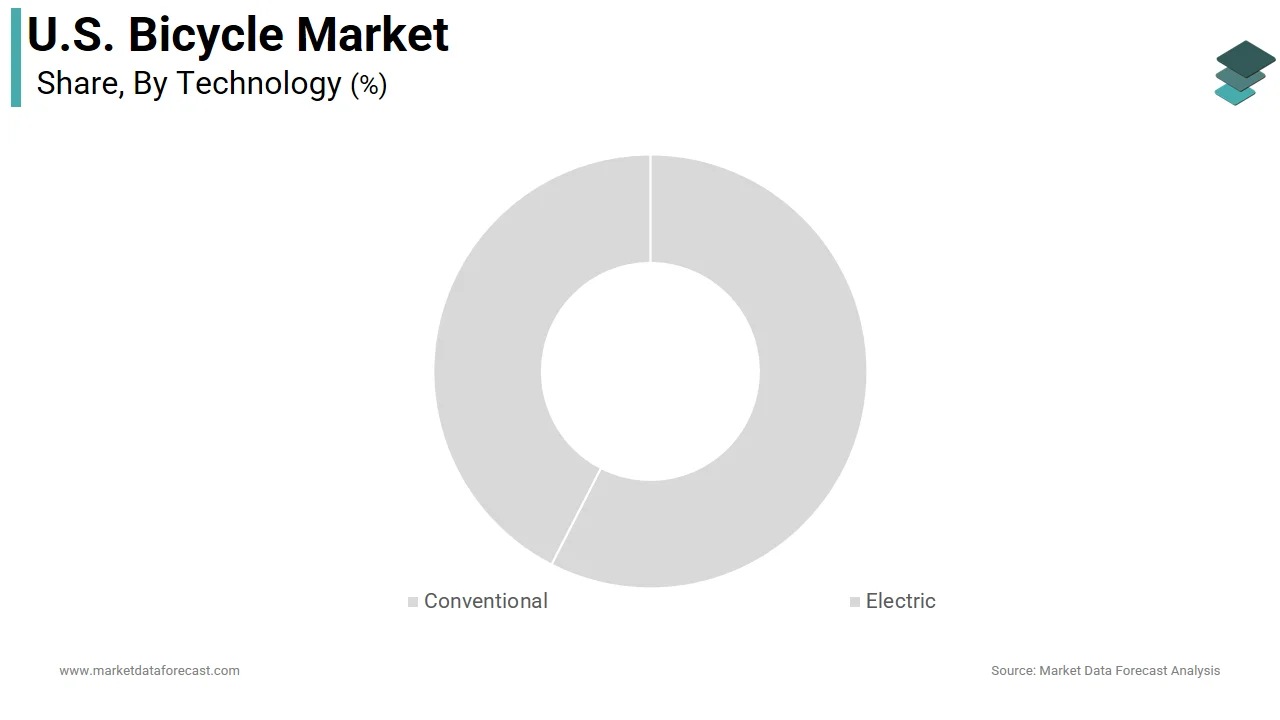
The electric bicycles segment is expected to witness the fastest CAGR of 11.2% from 2026 to 2034, with their ability to enhance commuting efficiency and provide assistance over challenging terrains. The integration of motor assistance allows riders to travel longer distances and tackle hills without excessive physical exertion, making cycling a viable alternative to driving. Urban commuters are increasingly adopting electric bikes to avoid traffic congestion and reduce parking costs. The ability to arrive at work without sweating encourages professional adoption, particularly in cities with hilly topographies. Government incentives, such as tax credits and rebates in various states, further accelerate adoption by lowering the financial barrier. The expansion of protected bike lanes has made electric commuting safer and more attractive. Employers are beginning to offer subsidies for electric bike purchases as part of wellness programs. The versatility of electric bikes allows them to serve both recreational and utilitarian purposes, appealing to a broad demographic.
By Type Insights
The mountain bikes segment held a dominant share of the United States bicycle market in 2025 due to their exceptional versatility, durability, and suitability for diverse terrain. These bicycles are designed to withstand rough conditions, making them ideal for off-road trails as well as urban environments with poor road quality. The robust construction of mountain bikes, including suspension systems and wide tires, provides a comfortable and stable ride on various surfaces. This adaptability appeals to consumers, who seek a single bicycle for multiple uses, including commuting, recreation, and trail riding. The strong cultural presence of mountain biking in the United States, supported by numerous trails and parks, drives consistent demand. Manufacturers offer a wide range of mountain bike models from entry-level hardtails to high-end full suspension rigs, catering to different skill levels and budgets. The aftermarket for mountain bike accessories and upgrades is extensive, contributing to overall revenue. The perceived value of durability ensures that consumers view mountain bikes as long-term investments. Retailers prioritize mountain bike inventory due to their high sales volume and broad appeal. The continuous innovation in suspension technology and frame materials keeps the segment dynamic and engaging for enthusiasts.
The cargo bikes segment is swiftly emerging at an anticipated CAGR of 8.2% from 2026 to 2034, with the increasing need for efficient urban logistics and family transportation solutions. These bicycles are designed to carry heavy loads, making them practical alternatives to cars for short-distance trips. Urban families are adopting cargo bikes to transport children to school and run errands, reducing reliance on automobiles. The rise of e-commerce has also spurred demand for cargo bikes in last-mile delivery operations as companies seek sustainable and cost-effective distribution methods. Municipalities are supporting this trend by implementing policies that favor cargo bike usage, such as dedicated parking and loading zones. The integration of electric assist in cargo bikes further enhances their utility by reducing the physical effort required to haul heavy loads. Manufacturers are introducing innovative designs with improved stability and storage capacity, appealing to a wider audience. The environmental benefits of cargo bikes align with the sustainability goals of cities and corporations.
By End User Insights
The men segment was the largest by holding 46.7% of the United States bicycle market share in 2025 due to historically higher participation rates in cycling activities and higher disposable income for premium purchases. Traditional marketing and product development have long targeted male demographics, resulting in a wide variety of models tailored to their preferences. The prevalence of men in competitive cycling sports, such as road racing and mountain biking, drives demand for high-performance equipment. Male consumers are often early adopters of new technologies such as advanced suspension systems and electronic shifting. The social dynamics of cycling clubs and group rides often skew male, further reinforcing participation. Retailers observe higher average transaction values among male customers who tend to invest in accessories and upgrades. Manufacturers continue to release flagship models aimed at male enthusiasts, maintaining their interest and loyalty.
The women segment is expected to grow at the fastest CAGR of 8.6% from 2026 to 2034, owing to the increased inclusivity initiatives and targeted marketing strategies. The industry has recognized the underserved potential of female cyclists and is actively developing products and programs to meet their needs. Manufacturers are designing bicycles with geometry and components specifically suited for female anatomy, enhancing comfort and performance. Marketing campaigns featuring diverse female riders challenge traditional stereotypes and inspire participation. Women-specific retail events and workshops create welcoming environments for new riders. Retailers are training staff to better serve female customers, addressing specific fit and safety concerns. The emphasis on safety and visibility in product design appeals to women who may have previously felt vulnerable on the road.
By Distribution Channel Insights
The offline retail channels segment held aa dominant share of the United States bicycle market in 2025 due to the need for professional fitting and after-sales service. Bicycles require precise adjustments to ensure comfort and safety, which is best achieved through in-person expertise. According to the research, the majority of high-value bicycles are sold through specialized offline retailers, who offer comprehensive fitting services. Customers value the ability to test ride different models before making a purchase decision. The trust established with local shop owners fosters long-term relationships and repeat business. Offline retailers provide essential maintenance and repair services that extend the life of bicycles. The tactile experience of examining build quality and components influences purchasing decisions. Many consumers prefer the immediate gratification of taking a bicycle home rather than waiting for shipping. Local shops often serve as community hubs, hosting group rides and events that drive sales.
The online retail segment was the largest by holding 56.4% of the United States bicycle market share in 2025, with the convenience of home delivery and the rise of direct-to-consumer brands. Consumers appreciate the ability to browse extensive catalogs and compare prices from the comfort of their homes. Direct-to-consumer brands eliminate middlemen, offering competitive pricing and streamlined purchasing experiences. The improvement in packaging and assembly instructions has made buying bicycles online more feasible for average consumers. Subscription services for accessories and maintenance products add recurring revenue streams. Online platforms provide detailed product descriptions and customer reviews that aid decision-making. The accessibility of online shopping reaches customers in areas without local bike shops. Digital marketing strategies target specific demographics with personalized recommendations.
COMPETITIVE LANDSCAPE
The competition in the United States bicycle market is characterized by intense rivalry among established global brands and emerging direct-to-consumer startups. Major players compete on innovation quality and brand heritage, while newer entrants leverage agility and lower pricing structures. The market is fragmented with numerous specialized manufacturers catering to niche segments such as mountain biking, road racing, and urban commuting. Differentiation is achieved through proprietary technologies such as advanced suspension systems and integrated electronic components. Price sensitivity varies across segments, with premium brands focusing on performance and entry-level brands competing on value. Retail channels play a crucial role as independent bike shops offer personalized service while online retailers provide convenience and a broader selection. Supply chain reliability has become a key competitive advantage as companies strive to meet demand amidst global logistical challenges. Brand loyalty is strong among enthusiasts, but new consumers are increasingly influenced by social media and peer recommendations. The rise of electric bicycles has intensified competition as traditional manufacturers race to capture this growing segment.
KEY MARKET PLAYERS
Some of the companies that are playing a dominating role in the U.S. bicycle market include
- Pon Holdings B.V.
- Trek Bicycle Corporation
- Accell Group N.V.
- Giant Bicycles
- Cannondale Sports Group
- Merida Industry Co., Ltd.
- Specialized Bicycle Components, Inc.
- Orbea S. Coop.
- Hero Cycles Ltd.
- Brompton Bicycle Ltd.
- Mobility Holdings, Ltd.
TOP PLAYERS IN THE MARKET
- Trek Bicycle Corporation stands as a premier manufacturer and retailer of high-performance bicycles in the United States with significant global influence. The company contributes to the international market by setting benchmarks for innovation in carbon fiber technology and sustainable manufacturing practices. It strengthens its position through continuous investment in research and development to produce lighter and more efficient bicycle frames. Recent actions include expanding its direct-to-consumer digital platforms and enhancing its retail network with immersive brand centers. Trek also focuses on sustainability initiatives such as reducing waste in production facilities and promoting recycling programs. These efforts resonate with environmentally conscious consumers and enhance brand loyalty. The organization collaborates with professional cycling teams to test and refine products under competitive conditions. This strategy ensures that technological advancements trickle down to consumer models. The company emphasizes community engagement through local events and advocacy for safe cycling infrastructure.
- Specialized Bicycle Components is a leading innovator in the United States bicycle market, known for its premium quality and performance-oriented products. The company plays a vital role in the global sector by pioneering advancements in aerodynamics and electronic shifting systems. It strengthens its market position by focusing on rider-centric design and personalized fitting technologies. Recent actions involve launching new electric bicycle models that integrate seamlessly with existing ecosystems and offer enhanced battery efficiency. Specialized invests heavily in marketing campaigns that highlight the emotional and physical benefits of cycling. The brand collaborates with elite athletes to validate product performance and build credibility among enthusiasts. Its retail partners receive extensive training to provide superior customer service and technical support. Specialized also advocates for diversity and inclusion in cycling through targeted community programs. These initiatives broaden its appeal and attract new demographics to the sport. The company's commitment to innovation and customer experience ensures its continued relevance and growth in a competitive landscape.
- Cannondale Sports Group is a prominent player in the United States bicycle market, recognized for its distinctive aluminum frames and innovative suspension systems. The company contributes to the global market by introducing unique engineering solutions that challenge traditional design norms. It strengthens its position through strategic partnerships with technology firms to integrate smart features into bicycles. Recent actions include expanding its lineup of gravel and adventure bikes to cater to growing consumer interest in versatile riding experiences. Cannondale focuses on enhancing its supply chain efficiency to ensure timely product availability and reduce environmental impact. The brand engages with consumers through digital content that educates riders on maintenance and riding techniques. It also supports grassroots cycling events to foster community involvement and brand affinity. Cannondale's commitment to quality and innovation appeals to discerning cyclists who value performance and durability.
TOP STRATEGIES USED BY KEY MARKET PARTICIPANTS
Key players in the United States bicycle market employ product differentiation strategies to stand out in a crowded landscape. Companies focus on developing lightweight materials and advanced electric assist systems to appeal to performance-driven consumers. Sustainability initiatives are central to corporate strategies as brands highlight eco-friendly manufacturing and recycling programs. Digital transformation is prioritized through enhanced e-commerce platforms and virtual fitting tools that improve online shopping experiences. Strategic partnerships with professional cycling teams provide valuable testing grounds for new technologies and enhance brand visibility. Retailers invest in community building by hosting local rides and workshops to foster customer loyalty. Supply chain diversification helps mitigate risks associated with global disruptions and ensures consistent product availability. Premiumization efforts involve launching high-end models with exclusive features that command higher price points. These multifaceted strategies enable manufacturers to navigate market challenges and sustain growth in a mature industry.
MARKET SEGMENTATION
This research report on the U.S. bicycle market has been segmented and sub-segmented into the following categories.
By Technology
- Conventional
- Electric
By Type
- Mountain
- Road
- Hybrid
- Cargo
- Others
By End User
- Men
- Women
- Kids
By Design
- Folding
- Regular
By Distribution Channel
- Offline
- Online
By Country
- New York
- Texas
- Florida
- Georgia
- California
- Rest of U.S.
Frequently Asked Questions
What is the U.S. bicycle market?
The U.S. bicycle market covers sales of bikes and related products for commuting, fitness, recreation, and transport across retail and online channels.
How does the U.S. bicycle market function?
The U.S. bicycle market functions through brands, distributors, retailers, and e-commerce channels that sell bicycles, parts, and accessories to consumers.
What drives growth in the U.S. bicycle market?
The U.S. bicycle market grows because of fitness trends, sustainability goals, urban commuting, and rising interest in electric bicycles.
Which bicycle types lead the U.S. bicycle market?
The U.S. bicycle market is led by e-bikes, mountain bikes, road bikes, hybrid bikes, and folding bikes, depending on consumer use and terrain.
How important are e-bikes in the U.S. bicycle market?
The U.S. bicycle market is increasingly shaped by e-bikes because they support longer rides, easier commuting, and wider rider adoption.
What role do commuter bikes play in the U.S. bicycle market?
The U.S. bicycle market benefits from commuter bikes as more riders use bicycles for short daily trips, errands, and urban transport.
How do mountain bikes fit the U.S. bicycle market?
The U.S. bicycle market includes mountain bikes for outdoor recreation, trail riding, and consumers seeking durable multi-surface performance.
How do road bikes fit the U.S. bicycle market?
The U.S. bicycle market includes road bikes for speed, long-distance fitness, and performance-focused cyclists.
What channels shape the U.S. bicycle market?
The U.S. bicycle market is shaped by specialty stores, sporting goods chains, direct-to-consumer brands, and online marketplaces.
What trends affect the U.S. bicycle market?
The U.S. bicycle market is affected by e-bike adoption, city mobility, sustainability awareness, and demand for affordable transport options.
Related Reports
Access the study in MULTIPLE FORMATS
Purchase options starting from
$ 1200
Didn’t find what you’re looking for?
TALK TO OUR ANALYST TEAM
Need something within your budget?
NO WORRIES! WE GOT YOU COVERED!
Call us on: +1 888 702 9696 (U.S Toll Free)
Write to us: sales@marketdataforecast.com