U.S. Poultry Market Size, Share, Trends & Growth Forecast Report Segmented By Species Type (Chicken, Turkey Duck, Geese, Others), Product Type, Distribution Channel and Country – Industry Analysis From 2026 to 2034
U.S. Poultry Market Report Summary
The U.S. poultry market was valued at USD 85.60 billion in 2025, is estimated to reach USD 88.46 billion in 2026, and is projected to reach USD 114.99 billion by 2034, growing at a CAGR of 3.33% during the forecast period from 2026 to 2034. The growth of the U.S. poultry market is driven by rising health consciousness, increasing demand for lean protein, and the affordability and versatility of poultry products. Additionally, advancements in automation, genetics, and value-added product innovation are further supporting market expansion.
Key Market Trends
- Increasing preference for lean protein diets and healthier food options
- Growing demand for processed and ready-to-cook poultry products
- Expansion of online grocery and e-commerce channels
- Rising adoption of organic, antibiotic-free, and cage-free poultry products
- Continuous advancements in automation and production efficiency
Segmental Insights
- Based on species type, the chicken segment was the largest and held a significant share of the U.S. poultry market in 2025. The segment’s dominance is attributed to its high consumption levels, affordability, and versatility across diverse culinary applications.
- Based on product type, the meat segment accounted for a major share of the U.S. poultry market in 2025. This is driven by the high demand for fresh and processed poultry meat across households and food service sectors.
- Based on distribution channel, the business-to-business (B2B) segment was the largest, supported by strong demand from food service providers, restaurants, and institutional buyers.
Regional Insights
The United States poultry market is well-established and highly integrated, supported by strong production capabilities and widespread consumption. States such as California, Washington, Oregon, and New York contribute significantly due to their large population base and robust food service industries.
Competitive Landscape
The U.S. poultry market is characterized by high consolidation, with major players operating integrated supply chains to maintain efficiency and cost advantages. Companies focus on product innovation, sustainability initiatives, and operational efficiency to remain competitive. Prominent players in the U.S. poultry market include Tyson Foods, Inc., Pilgrim’s Pride Corporation, Perdue Farms, Inc., Sanderson Farms, Inc., Foster Farms, Koch Foods, Inc., Wayne Farms LLC, Mountaire Farms, Inc., House of Raeford Farms, Inc., and Bell & Evans.
U.S. Poultry Market Size
The U.S. Poultry Market size was valued at USD 85.60 billion in 2025 and is anticipated to reach USD 88.46 billion in 2026 from USD 114.99 billion by 2034, growing at a CAGR of 3.33% during the forecast period from 2026 to 2034.
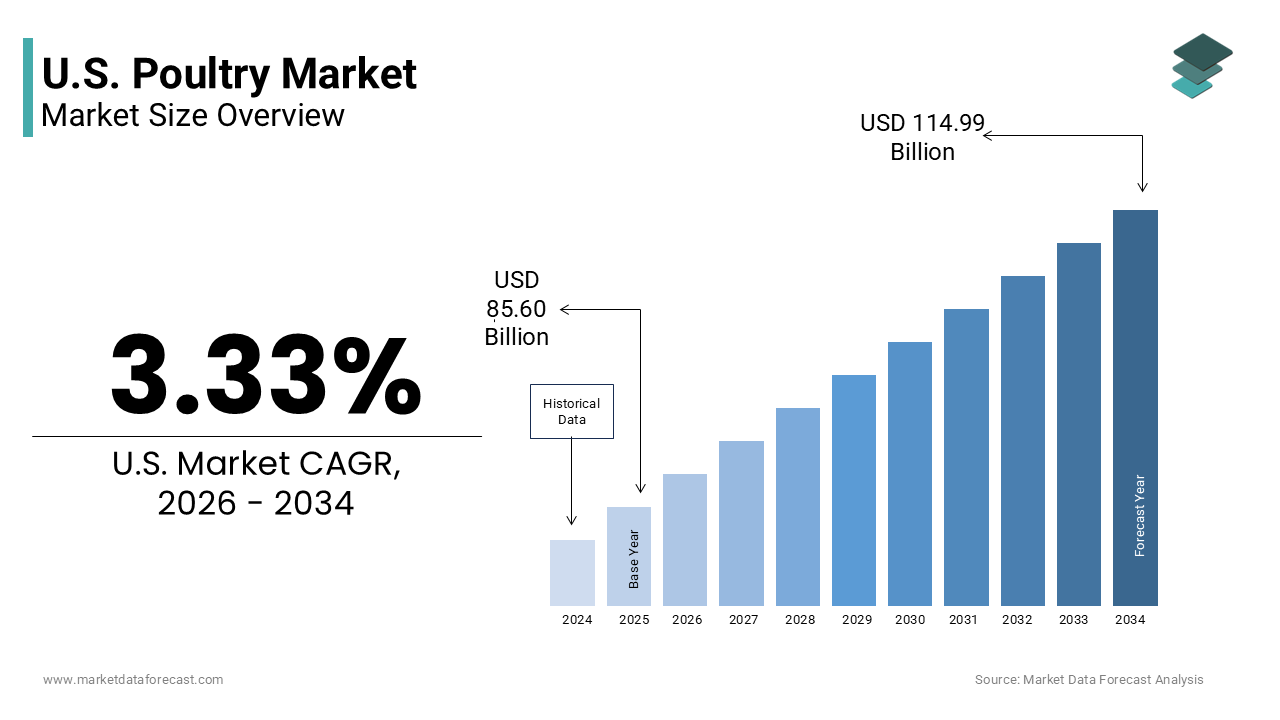
The poultry is the breeding raising processing and distribution of domesticated birds, primarily chickens, turkeys, and ducks for meat and egg consumption. The integrated supply chain, where a few major companies control multiple stages from feed production to retail distribution. According to the United States Department of Agriculture, the United States produces approximately 45 billion pounds of chicken annually making it the leading producer globally. The cultural integration of poultry into diverse culinary traditions ensures consistent domestic demand across all demographic segments. Regulatory oversight by the Food Safety and Inspection Service ensures strict hygiene and safety standards which influence operational costs and consumer confidence. Technological advancements in automation and genetic selection continue to drive efficiency improvements.
MARKET DRIVERS
Health Consciousness and Preference for Lean Protein Sources
The health consciousness and the growing preference for lean protein sources is accelerating the growth of the United States poultry market. Consumers are increasingly aware of the nutritional benefits of poultry which is lower in saturated fats and calories compared to red meats. The guidance influences consumer purchasing decisions and encourages healthcare professionals to recommend poultry-based diets. The annual food and health surveys indicate that a majority of Americans are actively trying to consume more protein, while reducing intake of unhealthy fats. Poultry fits this dietary requirement perfectly offering high quality protein essential for muscle maintenance and metabolic health. The rise of fitness culture and weight management programs further amplifies demand for chicken breast and turkey products, which are staples in low calorie meal plans. Retailers respond by expanding their offerings of organic grass fed and antibiotic free poultry to meet the demands of health focused shoppers. The perception of poultry as a clean label ingredient supports its inclusion in various diet trends including keto paleo and Mediterranean diets.
Affordability and Versatility in Culinary Applications
Affordability and culinary versatility significantly by making it an accessible staple for households across income levels is additionally propelling the growth of the United States poultry market. Poultry generally offers a lower cost per pound compared to beef and pork by allowing families to maintain protein intake without exceeding budget constraints. According to the research, the consumer price index for poultry products often remains stable or increases at a slower rate than other meat categories providing economic relief during periods of inflation. This price advantage makes poultry a critical component of food security strategies for low-and-middle income consumers. The ability of poultry to absorb various flavors and spices allows it to adapt to diverse culinary trends and consumer preferences. Food service establishments rely heavily on poultry due to its consistent supply and ease of preparation which reduces kitchen labor costs. The development of convenient value-added products such as pre marinated cuts and ready to cook kits further enhances its appeal to busy consumers.
MARKET RESTRAINTS
Outbreaks of Avian Influenza and Disease Risks
The outbreaks of avian influenza and other diseases by disrupting supply chains and causing substantial flock losses is hampering growth of the United States poultry market. Highly pathogenic avian influenza HPAI is a contagious viral disease that can decimate poultry populations and lead to strict quarantine measures. The recent outbreaks have resulted in the depopulation of tens of millions of birds affecting both commercial layers and broilers. These losses reduce the available supply of poultry products leading to price volatility and shortages in retail areas. The trade restrictions imposed by importing countries during outbreaks further limit export opportunities, which are crucial for industry profitability. The cost of implementing biosecurity measures to prevent disease transmission adds to operational expenses for producers. Consumer confidence can also be shaken during outbreaks although proper cooking eliminates health risks perceptions of safety may decline temporarily. The unpredictability of disease cycles makes long term planning difficult for farmers and processors. Insurance premiums for poultry operations may increase reflecting the heightened risk profile.
Rising Feed Costs and Input Price Volatility
The rising feed costs and input price volatility by squeezing profit margins for producers is another attribute declining the growth of United States poultry market. Corn and soybean meal constitute the primary components of poultry feed and their prices are subject to global commodity market fluctuations. According to the Economic Research Service of the United States Department of Agriculture feed costs typically account for 60 to 70% of the total cost of producing broilers. Droughts extreme weather events and geopolitical tensions can disrupt crop yields and supply chains leading to sharp increases in grain prices. The energy costs associated with heating and ventilating poultry houses also contribute to rising operational expenses. Small and independent farmers are particularly vulnerable to these cost pressures as they lack the economies of scale enjoyed by large integrated companies. The inability to predict input costs complicates budgeting and financial planning for the entire supply chain. Hedging strategies can mitigate some risks but do not eliminate exposure to sudden price spikes.
MARKET OPPORTUNITIES
Expansion of Export Markets and Global Demand
The expansion of export and growing global demand to increase revenue and diversify customer bases is setting up new opportunities for the growth of United States poultry market. The United States is a leading exporter of poultry products, particularly chicken parts and offal, which are highly valued in international markets. The trade agreements and improved access facilitate the flow of US poultry products to key destinations. The reputation of US poultry for high safety standards and quality enhances its competitiveness in global markets. Diversifying export destinations reduces dependence on domestic consumption and mitigates risks associated with local saturation. The development of specialized products tailored to specific cultural preferences in target markets further boosts export potential. Logistics improvements and cold chain innovations enable faster and more efficient delivery of perishable goods.
Innovation in Value Added and Convenience Products
The innovation in value added and convenience products to capture higher margins and meet evolving consumer lifestyles is another factor to expand the growth of the United States poultry market. Busy consumers increasingly seek ready to cook and ready to eat meal solutions that save time without compromising on nutrition or taste. Manufacturers are investing in product development to create healthy convenient options that align with current dietary trends, such as high protein and low sodium. The demand for ethnic and gourmet poultry preparations is rising as consumers experiment with global flavors at home. The use of advanced processing technologies allows for the creation of novel textures and forms, such as plant blended poultry products that appeal to flexitarians. Packaging innovations that extend shelf life and enhance freshness also contribute to product appeal. Retailers and food service providers benefit from these products as they reduce preparation time and labor costs.
MARKET CHALLENGES
Environmental Sustainability and Waste Management
The environmental sustainability and waste management, as stakeholders face increasing pressure to reduce ecological footprints is likely a challenge for the growth of United States poultry market. Poultry production generates significant amounts of manure wastewater and packaging waste, which require careful handling to prevent environmental contamination. The agricultural runoff containing nutrients from poultry litter can contribute to water quality issues, such as algal blooms in nearby water bodies. Regulations regarding waste disposal and emissions are becoming stricter requiring producers to invest in advanced treatment systems and sustainable practices. The balancing production efficiency with environmental responsibility. Implementing circular economy principles such as converting waste into energy or fertilizer requires substantial capital investment and technical expertise. Consumer awareness of climate change impacts drives demand for sustainably sourced products, which may necessitate changes in farming methods. The carbon footprint of feed production and transportation also contributes to overall environmental impact.
Labor Shortages and Workforce Constraints
The labor shortages and workforce constraints by affecting operational efficiency and production capacity is also to hinder the growth of the United States poultry market. The poultry processing industry relies heavily on manual labor for tasks, such as slaughtering deboning and packaging, which are difficult to automate completely. The wage rates in the manufacturing sector have risen as employers compete for a limited pool of available labor. The reliance on immigrant labor makes the industry vulnerable to changes in immigration policies and enforcement actions. Labor shortages can lead to production slowdowns increased overtime costs and higher turnover rates, which impact profitability. Workplace safety and ergonomics are also critical concerns as injuries can further reduce workforce availability. The industry is investing in automation and robotics to mitigate labor dependencies but these technologies require significant upfront investment and time to implement. Training programs and improved working conditions are essential to attract and retain employees.
REPORT COVERAGE
| REPORT METRIC | DETAILS |
| Market Size Available | 2025 to 2034 |
| Base Year | 2025 |
| Forecast Period | 2026 to 2034 |
| CAGR | 3.33% |
| Segments Covered | By Species Type, Product Type, Distribution Channel and Region |
| Various Analyses Covered | Global, Regional, & Country Level Analysis; Segment-Level Analysis, Drivers, Restraints, Opportunities, Challenges, PESTLE Analysis, Porter’s Five Forces Analysis, Competitive Landscape, Analyst Overview of Investment Opportunities |
| Countries Covered | California, Washington, Oregon, New York, and the Rest of the United States. |
| Key Market Players | Tyson Foods, Inc., Pilgrim’s Pride Corporation, Perdue Farms, Inc., Sanderson Farms, Inc., Foster Farms, Koch Foods, Inc., Wayne Farms LLC, Mountaire Farms, Inc., House of Raeford Farms, Inc., and Bell & Evans. |
SEGMENTAL ANALYSIS
By Species Insights
The chicken segment was accounted in holding 32.4% of the United States poultry market share in 2025 due to its widespread acceptance affordability and versatility in culinary applications. The domination of this segment is driven by its status as the most consumed meat in the country surpassing beef and pork in per capita consumption. According to the United States Department of Agriculture, Americans consume approximately 98 pounds of chicken per person annually reflecting its integral role in the national diet. The efficiency of chicken production allows for lower retail prices making it an accessible protein source for households across all income levels. The industry produces billions of broilers each year ensuring a consistent and reliable supply for both domestic and export markets. Chicken is favored for its mild flavor which adapts well to various seasoning profiles and cooking methods ranging from grilling to frying. The availability of diverse cuts, such as breasts thighs and wings caters to different consumer preferences and dietary needs. Health-conscious consumers prefer chicken for its high protein and low fat content particularly in skinless breast meat. The strong infrastructure for processing and distribution supports the dominance of chicken in retail and food service sectors.
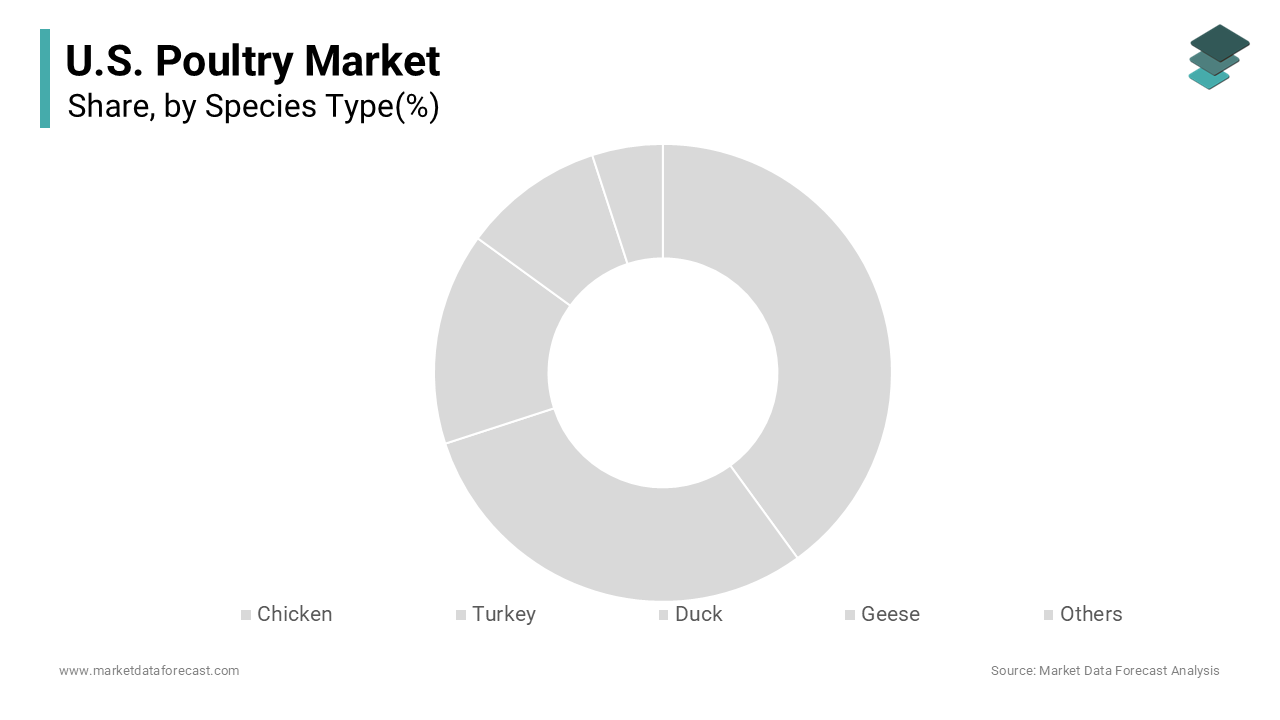
The turkey segment is exhibiting a fastest CAGR of 3.5% from 2026 to 2034 with the changing consumer perceptions and expanded product offerings. The turkey consumption has risen as consumers seek healthier options with lower calorie counts compared to red meats. The introduction of convenient turkey products, such as ground turkey, turkey bacon, and deli slices has broadened its appeal beyond traditional whole bird purchases. The producers have invested in marketing campaigns that the versatility and nutritional benefits of turkey for everyday meals. The demand for turkey burgers and sausages has increased in the food service sector as restaurants incorporate these items into health focused menus. Ground turkey is particularly popular among fitness enthusiasts and families looking for affordable lean meat options. The expansion of further processed turkey products such as seasoned tenders and marinated cuts aligns with the trend towards convenience.
By Product Type Insights
The meat products segment held a significant share of the United States poultry market in 2025 with the high volume of consumption and diverse application in meals. The preference for fresh and processed chicken and turkey meats, which serve as primary protein sources for millions of households. The availability of various cuts and preparations that allows consumers to customize their meals according to taste and dietary requirements. The expenditure on poultry meat remains stable even during economic downturns indicating its essential status in household budgets. The food service industry relies heavily on poultry meat for menu items ranging from fast food sandwiches to fine dining entrees. Processed meat products such as nuggets patties and sausages offer convenience for busy consumers who prioritize quick meal solutions. The innovation in packaging technologies extends the shelf life of fresh meat reducing waste and enhancing safety. The integration of poultry meat into ethnic cuisines further expands its market reach.
The egg segment is likely to witness a fastest CAGR of 4.2% from 2026 to 2034 with the recognition of eggs as a nutrient dense and versatile food item. The increasing inclusion of eggs in low carbohydrate and high protein diets, such as keto and paleo is also bolstering the growth of the segment. Eggs are rich in essential vitamins minerals and high quality protein making them an attractive option for health conscious individuals. The rise of breakfast culture and brunch trends in urban areas has boosted demand for egg based dishes in restaurants and cafes. Value added egg products such as liquid eggs egg whites and hard-boiled snacks offer convenience for on the go consumers. The expansion of cage free and organic egg options appeals to ethically minded shoppers willing to pay premium prices.
By Distribution Channel Insights
The Business to Business channel segment was accounted in holding 56.7% of the United States poultry market share in 2025 with the substantial volume of poultry purchased by food service establishments and institutional buyers. According to the survey, food service operators purchase large quantities of poultry due to its cost effectiveness and ease of preparation. The consistency of supply and standardized quality offered by B2B distributors make them preferred partners for commercial kitchens. The growth of quick service restaurants and fast casual dining chains further amplifies demand for chicken products such as wings strips and fillets. Institutional buyers, such as school districts and corporate cafeterias also contribute to B2B volume through contracted supply agreements. The efficiency of bulk purchasing reduces unit costs for businesses enhancing their profit margins. Distributors provide value added services such as logistics and inventory management which streamline operations for clients.
The online retail channel is deemed to witness a fastest CAGR of 12.5% during the forecast period with the shift in consumer shopping habits towards digital platforms. The convenience of home delivery and the ability to compare prices and products easily is elevating the growth of the segment. According to the study, online grocery sales have stabilized at higher levels post pandemic with poultry being a frequently purchased item. Consumers appreciate the time savings and reduced exposure to crowds associated with online shopping. The e-commerce sales for food and beverage stores have shown consistent growth indicating a permanent change in purchasing behavior. Major retailers and specialized meat providers have invested in cold chain logistics to ensure the safe delivery of fresh and frozen poultry. Subscription services for premium and organic poultry products are gaining popularity among affluent consumers seeking convenience and quality. Mobile apps and user friendly interfaces facilitate seamless ordering and tracking processes. The expansion of same day delivery options in urban areas further boosts the appeal of online retail.
COMPETITIVE LANDSCAPE
The competition in the United States poultry market is characterized by intense rivalry among a few large integrated producers who compete on price efficiency and product quality. The market structure is highly consolidated with key players holding significant influence over pricing and supply dynamics. Competitive intensity is driven by the commoditized nature of basic poultry products which forces companies to differentiate through branding and value added offerings. Innovation in convenience foods and sustainable practices plays a vital role as firms seek to appeal to health conscious and environmentally aware consumers. Regulatory compliance regarding food safety and animal welfare serves as a barrier to entry for smaller competitors without substantial capital. Established players leverage their economies of scale to maintain low production costs and offer competitive prices. Customer loyalty is maintained through consistent quality and reliable supply chains. Price wars are common during periods of oversupply impacting profit margins across the industry. The focus on technological advancement and operational efficiency is becoming a key differentiator.
KEY MAREKT PLAYERS
A few of the major companies in the U.S. poultry market include
- Tyson Foods, Inc.
- Pilgrim’s Pride Corporation
- Perdue Farms, Inc.
- Sanderson Farms, Inc.
- Foster Farms
- Koch Foods, Inc.
- Wayne Farms LLC
- Mountaire Farms, Inc.
- House of Raeford Farms, Inc.
- Bell & Evans
Top Players in the US Poultry Market
Tyson Foods Inc
Tyson Foods Inc is a dominant force in the United States poultry market with a comprehensive portfolio of fresh and frozen chicken products. The company operates an integrated supply chain that spans from feed production to retail distribution ensuring quality control and efficiency. Tyson recently strengthened its position by investing in automation technologies to enhance processing capabilities and reduce labor dependencies. The company focuses on sustainability initiatives including water conservation and animal welfare improvements to meet consumer expectations. Tyson also expands its value added product lines such as ready to cook meals to cater to convenience seeking customers. Its strong brand recognition and extensive distribution network allow it to maintain a competitive edge.
Pilgrim's Pride Corporation
Pilgrim's Pride Corporation is a major player in the US poultry industry known for its diverse range of chicken products served globally. The company leverages its vertical integration model to optimize production costs and ensure consistent supply across various markets. Pilgrim's Pride recently focused on operational efficiency by upgrading facilities and implementing advanced data analytics for better decision making. The company strengthens its market position through strategic partnerships with food service providers and retailers to expand its reach. It also invests in sustainable farming practices to address environmental concerns and regulatory requirements. Pilgrim's Pride emphasizes innovation in product development introducing new flavors and convenient formats to attract younger demographics.
Sanderson Farms Inc
Sanderson Farms Inc is a leading producer of fresh chicken in the United States with a reputation for high quality and customer service. The company operates primarily in the southern states utilizing a decentralized management approach to enhance flexibility and responsiveness. Sanderson Farms recently focused on expanding its processing capacity to meet growing demand for fresh poultry products. The company strengthens its market position by maintaining strong relationships with independent growers and local communities. It prioritizes animal health and welfare ensuring that its products meet strict safety standards. Sanderson Farms also invests in technology to improve operational efficiency and reduce environmental impact. Its commitment to producing natural and minimally processed chicken appeals to health-conscious consumers.
Top Strategies Used by Key Market Participants
Key players in the United States poultry market primarily employ strategies such as vertical integration product diversification and sustainability initiatives to strengthen their market position. Companies frequently invest in controlling the entire supply chain from feed production to processing to ensure quality and reduce costs. This approach allows them to mitigate risks associated with raw material price volatility and supply disruptions. Product diversification is another crucial strategy as firms expand into value added and convenience foods to capture higher margins. By focusing on ready to cook and ready to eat options companies meet the demands of busy consumers. Sustainability initiatives including waste reduction and animal welfare improvements help build brand trust and comply with regulations. Additionally, firms leverage technology and automation to enhance operational efficiency and reduce labor dependencies.
MARKET SEGMENTATION
This research report on the U.S. poultry market has been segmented based on the following categories.
By Species Type
- Chicken
- Turkey
- Duck
- Geese
- Others
By Product Type
- Meat
- Fresh/Chilled
- Processed
- Egg
By Distribution Channel
- Hypermarkets
- Supermarkets
- Online Channels
- Specialty Stores
- Others
By Country
- California
- Washington
- Oregon
- New York
- Rest of the United States
Access the study in MULTIPLE FORMATS
Purchase options starting from
$ 1200
Didn’t find what you’re looking for?
TALK TO OUR ANALYST TEAM
Need something within your budget?
NO WORRIES! WE GOT YOU COVERED!
Call us on: +1 888 702 9696 (U.S Toll Free)
Write to us: sales@marketdataforecast.com