Global Veterinary Drugs Market Size, Share, Trends & Growth Forecast Report By Animal Type, Product, Mode Of Delivery, End-User and Region (North America, Europe, Asia-Pacific, Latin America, Middle East and Africa) – Industry Analysis, 2026 to 2034
Global Veterinary Drugs Market Size
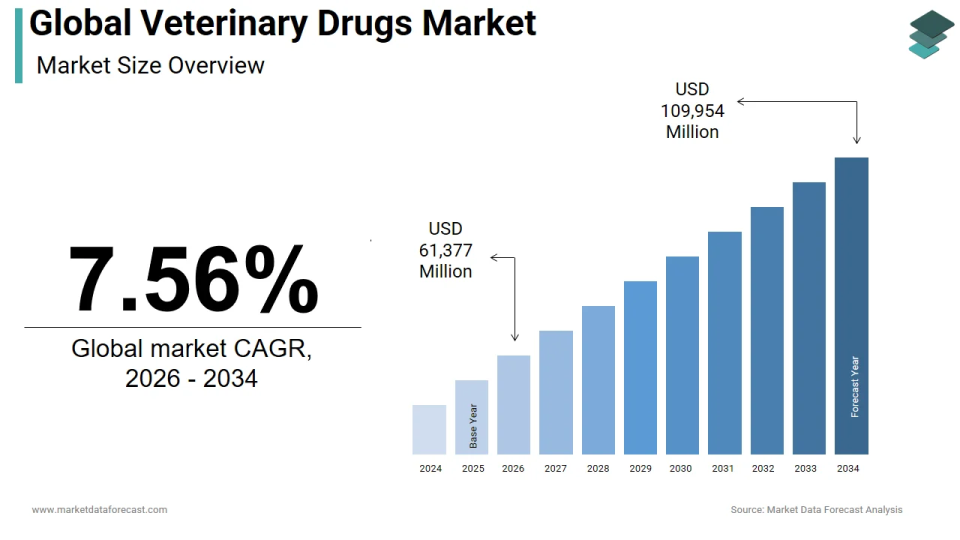
The global veterinary drugs market was valued at USD 57,062.73 million in 2025, is estimated to reach USD 61,377 million in 2026, and is projected to reach USD 109,954 million by 2034, growing at a CAGR of 7.56% from 2026 to 2034.
The veterinary drugs market, also known as the animal drugs market, is an industry of medicines for animals. The medicines are made to cure the various diseases that animals could contract and improve animal health. Veterinary pharmaceuticals have multiple drugs, vaccines, antibiotics, and nutritional medicines. These veterinary drugs mainly focus on livestock, companion, and farm animals, and these veterinary drugs are made, tested, and approved like human drugs. The U.S. FDA follows a present procedure for the approval of veterinary drugs. Every new animal drug must go through the new animal drug application (NADA) process for a generic license. All the regulatory requirements must be met for a drug to be approved by the FDA. Veterinary drugs are composed based on animal body functions and problems.
MARKET DRIVERS
Rising awareness regarding animal health and increased expenditure on veterinary care is expected to propel the expansion of the veterinary drugs market.
The increased adoption rate of pets in society and the increased risk of chronic diseases in animals have led to the market's rise. In addition, the heightened demand for poultry worldwide pushes the market's growth. It is predicted that more than 6 out of every ten known infectious diseases in people can come from animals, and 3 out of 4 newly emerged diseases are from animals. Furthermore, it is said that zoonotic contagious diseases are a common occurrence. So, the rate of acceptance for veterinary drugs in the animal farm industry has significantly risen and will continue increasing during the forecast period. In addition, the rise in animal parasitic and bacterial infections will also grow the market. With the increased risk of the spread of diseases from animals and the aggravated demand for meat around the world, the animals must be completely vaccinated and treated with veterinary drugs.
The continued growth in the human population and the rise in the livestock population in the world are expected to drive the veterinary drugs market growth.
For instance, according to the USDA, in 2020, there were around 103 million cattle and 32.1 million beef cows in the United States, which is expected to improve during the forecast period. Moreover, veterinary drugs help produce a healthy animal farm, a significant food source for the world. Additionally, the rise in the pet insurance market, with more people adopting and taking care of pets as their family members, is expected to boost the market growth.
MARKET RESTRAINTS
The hiked prices for veterinary drugs and veterinary services are expected to affect the veterinary drugs market negatively. The developing countries that spend very low on animal health will not be able to contribute significantly to the market. In addition, this high cost and low awareness about the importance of veterinary drugs and the threat of zoonotic diseases could hinder the market's growth.
REPORT COVERAGE
| REPORT METRIC | DETAILS |
| Market Size Available | 2025 to 2034 |
| Base Year | 2025 |
| Forecast Period | 2026 to 2034 |
| Segments Covered | By Animal Type, Product, Mode of Delivery, End-user, and Region. |
| Various Analyses Covered | Global, Regional, and Country-Level Analysis, Segment-Level Analysis, Drivers, Restraints, Opportunities, Challenges; PESTLE Analysis; Porter’s Five Forces Analysis, Competitive Landscape, Analyst Overview of Investment Opportunities |
| Regions Covered | North America, Europe, Asia Pacific, Latin America, Middle East & Africa |
| Market Leaders Profiled | Ceva, Elanco, Vetoquinol S.A., Bimeda, Inc., Pharmgate Inc., Zoetis, Intervet Inc., Boehringer Ingelheim International GmbH, Bayer AG, Merck Animal Health, Nuteco N.V., Vibrac, and Kindred Biosciences, Inc. |
SEGMENT ANALYSIS
By Animal Type Insights
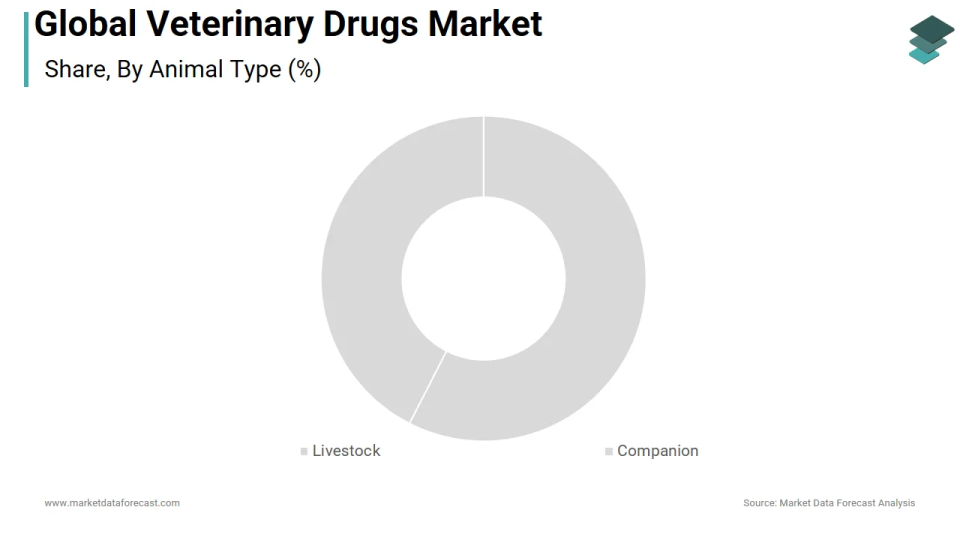
Based on the animal type, the livestock segment is the more lucrative and is estimated to contribute the most to the global veterinary drugs market during the forecast period. This rise is attributed to the rising demand for protein-rich food and concerns for veterinary healthcare. However, the companion segment is estimated to grow at a fast CAGR after the production section due to a rise in the adoption of pets and the prevalence of chronic diseases in animals.
By Product Insights
Based on the product, the drugs segment is anticipated to register the most significant share of the global veterinary drugs market during the forecast period and hold more than 50% of the share of the worldwide market in 2022. The domination of this segment is attributed to the increment in the spread of zoonotic diseases, food-borne diseases, and brucellosis.
On the other hand, the vaccines market is estimated to grow at a healthy CAGR during the forecast period owing to the growing demand for veterinary vaccines and increased epidemics.
By Mode of Delivery Insights
The parenteral segment of the mode of delivery shows therapeutic effects after only an hour of administration, thus making it the fastest and most effective way and placing it on top in the market. The parenteral segment had over 44% in 2022 due to its ease of availability and efficiency.
The oral segment is now on the rise and is expected to have a fast-growing CAGR during the forecast period.
By End-user Insights
Veterinary clinics and hospitals have facilities like laser diagnostics, specialized surgeries, nuclear and regenerative medicines, novel therapies, and advanced diagnostic imaging, making them highly efficient and, thus, the highest contributor to the market. As a result, the veterinary hospital and clinics segment held a massive share of the global veterinary drugs market in 2024.
The reference laboratories segment is expected to grow at a promising growth rate during the forecast period.
REGIONAL ANALYSIS
North America played a significant role in the global veterinary drugs market in 2024 and is expected to occupy a promising share worldwide throughout the forecast period. The North American veterinary drugs market size was worth USD 14589 million in 2021 and is expected to be worth USD 21864 million by 2027. This dominance is due to favorable reimbursement programs and increasing animal cases of zoonotic and chronic diseases. In addition, this rise is also because of the increment in the expenditure on companions in countries like U.S. and Canada. Additionally, the increase in pet health policies, along with the development of more veterinary clinics and partnerships among companies, fuels the market growth in this region; consider the 2019 partnership between Zoetis and Caritas U.S.-based companies to improve the quality of tilapia fish.
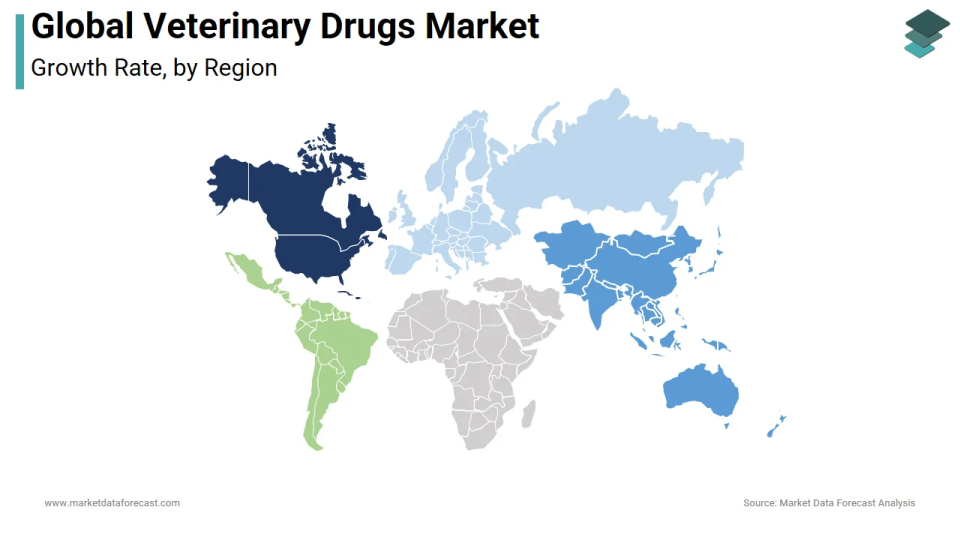
Europe is expected to keep growing in the market owing to its stringent animal health guidelines and critical players in the market in countries like the U.K., Italy, Germany, and France.
The Asia Pacific region is expected to grow at a fast CAGR during the forecast period owing to the increased adoption of companion animals and more awareness regarding the need for animal health care and the acceptance of veterinary drugs. In addition, increasing expenditure on veterinary services in developing countries like India, China, Japan, and South Korea leads to market growth in the regions.
Latin American countries like Brazil, Argentina, and Columbia will show growth in the market due to an increased demand for beef in the regions. In addition, the middle east and Africa, with countries like UAE and South Africa, are also expected to show study growth in the market.
KEY MARKET PLAYERS
Some of the noteworthy companies operating in the global veterinary drugs market are
- Ceva
- Elanco
- Vetoquinol S.A.
- Bimeda, Inc.
- Pharmgate Inc.
- Zoetis
- Intervet Inc.
- Boehringer Ingelheim International GmbH
- Bayer AG
- Merck Animal Health
- Nuteco N.V.
- Virbac
- Kindred Biosciences, Inc.
GLOBAL VETERINARY DRUGS MARKET NEWS
- On June 11, 2022, it was announced that on June 22, 2022, the FDA would be holding a live webinar titled "reporting of veterinary drug supply chain information using animal drug manufacturing system (ADMS) eSubmitter Tool." The webinar explains the structure and planning of the animal drug supply chain. It is easy to use convenient software to make animal drug service easier for people.
- On June 6, 2022, the FDA warned companies about importing, adulterating new veterinary drugs, and violating hazard analysis. Non-compliance with the FSVP rules has led to the issuing of these warning letters by the FDA to certain companies that have 15 days to respond to the FDA's warnings.
MARKET SEGMENTATION
This research report on the global veterinary drugs market has been segmented and sub-segmented based on animal type, product, mode of delivery, end-user, and region.
By Animal Type
- Livestock
- Poultry
- Swine
- Cattle
- Sheep & Goats
- Fish
- Companion
- Dogs
- Cats
- Horses
- Others
By Product
- Drugs
- Antiparasitic
- Anti-inflammatory
- Anti-infectives
- Others
- Vaccines
- Modified live vaccines (MLV)
- Killed inactivated vaccines
- Others
- Medicated feed additives
- Antibiotics
- Vitamins
- Amino acids
- Enzymes
- Antioxidants
- Prebiotics and probiotics
- Minerals
- Others
By Mode of Delivery
- Oral
- Powder
- Tablets
- Parenteral
- Topical
- Suspension
- Carrier
By End-user
- Reference Laboratories
- Veterinary Hospitals and Clinics
- Point Of Care Testing/In-House Testing
- Others
By Region
- North America
- Europe
- Asia Pacific
- Latin America
- Middle East and Africa
Frequently Asked Questions
1. What is the size of the global veterinary drugs market?
The global veterinary drugs market reach USD 57,062.73 million in 2025, driven by pet ownership and livestock needs worldwide.
2. What drives growth in the global veterinary drugs market?
Rising pet humanization, livestock production, and disease prevention fuel the global veterinary drugs market expansion.
3. Which regions lead the global veterinary drugs market?
North America dominates with over 40% share in the global veterinary drugs market due to advanced infrastructure.
4. What animal types rule the global veterinary drugs market?
Livestock animals lead demand in the global veterinary drugs market for vaccines and antibiotics.
5. How does pet ownership impact the global veterinary drugs market?
Increasing pet adoption boosts companion animal drugs in the global veterinary drugs market significantly.
6. What trends shape the global veterinary drugs market?
Antimicrobial resistance regulations and biologics innovation define the global veterinary drugs market direction.
7. Which drug types dominate the global veterinary drugs market?
Anti-infectives and vaccines hold major shares in the global veterinary drugs market for disease control.
8. Who are key players in the global veterinary drugs market?
Zoetis, Boehringer Ingelheim, and Merck Animal Health lead the global veterinary drugs market competition.
9. What challenges face the global veterinary drugs market?
Regulatory scrutiny on antibiotics challenges sustainability in the global veterinary drugs market.
10. How do vaccines influence the global veterinary drugs market?
Preventive vaccines for livestock and pets command strong growth in the global veterinary drugs market.
Related Reports
Access the study in MULTIPLE FORMATS
Purchase options starting from
$ 2500
Didn’t find what you’re looking for?
TALK TO OUR ANALYST TEAM
Need something within your budget?
NO WORRIES! WE GOT YOU COVERED!
Call us on: +1 888 702 9696 (U.S Toll Free)
Write to us: sales@marketdataforecast.com