Global Veterinary Vaccines Market Size, Share, Trends & Growth Forecast Report By Product Type (Livestock Vaccines (Bovine, Porcine, Ovine, Poultry and Equine), Companion Vaccines (Feline Vaccines and Canine Vaccines), Production Technologies (Live Attenuated Vaccines, Inactivated Vaccines, Recombinant Vaccines, Toxoid Vaccines, Subunit Vaccines, DNA Vaccines and Conjugate Vaccines) and Region (North America, Europe, APAC, Latin America, Middle East and Africa) - Industry Analysis (2025 to 2033)
Global Veterinary Vaccines Market Size
The global veterinary vaccines market size was valued at USD 7.6 billion in 2024. The veterinary vaccines market size is expected to have 5.5 % CAGR from 2025 to 2033 and be worth USD 12.31 billion by 2033 from USD 8.02 billion in 2025.

Veterinary Vaccines refers to the biologically engineered preparations designed to stimulate immune responses in animals, preventing infectious diseases across livestock, companion animals, and poultry. These vaccines serve as a strategic intervention in animal health management, reducing disease burden, enhancing productivity, and minimizing zoonotic transmission risks.
With over 70% of emerging infectious diseases in humans originating from animals, as per the Food and Agriculture Organization (FAO), veterinary immunization has become a cornerstone of global One Health initiatives. The World Organisation for Animal Health (WOAH) underscores that effective vaccination reduces reliance on antimicrobials in animal production, directly addressing the escalating crisis of antimicrobial resistance (AMR). Similarly, Japan mandates rabies vaccination for all dogs, achieving a national compliance rate exceeding 95%, according to the Ministry of Agriculture, Forestry and Fisheries (MAFF). The humanization of pets has further amplified demand, driving preventive care adoption. As urbanization and protein demand rise, particularly in developing economies, veterinary vaccines are increasingly recognized not only as animal health tools but as essential components of food security and public health infrastructure.
MARKET DRIVERS
Rising Livestock Intensification and Food Security Imperatives
The global shift toward intensified livestock farming to meet growing protein demand has significantly amplified the necessity for widespread veterinary vaccination. As the world’s population surpasses 8 billion, meat and dairy consumption has surged, particularly in Asia and Africa, where livestock production is expanding rapidly. According to the Food and Agriculture Organization (FAO), global meat output exceeded 350 million metric tons in 2023, with poultry and swine sectors leading growth. In high-density farming systems, disease transmission risks escalate dramatically, pathogens such as avian influenza, porcine epidemic diarrhea virus (PEDV), and foot-and-mouth disease (FMD) can decimate entire herds within days. The economic consequences are severe; South Korea culled over 4 million pigs during an FMD outbreak in 2021, as per the World Organisation for Animal Health (WOAH). Vaccination offers a cost-efficient alternative. National programs reflect this strategic shift, India vaccinated more than 500 million livestock under its National Animal Disease Control Programme in 2022, as per the Ministry of Fisheries, Animal Husbandry and Dairying. As global food systems become more interconnected, the role of veterinary vaccines in ensuring sustainable, resilient, and disease-free livestock production is increasingly indispensable.
Growing Companion Animal Ownership and Preventive Healthcare Trends
The transformation of pets into integral family members has catalyzed a paradigm shift in veterinary care, with preventive medicine, particularly vaccination, becoming a standard component of pet wellness. Urbanization, rising disposable incomes, and evolving social attitudes have elevated pet healthcare expectations. In the United States, pet ownership reached an all-time high of 68% of households in 2023, according to the American Veterinary Medical Association (AVMA), with annual veterinary expenditures surpassing $35 billion. This behavioral shift has driven consistent demand for core vaccines such as rabies, canine distemper, parvovirus, and feline panleukopenia, as well as non-core vaccines like leptospirosis and Bordetella. Regulatory frameworks reinforce compliance: the European Union mandates rabies vaccination for all dogs crossing borders, resulting in near-universal immunization in member states. Japan’s Animal Welfare Law requires annual rabies vaccination, contributing to a 95% coverage rate among dogs, as per the Ministry of Agriculture, Forestry and Fisheries (MAFF). Besides, the expansion of pet insurance, 3.5 million policies in the UK as per the Insurance Federation, has reduced financial barriers to routine care. With telehealth platforms and digital reminders improving adherence, the integration of vaccination into lifelong pet health plans is now a well-entrenched practice in developed markets.
MARKET RESTRAINTS
Cold Chain Limitations in Low- and Middle-Income Countries
A critical barrier to equitable veterinary vaccine distribution is the fragility of cold chain infrastructure, especially in rural and underdeveloped regions. Most veterinary vaccines, including modified-live and inactivated formulations, require continuous refrigeration between 2°C and 8°C to preserve immunogenicity. However, as per the World Bank, more than 1.2 billion people live in areas with unreliable electricity, severely disrupting vaccine logistics. In sub-Saharan Africa, only 28% of veterinary clinics have consistent refrigeration, according to a 2023 assessment by the International Livestock Research Institute (ILRI). This leads to widespread vaccine spoilage. In Southeast Asia, where smallholder farms dominate livestock production, the absence of solar-powered refrigerators and insulated transport vehicles limits outreach. This undermines disease control programs for critical pathogens such as peste des petits ruminants and contagious bovine pleuropneumonia, which affect millions of pastoral animals annually. While thermostable vaccines are under development, their commercial availability remains limited. Until systemic improvements in energy access and cold logistics are achieved, particularly in remote agrarian economies, the efficacy and reach of veterinary immunization will remain constrained, perpetuating disease vulnerability in vulnerable animal populations.
Regulatory Heterogeneity and Approval Delays
The lack of harmonized regulatory frameworks across countries presents a major impediment to the timely introduction and distribution of veterinary vaccines. Unlike human pharmaceuticals, which benefit from international alignment through agencies like the FDA and EMA, veterinary biologics face disparate standards in efficacy, safety, and quality control. This delays the deployment of advanced vaccines, including recombinant and mRNA-based platforms, even when proven effective in clinical trials. In Africa, manufacturers must undergo redundant registration processes in each country due to the absence of regional harmonization. The African Union’s Interafrican Bureau for Animal Resources (AU-IBAR) estimates that multi-country registration costs exceed $500,000 per product, discouraging innovation and market entry. Additionally, post-marketing surveillance systems are weak in many regions, increasing the risk of counterfeit or substandard vaccines entering the supply chain. These regulatory inefficiencies not only hinder disease control but also deter investment in next-generation veterinary immunizations, particularly for niche or species-specific applications.
MARKET OPPORTUNITIES
Expansion of Thermostable and Needle-Free Vaccine Technologies
Innovations in thermostable formulations and needle-free delivery systems are unlocking transformative opportunities for veterinary vaccine deployment, especially in resource-constrained environments. Traditional vaccines are highly sensitive to temperature fluctuations, but new technologies, such as lyophilization, microencapsulation, and nanoparticle carriers, are enhancing thermal stability. The International Atomic Energy Agency (IAEA) has supported radiation-based thermostable vaccines, with pilot programs in Vietnam reducing cold chain dependency for avian influenza vaccines by 60%. Needle-free administration methods, such as intranasal sprays, oral baits, and jet injectors, are also gaining momentum. In Canada, oral rabies vaccination via bait distribution has led to the elimination of terrestrial rabies in multiple provinces, as reported by the Public Health Agency of Canada. These advancements reduce animal stress, minimize labor costs, and enable mass immunization in free-ranging or wild populations. Supported by global health initiatives like the FAO-OIE-WHO Tripartite, these technologies are poised to revolutionize disease control in both commercial and subsistence farming systems.
Integration of Digital Health and Vaccine Traceability Systems
The convergence of digital technologies with veterinary healthcare is creating unprecedented opportunities for vaccine monitoring, compliance, and outbreak prevention. Electronic animal identification (eID), blockchain-based traceability, and mobile veterinary platforms are enabling real-time tracking of immunization records and disease events. As per the European Commission, over 85% of EU member states now use digital cattle passports integrated with vaccination data, facilitating rapid response to diseases like brucellosis and bovine tuberculosis. In Indonesia, the iSIKHNAS mobile platform has enabled the reporting of over 5 million animal health incidents since 2020, including vaccine coverage, as per the Food and Agriculture Organization (FAO). For companion animals, smart collars and apps like PetDesk in the U.S. send automated vaccination reminders. AI-driven predictive analytics are also being deployed. As digital infrastructure expands globally, the integration of data systems with veterinary immunization will redefine preventive animal health strategies, enhancing transparency, efficiency, and public trust.
MARKET CHALLENGES
Emergence of Antimicrobial Resistance and Policy-Driven Vaccine Adoption
The escalating crisis of antimicrobial resistance (AMR) is placing immense pressure on the veterinary sector to shift from therapeutic to preventive disease management, yet vaccine adoption remains inconsistent. The World Health Organization (WHO) projects that AMR could cause 10 million deaths annually by 2050, with livestock production contributing significantly, over 70% of antimicrobials are used in animals in some countries, as reported by the ReAct Network. This regulatory shift has increased demand for alternative tools, including vaccines. However, economic and behavioral barriers persist. In Thailand, as per a 2023 survey by the Department of Livestock Development, only 45% of smallholder poultry farmers used vaccines regularly, preferring low-cost antibiotics. Similarly, in Brazil, vaccine coverage for infectious bursal disease in broilers remains below 60% in informal systems, as reported by Embrapa. While vaccines offer long-term cost savings, their higher upfront price and lack of awareness hinder adoption. Overcoming this inertia requires policy enforcement, farmer education, and financial incentives to align economic behavior with public health imperatives.
Wildlife-Livestock Interface and Zoonotic Spillover Risks
The expanding interaction between wildlife, domestic animals, and human populations presents a complex challenge for veterinary vaccination programs. Habitat encroachment due to deforestation and urbanization has intensified pathogen spillover risks. The Centers for Disease Control and Prevention (CDC) states that 75% of emerging infectious diseases originate at the wildlife-livestock-human interface. Examples include Nipah virus in Bangladesh, where fruit bats infect pigs and subsequently humans, and African swine fever (ASF), which spreads from wild boars to commercial pig farms. In Germany, over 7,000 wild boar tested positive for ASF between 2020 and 2023, threatening the country’s pork exports, as documented by the Friedrich-Loeffler-Institut. Controlling such diseases requires coordinated vaccination across species, but logistical and ethical challenges remain. Oral rabies vaccination of foxes in Europe has been successful, but similar strategies for ASF or avian influenza in wild birds are still experimental. Moreover, vaccine hesitancy among farmers, 38% of livestock keepers in Uganda refused FMD vaccination due to distrust in government programs, as per a 2022 study by the International Livestock Research Institute (ILRI), further complicates control efforts. Addressing this challenge demands interdisciplinary collaboration, community engagement, and adaptive immunization strategies that account for ecological dynamics and human behavior.
REPORT COVERAGE
| REPORT METRIC | DETAILS |
| Market Size Available | 2024 to 2033 |
| Base Year | 2024 |
| Forecast Period | 2025 to 2033 |
| Segments Covered | By Type, Production Technologies, and Region |
| Various Analyses Covered | Global, Regional & Country Level Analysis, Segment-Level Analysis, Drivers, Restraints, Opportunities, Challenges; PESTLE Analysis; Porter's Five Forces Analysis; Competitive Landscape, Analyst Overview of Investment Opportunities |
| Regions Covered | North America, Europe, Asia Pacific, Latin America, Middle East & Africa |
| Key Market Players | Bayer HealthCare AG, Sanofi Animal Health, Inc., Heska Corporation, Indian Immunologicals Ltd., Biogenesis Bago SA, Boehringer Ingelheim GmbH, Zoetis, Novartis Animal Health, Inc., Merck & Co. Inc. and Protein Sciences. |
SEGMENTAL ANALYSIS
By Type Insights
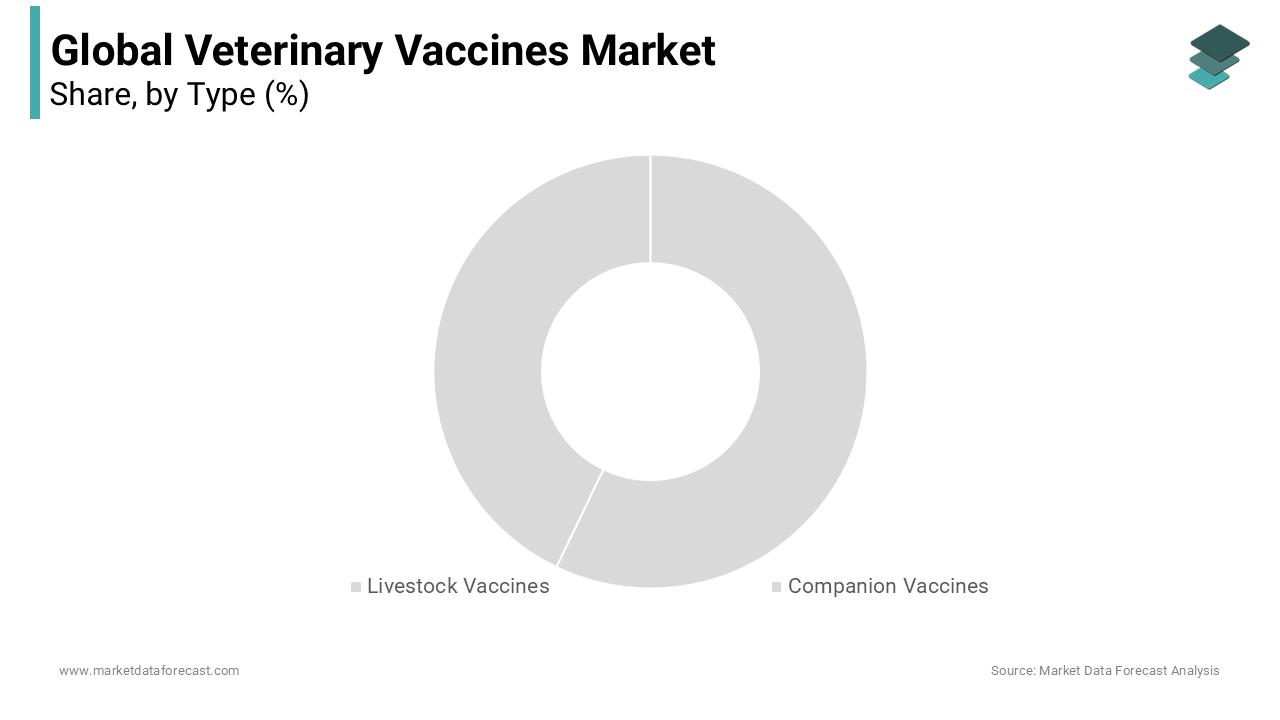
The poultry vaccines segment dominated the livestock vaccines segment by capturing an estimated 32.5% of the global veterinary vaccines market in 2024. This lead position is due to the exponential growth of the global poultry industry. Intensive broiler and layer farming systems are highly susceptible to rapid disease transmission, necessitating widespread immunization against pathogens such as Newcastle disease virus (NDV), infectious bronchitis (IBV), and avian influenza. The economic stakes are immense outbreaks of highly pathogenic avian influenza (HPAI) in 2022 led to the culling of more than 58 million birds in the United States alone, as per the U.S. Department of Agriculture (USDA), reinforcing the reliance on preventive vaccination. Besides, the absence of effective antiviral treatments in poultry makes vaccines the primary defense mechanism. Countries like Brazil and Thailand, which are major exporters of poultry products, mandate vaccination programs to meet international sanitary standards set by the World Organisation for Animal Health (WOAH). With global demand for affordable protein rising, particularly in Asia and Africa, the structural dependence of industrial poultry production on routine immunization ensures the sustained dominance of this segment.
By Companion Vaccines Insights
The canine vaccines segment represented the largest part within the companion animal vaccines market by accounting for a 66.3% of total companion vaccine sales in 2024. This dominance is due to the sheer scale of dog ownership and the regulatory mandates surrounding rabies immunization. Legal requirements further reinforce adoption the European Union mandates rabies vaccination for all dogs traveling across member states, ensuring near-universal compliance across 27 nations. Japan’s Ministry of Health, Labour and Welfare points out that over 16 million dogs are registered in the national pet database, with vaccination rates exceeding 90% due to strict enforcement under the Rabies Prevention Law. Additionally, the rise of urban pet populations in emerging economies has amplified demand. The integration of vaccination into routine wellness plans, supported by pet insurance and telehealth platforms, has institutionalized canine immunization as a standard of care, solidifying its market leadership.
The feline vaccines segment is experiencing the fastest growth within the companion animal segment and is projected to grow at a CAGR of 8.3% during the forecast period. This acceleration is fueled by rising cat ownership and increasing awareness of feline-specific diseases. Unlike dogs, cats historically received lower vaccination coverage due to perceived lower disease risk and indoor lifestyles. However, the prevalence of feline leukemia virus (FeLV) and feline immunodeficiency virus (FIV) has prompted greater preventive action. Moreover, the introduction of non-adjuvanted and recombinant feline vaccines has improved safety profiles, reducing the risk of vaccine-associated sarcomas and increasing owner compliance. Thus, financial barriers to vaccination are diminishing. As cats transition from outdoor animals to valued household members, their healthcare standards are aligning with those of dogs, propelling rapid market expansion.
By Production Technology Insights
The inactivated vaccines segment held the largest share of the veterinary vaccine production technology market at 35.6% of total production in 2024. Their dominance is attributed to safety, stability, and broad regulatory acceptance across species and geographies. Unlike live-attenuated vaccines, inactivated formulations cannot revert to virulence, making them ideal for immunocompromised animals and high-biosecurity farms. They are widely used in poultry, swine, and equine sectors, particularly for diseases like avian influenza, equine encephalitis, and foot-and-mouth disease (FMD). Besides, these vaccines are easier to store and transport than live counterparts, requiring only standard refrigeration (2–8°C), which enhances accessibility in remote regions. With established manufacturing protocols and compatibility with adjuvants that enhance immunogenicity, inactivated vaccines remain the backbone of large-scale immunization programs, ensuring their continued market leadership.
The recombinant vaccines segment is emerging as the fastest-growing technology in the veterinary space and is projected to expand at a CAGR of 9.1% from 2025 to 2033. This growth is driven by their precision, safety, and ability to differentiate infected from vaccinated animals (DIVA), a critical feature for disease eradication programs. Unlike traditional vaccines, recombinant platforms use genetic engineering to express specific antigens, such as the glycoprotein B of bovine herpesvirus, without introducing whole pathogens. The technology also supports multivalent designs Boehringer Ingelheim’s Ingelvac CircoFLEX combines PCV2 antigen with a baculovirus vector, reducing co-infections in swine. With increasing investment from public-private partnerships like the FAO-OIE-WHO Tripartite, recombinant vaccines are becoming central to next-generation disease control, particularly for zoonotic and transboundary pathogens.
REGIONAL ANALYSIS
North America Veterinary Vaccines Market Insights
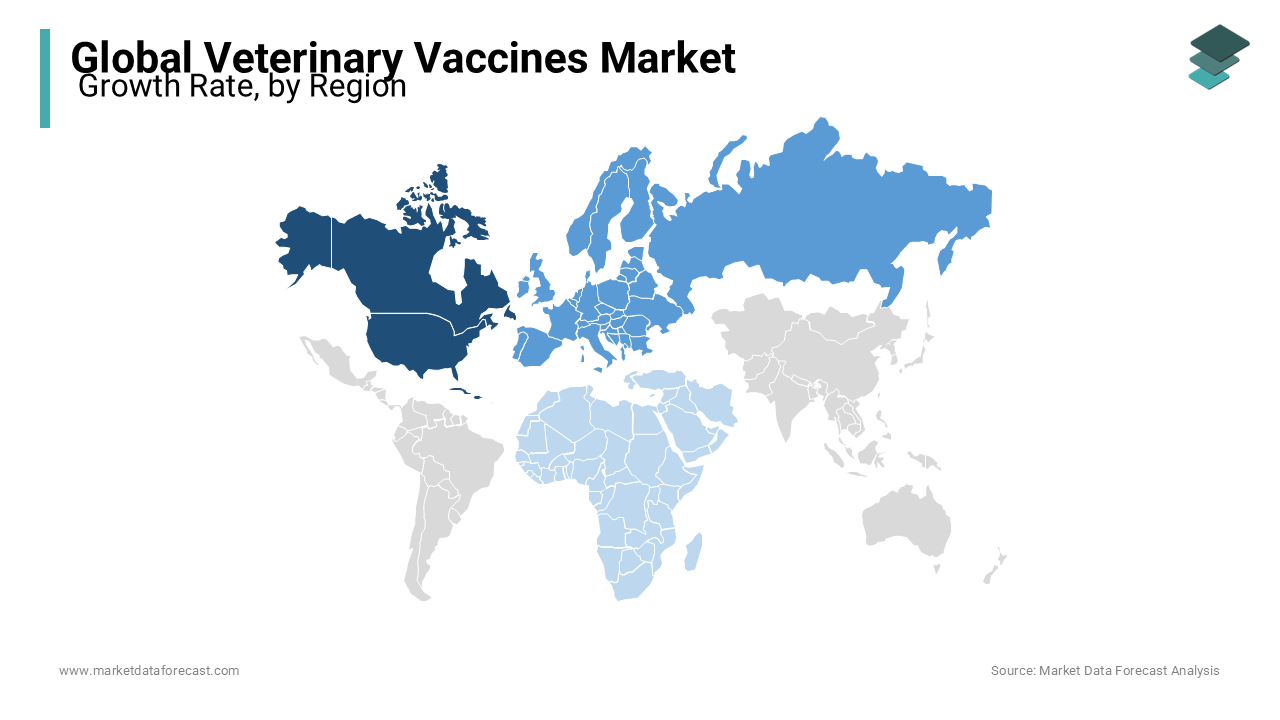
North America spearheaded the global veterinary vaccines market by commanding 36.7% in 2027. The region’s position is anchored in its advanced animal health infrastructure, high pet ownership rates, and stringent livestock biosecurity protocols. According to the American Veterinary Medical Association (AVMA), over 90% of U.S. dairy herds are vaccinated against bovine viral diarrhea (BVDV), while poultry farms administer over 1.5 billion vaccine doses annually. The pet economy further amplifies demand U.S. pet owners spent $35.6 billion on veterinary care in 2023, with vaccination constituting nearly 25% of preventive expenditures, as per the American Pet Products Association (APPA). Regulatory rigor enhances market confidence; the USDA’s Center for Veterinary Biologics licenses and monitors over 2,000 vaccine products, ensuring quality and traceability. Canada complements this ecosystem with federally mandated rabies and brucellosis programs. With strong R&D investment, the region remains the epicenter of innovation and commercialization in veterinary immunization.
Europe Veterinary Vaccines Market Insights
Europe maintains a strong second position in the veterinary vaccines market. The region’s market is shaped by stringent animal welfare regulations, export-oriented livestock industries, and high pet healthcare standards. The European Union’s ban on antibiotic growth promoters has redirected disease management toward preventive immunization, particularly in swine and poultry. In the companion sector, mandatory rabies vaccination for cross-border pet travel ensures near-universal compliance across member states. The UK’s bovine TB eradication program relies heavily on BCG vaccination trials, supported by the Animal and Plant Health Agency (APHA). Additionally, the EU’s harmonized regulatory framework under Regulation (EU) 2019/6 streamlines vaccine approval, fostering innovation. With strong public funding for One Health initiatives and a dense network of veterinary clinics, Europe remains a mature and evolving market for advanced veterinary biologics.
Asia-Pacific Veterinary Vaccines Market Insights
The Asia-Pacific region is poised for rapid expansion due to rising protein demand and intensifying livestock production. China and India are the primary drivers China produces over 50 million metric tons of pork annually, necessitating large-scale vaccination against PRRS and ASF, while India’s National Animal Disease Control Programme administered over 500 million doses of FMD and brucellosis vaccines in 2022. The Australian Department of Agriculture, Fisheries and Forestry notes that Australia’s poultry sector uses over 80 million vaccine doses annually, primarily for Newcastle disease. In Japan, strict pet vaccination laws ensure a 95% rabies immunization rate among dogs, as per the Ministry of Agriculture, Forestry and Fisheries (MAFF). Urbanization is also boosting companion animal healthcare. However, cold chain limitations and fragmented regulations in countries like Indonesia and the Philippines constrain uniform adoption. Despite these challenges, government-backed animal health initiatives and rising awareness are transforming APAC into a high-potential market for both traditional and next-generation vaccines.
Latin America Veterinary Vaccines Market Insights
Latin America holds a significant share of the global veterinary vaccines market, with Brazil and Argentina leading regional demand. The region’s economy is heavily reliant on livestock exports Brazil is the world’s largest beef exporter and second-largest poultry exporter, necessitating rigorous vaccination programs to meet international sanitary standards. As per the Brazilian Ministry of Agriculture, over 200 million cattle are vaccinated annually against foot-and-mouth disease, supporting the country’s FMD-free status with vaccination. In poultry, over 6 billion broilers are vaccinated in ovo against Marek’s disease and infectious bursal disease each year, as documented by Embrapa. Companion animal vaccination is also expanding. However, inconsistent regulatory enforcement and limited rural veterinary access hinder broader coverage. The Andean region faces challenges with peste des petits ruminants and bovine tuberculosis due to cross-border animal movement. Despite these constraints, public-private partnerships and regional harmonization efforts through the Inter-American Committee on Agriculture (CIA) are strengthening vaccine deployment, positioning Latin America as a growing market with untapped potential.
Middle East and Africa Veterinary Vaccines Market Insights
The Middle East and Africa collectively exhibit significant growth potential due to rising livestock dependency and disease burden. In East Africa, pastoralist communities rely on cattle, sheep, and goats for livelihoods, yet vaccination coverage remains low, only 30% of smallholder farms in Ethiopia and Kenya use routine vaccines, according to the International Livestock Research Institute (ILRI). Transboundary diseases like peste des petits ruminants (PPR) affect sheep and goat populations in the Sahel. The UAE and Saudi Arabia are regional leaders, investing heavily in high-tech livestock facilities and mandatory vaccination programs UAE’s Ministry of Climate Change and Environment administered over 10 million animal vaccine doses in 2023. Wildlife-livestock interactions further complicate control. While cold chain and regulatory gaps persist, initiatives like the AU’s PPR Eradication Program aim to vaccinate over 1 billion small ruminants by 2030. With increasing donor support and regional coordination, the MEA region is gradually building capacity to expand veterinary immunization coverage.
KEY MARKET PLAYERS
Notable companies in the global animal / veterinary vaccines market profiled in the report are Bayer HealthCare AG, Sanofi Animal Health, Inc., Heska Corporation, Indian Immunologicals Ltd., Biogenesis Bago SA, Boehringer Ingelheim GmbH, Zoetis, Novartis Animal Health, Inc., Merck & Co. Inc. and Protein Sciences.
TOP LEADING PLAYERS IN MARKET
Merck Animal Health
Merck Animal Health has established a dominant presence in the Asia Pacific veterinary vaccines market through strategic investments in R&D and regional manufacturing. The company offers a comprehensive portfolio, including vaccines for poultry, swine, and companion animals, with key products like Nobilis for avian diseases and PureVax® for feline immunizations. In 2023, Merck expanded its production facility in India to enhance supply resilience for foot-and-mouth disease and avian influenza vaccines, catering to both domestic and export markets. It actively collaborates with governments on disease eradication programs, such as India’s National Animal Disease Control Programme. The company also launched digital veterinary support platforms in Australia and Japan to improve vaccine adoption and monitoring. By integrating advanced biologics with data-driven animal health solutions, Merck Animal Health continues to strengthen its footprint across commercial farms and urban pet care sectors in the region.
Zoetis
Zoetis has emerged as a pivotal player in the Asia Pacific veterinary vaccines landscape by focusing on innovation and localized product development. The company’s vaccines for porcine reproductive and respiratory syndrome (PRRS) and bovine respiratory disease are widely adopted in commercial livestock operations across China, Thailand, and Australia. In 2022, Zoetis opened a new technical support center in Singapore to accelerate regulatory approvals and field surveillance across Southeast Asia. It introduced the Fostera® line of swine vaccines in Vietnam and the Philippines, improving herd immunity in high-density pig farms. The company also partnered with Australia’s CSIRO to develop next-generation poultry vaccines using viral vector technology. Through targeted marketing, veterinary education programs, and collaborations with national animal health agencies, Zoetis has deepened its integration into regional disease prevention frameworks, ensuring sustained growth and trust among farmers and veterinarians.
Boehringer Ingelheim Animal Health
Boehringer Ingelheim Animal Health has significantly influenced the Asia Pacific veterinary vaccines market through its focus on sustainable livestock health and zoonotic disease control. The company’s Ingelvac and Urvac vaccine lines are widely used in swine and poultry farms across India, Indonesia, and South Korea. The company strengthened its R&D presence by expanding its vaccine research facility in Japan, focusing on recombinant technologies for avian pathogens. It also introduced digital traceability tools in Thailand to monitor vaccine efficacy and distribution. By aligning with public health goals and supporting government-led immunization campaigns, Boehringer Ingelheim has solidified its reputation as a science-driven, socially responsible leader in the region’s evolving animal health ecosystem.
TOP STRATEGIES USED BY KEY MARKET PARTICIPANTS
Key players in the veterinary vaccines market employ a range of strategic initiatives to consolidate their position and drive innovation. Major strategies include product innovation through advanced biotechnologies such as recombinant and mRNA platforms, enabling faster response to emerging pathogens. Companies are increasingly investing in geographic expansion, particularly in high-growth regions like Asia Pacific, through local manufacturing and regulatory partnerships. Strategic collaborations with research institutions, governments, and diagnostic firms enhance vaccine development and deployment efficiency. Mergers and acquisitions are leveraged to broaden product portfolios and technological capabilities. Additionally, firms are integrating digital health tools such as vaccine tracking systems and tele-veterinary platforms to improve compliance and data collection. Capacity expansion and supply chain resilience are prioritized to meet rising demand and ensure cold chain integrity. These multifaceted strategies enable sustained competitiveness in a rapidly evolving global animal health landscape.
COMPETITION OVERVIEW
The competition in the veterinary vaccines market is intense and increasingly innovation-driven, characterized by the presence of well-established multinational corporations and emerging regional biotech firms. Leading companies differentiate themselves through technological advancement, regulatory agility, and strategic partnerships with public health agencies. The race to develop thermostable, multivalent, and DIVA-compliant vaccines has intensified, particularly in response to transboundary diseases like African swine fever and avian influenza. Firms are investing heavily in recombinant and nucleic acid-based platforms to shorten development timelines and improve safety profiles. Competitive dynamics are further shaped by geographic expansion, with major players strengthening their foothold in Asia Pacific and Africa through localized production and government collaborations. Price sensitivity in emerging markets has prompted cost-optimized formulations and public-private delivery models. Meanwhile, digital integration such as blockchain traceability and AI-driven outbreak prediction is becoming a differentiator in service offerings. The convergence of animal health, food security, and One Health initiatives has elevated the strategic importance of veterinary vaccines, prompting continuous R&D investment and aggressive market positioning. As disease threats evolve and regulatory standards tighten, the competitive landscape remains dynamic, favoring organizations with scientific agility, operational resilience, and strong stakeholder engagement.
RECENT MARKET DEVELOPMENTS
- In January 2022, Zoetis launched a new recombinant porcine circovirus vaccine in China, enhancing its swine health portfolio and supporting disease control in high-density pig farms across Asia Pacific.
- In September 2022, Merck Animal Health expanded its vaccine manufacturing facility in Hyderabad, India, to increase production capacity for poultry and livestock immunizations, ensuring faster regional distribution and supply chain resilience.
- In March 2023, Boehringer Ingelheim partnered with the Food and Agriculture Organization to distribute lumpy skin disease vaccines across South Asia, reinforcing its role in regional disease eradication and public health collaboration.
- In June 2023, Elanco acquired a biologics research facility in Australia, strengthening its R&D capabilities in next-generation veterinary vaccines and expanding its presence in the Oceania market.
- In November 2023, Ceva Santé Animale introduced a thermostable avian influenza vaccine in Southeast Asia, reducing cold chain dependency and improving vaccine access for smallholder poultry farmers.
MARKET SEGMENTATION
This research report on the global veterinary vaccines market has been segmented based on the type, production technologies, and region.
By Type
- Livestock Vaccines
- Bovine
- Porcine
- Ovine
- Poultry
- Equine
By Companion Vaccines
- Companion Vaccines
- Feline Vaccines
- Canine Vaccines
By Production Technologies
- Live Attenuated Vaccines
- Inactivated Vaccines
- Recombinant Vaccines
- Toxoid Vaccines
- Subunit Vaccines
- DNA Vaccines
- Conjugate Vaccines
By Region
- North America
- Europe
- Asia Pacific
- Latin America
- The Middle East and Africa
Frequently Asked Questions
1. What was the size of the veterinary vaccines market worldwide in 2025?
The global veterinary vaccines market size was valued at USD 8.02 billion in 2025.
2. What are the major diseases targeted by the Veterinary Vaccines Market?
Key diseases addressed in the Veterinary Vaccines Market include foot and mouth disease, Newcastle disease, canine parvovirus, brucellosis, avian influenza, PRRS, and rabies. These diseases require ongoing vaccination programs to prevent outbreaks and ensure animal wellbeing.
3. Who are the leading players in the Veterinary Vaccines Market?
Major Veterinary Vaccines Market players include Merck & Co., Zoetis, Elanco, Boehringer Ingelheim, Ceva, Kemin Industries, Virbac, Jinyu Biotechnology, and Indian Immunologicals. These companies drive innovation, expand distribution, and develop advanced products for global animal health needs.
4. Who are the leading players in the veterinary vaccines market?
Indian Immunologicals Ltd., Biogenesis Bago SA, Boehringer Ingelheim GmbH, Zoetis, Novartis Animal Health, Inc., Merck & Co. Inc., and Protein Sciences are some of the leading players in veterinary vaccines market
5. What role do government programs play in the Veterinary Vaccines Market?
Governments shape the Veterinary Vaccines Market by implementing immunization programs, funding research and development, offering regulatory approvals, and promoting animal health awareness. Such actions drive vaccine uptake and create protections against zoonotic diseases
6. How is technology changing the Veterinary Vaccines Market?
Innovations in the Veterinary Vaccines Market such as DNA and recombinant vaccines, improved cold chain logistics, and vaccine automation contribute to higher efficacy, better storage stability, streamlined production, and rapid response to emerging diseases
7. Why is cold chain management important in the Veterinary Vaccines Market?
Cold chain management is critical in the Veterinary Vaccines Market because many vaccines require precise low temperatures for potency. Proper storage decreases financial loss and wastage, with manufacturers investing in monitoring systems and devices to maintain recommended temperatures.
8. What trends are emerging in the Veterinary Vaccines Market?
Trends in the Veterinary Vaccines Market include rising companion animal vaccination, growing government livestock immunization, new vaccine technologies, increased investment in manufacturing, and focus on global distribution, notably in developing regions.
9. How do Veterinary Vaccines Market products impact food safety?
Veterinary Vaccines Market vaccines safeguard livestock health, minimizing disease transmission and improving food safety by ensuring healthy meat and dairy production for human consumption. This is vital for food supply chains and consumer trust.
10. Is the Veterinary Vaccines Market growing in emerging economies?
Emerging economies are significant growth regions for the Veterinary Vaccines Market due to urbanization, increased pet ownership, rising livestock farming, and government investment in local vaccine manufacturing and distribution, especially in Asia and Latin America.
Related Reports
Access the study in MULTIPLE FORMATS
Purchase options starting from
$ 2500
Didn’t find what you’re looking for?
TALK TO OUR ANALYST TEAM
Need something within your budget?
NO WORRIES! WE GOT YOU COVERED!
Call us on: +1 888 702 9696 (U.S Toll Free)
Write to us: sales@marketdataforecast.com