Global Acai Berry Market Size, Share, Trends, & Growth Forecast Report By Application (Food And Beverages, Pharmaceuticals, Dietary Supplements, Personal Care Or Cosmetics and Others), Product Form (Pulp and Dried), Distribution Channel (Hypermarkets Or Supermarkets, Convenience Stores, Pharmacies Or Drugstores, Online and Others) and Region (Latin America, North America, Asia Pacific, Europe, Middle East and Africa), Industry Analysis from 2026 to 2034
Global Acai Berry Market Summary
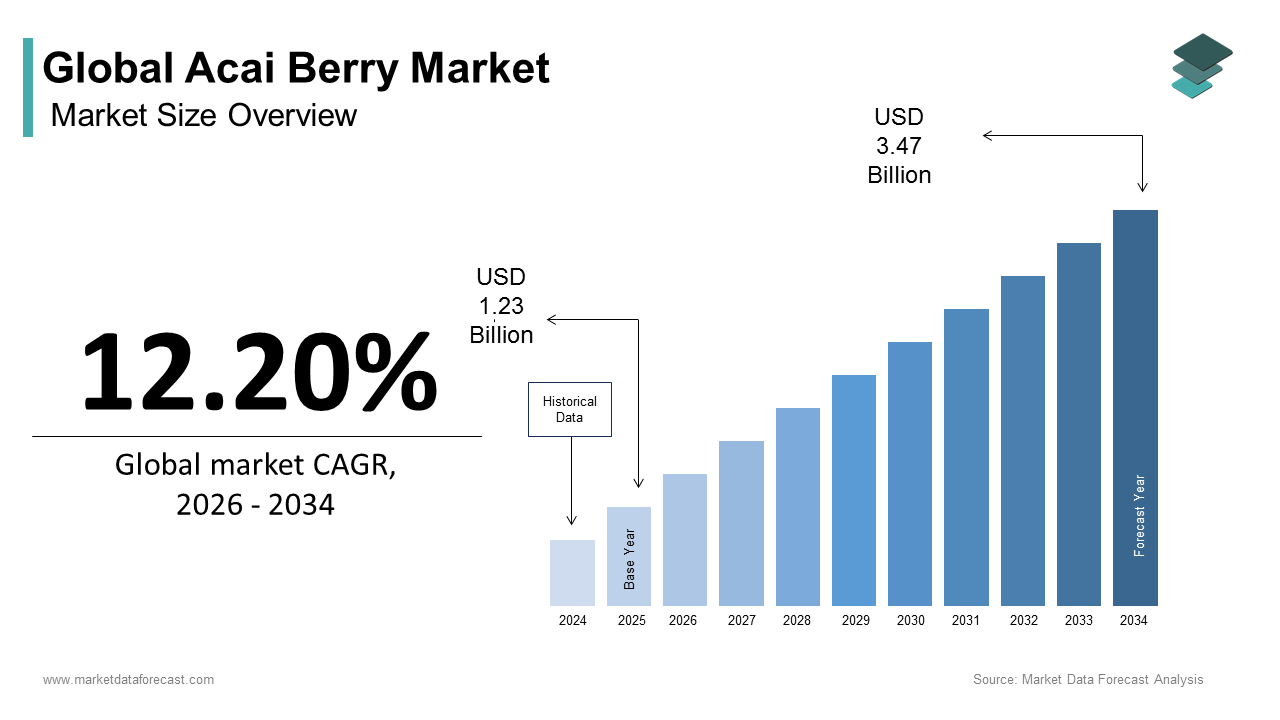
The global acai berry market size was valued at USD 1.23 billion in 2025, projected to reach USD 1.38 billion in 2026, and further grow to USD 3.47 billion by 2034, expanding at a CAGR of 12.2% from 2026 to 2034. The growth of the acai berry market is being fueled by rising health consciousness, increasing demand for antioxidant-rich superfoods, and the growing popularity of acai-based products in beverages, dietary supplements, and functional foods.
Key Market Trends
- Rising consumer preference for superfoods with antioxidant and anti-inflammatory benefits.
- Expanding use of acai berry in functional beverages and supplements, boosting mainstream adoption.
- Growth of health-conscious diets and clean-label products supporting acai’s integration in food and beverages.
- Increasing penetration in urban retail chains and e-commerce platforms, making acai products widely available.
Segmental Insights
- Based on product form, the pulp segment dominated the market with a 59.7% share in 2025, owing to its high nutritional value and versatility in food and beverage applications.
- Based on application, the food & beverages segment led the market with a 44.7% share in 2025, driven by growing demand for smoothies, juices, and functional health products.
- Based on the distribution channel, hypermarkets and supermarkets accounted for 36.7% of the market in 2025, supported by wide availability, visibility, and strong consumer preference for in-store purchases.
Regional Insights
- North America led the acai berry market in 2025, driven by health-conscious consumers and the rising adoption of superfoods in diets.
- Asia-Pacific is projected to be the fastest-growing regional market over the forecast period, fueled by increasing awareness of functional nutrition and rapid urbanization.
- Europe held a substantial market share, supported by the growing use of acai in supplements and wellness products.
- Latin America, being the native region for acai, continues to see steady demand, largely from export-oriented production and growing domestic consumption.
- Middle East & Africa are experiencing emerging growth opportunities as awareness of acai-based nutritional products expands.
Competitive Landscape
The acai berry market is moderately fragmented, with companies focusing on organic certifications, sustainable sourcing, and innovative product launches. Key players include Sambazon, Acairoots, Nativo Acai, AcaiExotic, Zola, Vision America, Amazon Forest Trading, Organique Acai, Tropical Acai, and Energy Foods International.
Global Acai Berry Market Size
The global acai berry market size was calculated to be USD 1.23 billion in 2025 and is anticipated to be worth USD 3.47 billion by 2034, from USD 1.38 billion in 2026, growing at a CAGR of 12.2% during the forecast period
The Acai Berry is a palm fruit native to the Amazon rainforest, predominantly harvested in Brazil, Peru, and Colombia. Renowned for its deep purple hue and dense nutrient profile, the acai berry has transitioned from a regional dietary staple to a globally sought-after superfood, primarily consumed in frozen pulp, juice, powder, and dietary supplement forms. In the Brazilian state of Pará, where over 95% of commercial acai is produced, an estimated 1.2 million people depend directly or indirectly on the acai economy, according to the Brazilian Institute of Geography and Statistics. The traditional consumption pattern in the Amazon involves mixing frozen pulp with cassava flour or granola, a practice now mirrored in global smoothie bowls and functional beverages.
MARKET DRIVERS
Escalating Consumer Demand for Functional Foods and Natural Antioxidants
The growing consumer preference for functional foods edibles that deliver health benefits beyond basic nutrition particularly those rich in natural antioxidants. According to the European Food Safety Authority, acai berry extracts have demonstrated significant in vitro antioxidant activity, leading to authorized health claims in select EU markets for products supporting vascular function. In the United States, the National Health and Nutrition Examination Survey found that 68% of adults actively consume antioxidant-rich foods or supplements, with acai frequently cited in dietary recall studies involving smoothie and juice consumers. The American Society for Nutrition published findings in 2023 indicating that regular intake of acai pulp improved endothelial function and reduced markers of oxidative stress in overweight adults over a 12-week period.
Expansion of the Global Superfood and Plant-Based Diet Movement
The proliferation of plant-based and superfood-centric diets has significantly amplified demand for acai, which is positioning it as a flagship ingredient in health-conscious eating patterns such as clean eating, veganism, and athletic nutrition. In Australia, the Australian Bureau of Statistics noted that 12% of the population identifies as vegetarian or vegan, a demographic that heavily relies on superfoods like acai to meet micronutrient needs. Athletes and fitness enthusiasts also favor acai for its high caloric density and rapid energy release; a 2023 study by the International Journal of Sport Nutrition and Exercise Metabolism found that 41% of endurance athletes consumed acai-based products pre- or post-workout for enhanced recovery and reduced muscle fatigue. Additionally, celebrity endorsements and social media influence have popularized the “açaí bowl” as a lifestyle symbol, particularly in urban centers across North America and Western Europe.
MARKET RESTRAINTS
Post-Harvest Perishability and Cold Chain Logistics Limitations
The fruit’s extreme post-harvest perishability, which necessitates immediate processing and uninterrupted cold chain infrastructure to maintain quality and safety is limiting the growth of the acai berry market. Acai berries begin to oxidize and ferment within 24 hours of harvest, rendering them unsuitable for human consumption if not flash-frozen within six to eight hours, as established by the Embrapa Agroindustrial Tropical research institute in Brazil. This requirement poses significant logistical challenges, particularly in remote Amazonian regions where roads are often impassable during the rainy season and refrigeration facilities are scarce. According to the Brazilian Ministry of Agriculture, only 60% of acai-producing communities in Pará have reliable access to freezing units, leading to post-harvest losses estimated at 30–40% annually.
Mislabeling and Adulteration in the Global Supply Chain
The reputational and regulatory risks due to widespread mislabeling and adulteration in powdered and capsule forms sold outside South America is also restricting the growth of the acai berry market. A 2023 investigation by the U.S. Pharmacopeial Convention found that 37% of acai dietary supplements tested contained fillers such as rice flour, maltodextrin, or lower-cost berry powders, with some products exhibiting less than 10% actual acai content. Similarly, the European Commission’s Rapid Alert System for Food and Feed issued multiple notifications between 2021 and 2023 regarding acai powders contaminated with unauthorized dyes or microbial pathogens. In India, the Food Safety and Standards Authority detected synthetic colorants in imported acai products marketed as “100% natural,” leading to recalls and consumer distrust. These incidents erode brand credibility and deter health-conscious buyers who prioritize purity and authenticity. Consumers are increasingly demanding third-party verification, yet enforcement remains inconsistent across jurisdictions.
MARKET OPPORTUNITIES
Development of Value-Added Acai-Based Functional Foods and Beverages
The formulation of innovative, value-added products that extend beyond frozen pulp and powders into ready-to-consume functional foods and beverages is creating new opportunities for the growth of the acai berry market. In Japan, the Ministry of Health, Labour and Welfare has approved acai-enriched beverages with claims related to antioxidant activity, enabling premium positioning in the wellness market. Companies like Sambazon and Nativa have launched acai-infused energy drinks and probiotic smoothies, leveraging the fruit’s natural flavor profile and health halo. According to the International Food Information Council, 62% of consumers are more likely to purchase a product if it contains a recognized superfood, with acai ranking among the top five most trusted.
Promotion of Sustainable and Ethically Sourced Acai Through Certification Programs
The growing emphasis on environmental stewardship and ethical sourcing. According to the Amazon Environmental Research Institute, acai agroforestry systems maintain 85% of native tree species and sequester up to 45 tons of carbon per hectare, which is making them a climate-resilient land use model. Certification programs such as Rainforest Alliance and Fair Trade have begun accrediting acai cooperatives in Brazil and Peru by ensuring fair wages, gender equity, and forest conservation. As per the Fair Trade International 2023 report, certified acai producers in Pará received a 20% price premium over conventional buyers, improving livelihoods for over 15,000 smallholder families. Retailers like Whole Foods and Waitrose now prioritize certified acai in their supply chains, responding to consumer demand for transparency. A NielsenIQ study found that 73% of global consumers are willing to pay more for sustainably sourced food products, with acai’s rainforest origin serving as a powerful narrative.
MARKET CHALLENGES
Environmental Pressures and Unsustainable Harvesting Practices in Key Producing Regions
The unsustainable harvesting methods that threaten long-term yield and forest integrity is solely to impede the growth of the acai berry market. According to the Chico Mendes Institute for Biodiversity Conservation, 18% of acai palms in monitored areas of the Brazilian Amazon were illegally cut down in 2023, a practice that undermines the species’ natural regeneration cycle. Additionally, the expansion of acai monocultures in cleared floodplains reduces habitat complexity and soil fertility, as noted by the Amazonian Socio-Environmental Research Network. Climate change further exacerbates these challenges; prolonged droughts in the Negro River basin have reduced fruiting cycles by up to 30% in certain regions, as recorded by Brazil’s National Institute for Space Research. Smallholder farmers, lacking access to sustainable training or financing, often prioritize short-term income over long-term stewardship.
Regulatory Heterogeneity and Lack of Standardized Health Claims Across Markets
The inconsistent regulatory frameworks governing health claims, labeling, and import standards is also hampering the growth of the acai berry market. While Brazil permits broad wellness claims for acai under its National Health Surveillance Agency (ANVISA) guidelines, the U.S. Food and Drug Administration restricts such assertions unless supported by substantial scientific agreement, limiting marketing potential. In the European Union, acai is classified under the Novel Foods Regulation, requiring pre-market authorization for certain processed forms, as administered by the European Food Safety Authority. China’s National Medical Products Administration mandates stringent import testing for pesticide residues and microbial content, leading to shipment rejections for non-compliant batches. According to the International Trade Centre, 23% of acai exports from Latin America were delayed or rejected in 2023 due to regulatory discrepancies. Moreover, the absence of a unified global standard for acai purity, processing, or origin verification complicates compliance and increases operational risk. Manufacturers must navigate a patchwork of requirements, increasing costs and slowing market entry. Harmonizing international standards through multilateral cooperation would enhance market access and ensure consumer protection, but progress remains fragmented.
REPORT COVERAGE
| REPORT METRIC | DETAILS |
| Market Size Available | 2025 to 2034 |
| Base Year | 2025 |
| Forecast Period | 2026 to 2034 |
| Fastest Growing Market | Asia Pacific |
| Largest Market | North America |
| CAGR | 12.2% |
| Segments Covered | By Application, Product Form, Distribution Channel, and Region |
| Various Analyses Covered | Global, Regional, & Country Level Analysis; Segment-Level Analysis; DROC; PESTLE Analysis; Porter’s Five Forces Analysis; Competitive Landscape; Analyst Overview of Investment Opportunities |
| Regions Covered | North America, Europe, APAC, Latin America, Middle East & Africa |
| Market Leaders Profiled | AcaiExotic, Acairoots, Nativo Acai, Sambazon, Vision America International, Amazon Forest Trading, Energy Foods International, Organique Acai USA, Tropical Acai, Zola. |
SEGMENTAL ANALYSIS
By Product Form Insights
The pulp segment led the acai berry market in 2025 and held 59.7% of the global market share and is anticipated to hold the dominating sport in the worldwide market throughout the forecast period. The domination of the pulp segment is credited to the increasing usage of acai pulp in various industries such as food and beverage, cosmetics, and pharmaceuticals. Moreover, frozen pulp is the most desired form for preservation or export purposes because of limitations in transporting fresh berries, contributing to the growth of the segment’s market share. It is due to this reason, that the advantages of acai transportability through the production of frozen pulp overpower the energy and time required for the process. Additionally, the rising popularity of acai bowls and acai smoothies from health-conscious consumers is further boosting the expansion of the pulp segment in the global market.
The dried segment is estimated to account for a substantial share of the worldwide market during the forecast period. Dried acai berries are increasingly being used in snacks, supplements, and baked goods due to their longer shelf life, convenience, and suitability properties, which is majorly driving the growth of the dried segment in the global market. Dried is the most popular product form in this market. This is because of the convenience of storing the bulk acai powder at room temperature, provided that its packing is correctly done. Moreover, the wide usage of dried powder in savory recipes, baked goods, and smoothies is also increasing the segment's market share. So, several countries prefer the dried form over pulp because it is easier to store and transport, becoming more prevalent. European nations hold a major portion of the overall acai berry exports by the countries of origin. Therefore, the market size of the dried form is believed to increase in the future.
By Application Insights
The food and beverages segment accounted for 44.7% of the global market share in 2025 and is expected to progress at a steady CAGR during the forecast period. Acai berries have gained recognition among consumers as a superfood. The growing usage of acai berries in smoothies, juices, energy drinks and snacks to address the needs of health-conscious consumers is primarily resulting in the domination of the food and beverages segment in the global market. Companies such as Sambazon, The Coca-Cola Company, and PepsiCo are launching acai-infused beverages to capture the growing demand for healthy and natural refreshment drinks. Moreover, these berries possess a notable number of important minerals and vitamins, such as iron, calcium, vitamin C, and vitamin A, along with the rising trend of the consumption of tropical fruits, especially among the US buyers, driving forward the market growth of the segment. Apart from this, beverages, fruity desserts, fruit bowls, smoothies, etc., without sugar or with sugar alternatives, are attracting health-conscious people seeking both nutrition and taste.
The dietary supplements segment is predicted to be the fastest-growing segment in the global acai berry market. The consumer preference for natural and plant-based supplements is increasing rapidly, which is promoting the demand for acai-berry dietary supplements and driving segmental expansion.
The pharmaceuticals segment is projected to witness a healthy CAGR in the global market during the forecast period owing to the increasing R&D activities by the pharmaceutical companies to explore the ways of using acai extracts in formulations for dietary supplements, functional foods and pharmaceutical drugs targeting various health conditions. As per a study published in the National Library of Medicine, freeze-dried have a heart-friendly profile along with high amounts of fiber and antioxidants, establishing their importance as health-promoting food in the functional food industry. It has been found that extracts of acai fruit may possess anti-inflammatory and antioxidant activities associated with the prevention and treatment of dangers for cardiovascular diseases (CVDs), hypertension, dyslipidemia, and diabetes. Apart from this, acai has been revealed to show antiaging, antileishmanial, anticonvulsant, antinociceptive, antimicrobial, antiatherogenic, and anticancer activities, influencing its demand in the pharmaceutical industry.
By Distribution Channel Insights
The hypermarkets or supermarkets segment dominated the acai berry market, accounting for 36.7% of the worldwide market share in 2025. Popular supermarket chains such as Walmart, Carrefour and Tesco offer a wide selection of acai berry products ranging from frozen pulp to supplements and beverages. The online segment is projected to be the top-performing category in the acai berry market during the estimation period. Online food ordering and delivery platforms are rapidly growing, making the acai products more accessible. Moreover, considering the swift rise of Asian economies, the segment is expected to expand significantly in the coming years.
REGIONAL ANALYSIS
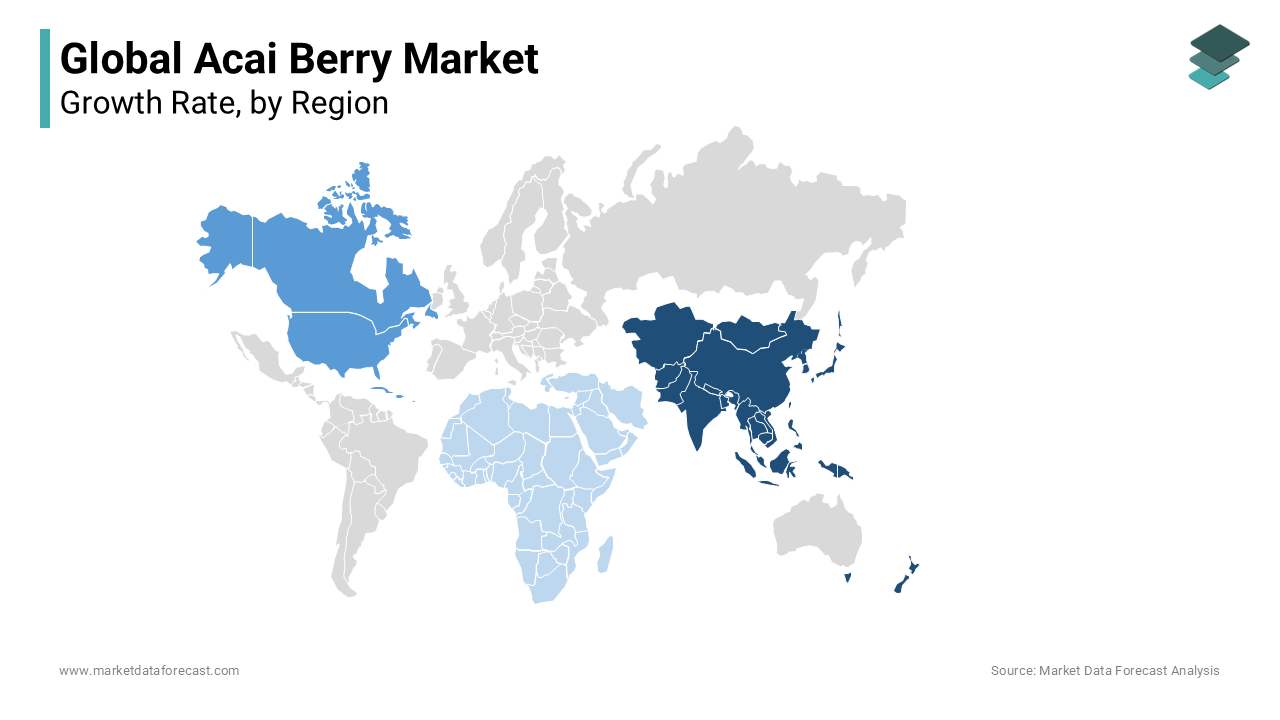
North America occupied a leading share of the world market of acai berries due to the increasing prevalence of cardiovascular diseases in the region. Acai berry consists of anthocyanin, which helps prevent cholesterol oxidation and reduce plaque buildup in the arteries. However, in 2009, the Health Canada Department of the Government of Canada advised people not to use certain acai berry products, including Acai Pure Ultra, Acai Power Blast, Vital Acai Super Antioxidant Weight Loss, and others.
Latin America held a notable share of the global acai berry market in 2025. This is because the region is the biggest supplier and exporter of acai products worldwide. It is part of the “Arecaceae” family and has been produced for thousands of years in South and Central America, including Venezuela, Ecuador, and Brazil, as an all-purpose dietary plant. The late emergence of this fruit and its wholesome and therapeutic properties in external countries has quickly escalated the demand worldwide for açaí berry. Moreover, the Brazilian states of Amapa and Para have considerable agricultural and dietary effects. Para is the primary contributor to its cultivation. However, because of the higher consumption worldwide, Para locals no longer constitute the biggest density of acai customers. Its demand has also elevated significantly in midwestern and southeastern Brazil. Besides this, acai production has arrived in foreign lands in other nation’s states like Espirito Santo.
Asia-Pacific is expected to be the fastest-growing region in the world acai berry market during the forecast period. This is due to the growing number of pharmaceutical and cosmetic industries. According to the Indian Brand Equity Foundation (IBEF), the pharmaceutical industry is the third-largest industry in India in terms of volume and accounted for about 20% of the global pharmaceutical industries in 2018. The growing consumption of dietary and dietary supplements across the Asia-Pacific region is boosting the growth of the acai berry market in this region. According to the Australian Trade and Investment Commission, nutritional supplements account for approximately 35% of the Chinese health food market and are supposed to reach USD 22.3 billion by 2020 with a compound annual rate of 6.4%. The Asia Pacific, in particular, due to increased consumption of nutritional and dietary supplements as well as the increase in the acai berry market among the regional population, may pose significant growth possibilities. Meanwhile, advanced regional economies can also increase throughout the evaluation period at a significant growth pace year-over-year. It is anticipated that increasing demand for dietary supplements to reduce cardiovascular hazards in populations in developed countries will add a significant share of income to the worldwide economy.
KEY MARKET PLAYERS AND COMPETITIVE LANDSCAPE
AcaiExotic, Acairoots, Nativo Acai, Sambazon, Vision America International, Amazon Forest Trading, Energy Foods International, Organique Acai USA, Tropical Acai and Zola are playing a dominating role in the global acai berry market.
The acai berry market is marked by dynamic competition driven by the growing global demand for superfoods and natural wellness products. While the market features a mix of large-scale exporters, regional processors, and niche organic brands, the competitive landscape is shaped by differentiation in sourcing, sustainability, and product innovation. Companies strive to establish authenticity by emphasizing their Amazonian roots and commitment to ethical harvesting practices, which helps build consumer trust. Brand positioning plays a crucial role, with leaders focusing on transparency, environmental stewardship, and health benefits to stand out in a crowded wellness sector. Strategic partnerships with retailers, food manufacturers, and health brands enable wider distribution and market penetration. The competition is further intensified by the entry of private-label brands and new players seeking to capitalize on acai’s popularity.
TOP PLAYERS IN THE MARKET
Sambazon
Sambazon is a pioneering force in the global acai berry market, widely recognized for introducing acai to mainstream Western consumers. Founded with a mission to sustainably harvest and distribute acai from the Amazon rainforest, the company emphasizes ethical sourcing and environmental stewardship. Sambazon has played a crucial role in shaping consumer perception of acai as a premium superfood, offering a wide range of products including frozen pulp, beverages, and dietary supplements. Its integration of fair-trade practices and support for local communities has set industry benchmarks.
Amafruits
Amafruits has established itself as a key player by focusing on high-quality, organic acai products sourced directly from family farms in the Brazilian Amazon. The company differentiates itself through a commitment to transparency, traceability, and minimal processing to preserve the nutritional integrity of acai. Amafruits caters to both bulk ingredient suppliers and end-consumer brands, enabling wider market penetration across smoothie bowls, energy bars, and functional foods. Its dedication to preserving traditional harvesting methods while meeting international food safety standards has earned trust among health-conscious consumers and premium brands. Amafruits also promotes the cultural significance of acai, strengthening its brand identity.
Natexis
Natexis is a leading Brazilian agribusiness specializing in the processing and export of acai berries, with a strong footprint in international markets. The company operates large-scale production facilities that ensure consistent quality and supply of acai pulp and derivatives. Natexis places emphasis on research and development to enhance product applications in food, beverage, and nutraceutical industries.
TOP STRATEGIES USED BY KEY MARKET PLAYERS
One major strategy employed by leading acai berry companies is vertical integration of the supply chain. By controlling operations from harvest to processing and distribution, firms ensure quality, traceability, and sustainability while reducing dependency on third parties. This approach strengthens brand credibility and supports premium positioning in health-focused markets.
Another key strategy is the emphasis on sustainability and ethical sourcing. Companies actively promote fair-trade practices, environmental conservation, and community engagement in the Amazon region. These initiatives not only protect the ecosystem but also resonate with eco-conscious consumers, enhancing brand loyalty and differentiation in a competitive landscape.
RECENT HAPPENINGS IN THE MARKET
- In March 2023, Sambazon launched a new line of organic acai-based ready-to-drink beverages in collaboration with a major U.S. retail chain, expanding its presence in the convenience health sector.
- In June 2023, Amafruits partnered with a European wellness brand to co-develop acai-infused functional snacks byenhancing its footprint in the clean-label food market.
- In September 2023, Natexis inaugurated an advanced cold-processing facility in northern Brazil to improve acai pulp quality and increase export capacity.
- In January 2025, Sambazon announced a reforestation initiative in the Amazon, committing to plant 50,000 native trees annually to support biodiversity and sustainable acai farming.
- In May 2025, Amafruits introduced blockchain traceability for its supply chain, allowing consumers to verify the origin and harvesting practices of their acai products.
MARKET SEGMENTATION
This research report on the global acai berry market has been segmented and sub-segmented based on application, product form, distribution channel and region.
By Product Form
- Pulp
- Dried
By Application
- Food and Beverages
- Pharmaceuticals
- Dietary Supplements
- Personal Care or Cosmetics
- Others
By Distribution Channel
- Hypermarkets or Supermarkets
- Convenience Stores
- Pharmacies or Drugstores
- Online
- Others
By Region
- North America
- Europe
- Asia-Pacific
- Latin America
- Middle East and Africa
Frequently Asked Questions
What is the current size of the global acai berry market?
As of 2025, the global acai berry market is estimated to be worth USD 1.38 billion, with growth driven by consumer demand for antioxidant-rich superfoods and clean-label functional products.
What factors are driving the acai berry market growth?
Key drivers include increasing health consciousness, rising popularity of smoothie bowls and wellness drinks, e-commerce expansion, and the inclusion of acai in beauty and cosmetic products.
What are the major product segments in the acai berry market?
The Global Acai Berry Market is segmented By Application (Food And Beverages, Pharmaceuticals, Dietary Supplements, Personal Care Or Cosmetics and Others), Product Form (Pulp and Dried), Distribution Channel (Hypermarkets Or Supermarkets, Convenience Stores, Pharmacies Or Drugstores, Online and Others) and Region (Latin America, North America, Asia Pacific, Europe, Middle East and Africa).
Which regions lead the global acai berry market?
North America holds the largest market share due to strong demand in the U.S. and Canada. Europe is growing steadily, while Asia-Pacific is emerging as a high-growth region with expanding health food markets.
Who are the key players in the acai berry market?
Major players include Sambazon Inc., The Berry Company, Nativo Acai, Acai Roots Inc., and Organique Acai, alongside growing private label brands and regional exporters from Brazil.
What is the expected CAGR of the acai berry market through 2033?
The global acai berry market is expected to grow at a CAGR of 12.2% from 2025 to 2033, with rising adoption in both foodservice and personal wellness sectors.
What are the latest trends in acai-based product development?
Trends include ready-to-drink acai beverages, acai-infused skincare, plant-based frozen desserts, and sustainability-labeled products targeting eco-conscious consumers.
What are the key challenges in the acai berry market?
Challenges include volatile supply due to seasonality, price fluctuations, limited shelf life, and lack of awareness in developing markets.
How is the online channel influencing acai berry product sales?
Online platforms are playing a major role in brand discovery, direct-to-consumer (D2C) sales, subscription-based wellness boxes, and global reach for niche acai product manufacturers.
What future opportunities exist in the acai berry market?
Opportunities lie in functional nutrition, cosmeceuticals, sports nutrition, and acai-based product expansion in Asia, Middle East, and Latin America through partnerships and influencer marketing.
Related Reports
Access the study in MULTIPLE FORMATS
Purchase options starting from
$ 2500
Didn’t find what you’re looking for?
TALK TO OUR ANALYST TEAM
Need something within your budget?
NO WORRIES! WE GOT YOU COVERED!
Call us on: +1 888 702 9696 (U.S Toll Free)
Write to us: sales@marketdataforecast.com